



Didn’t find the reference you had in mind? Explore our vintage watches — fully serviced with a 12-month warranty.
EXPLORE WATCHMAKING HERITAGE
Discover More Vintage Watch Collections
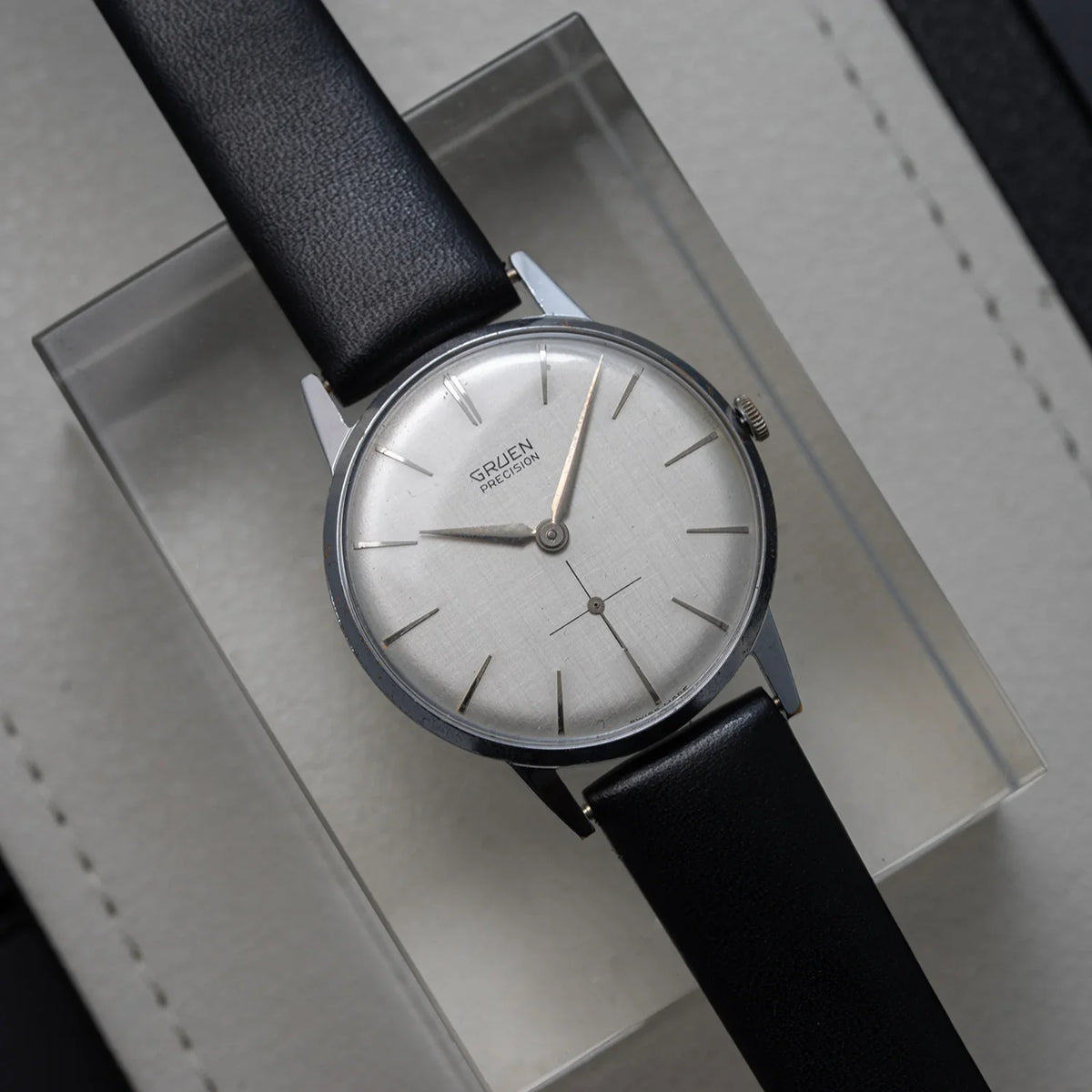
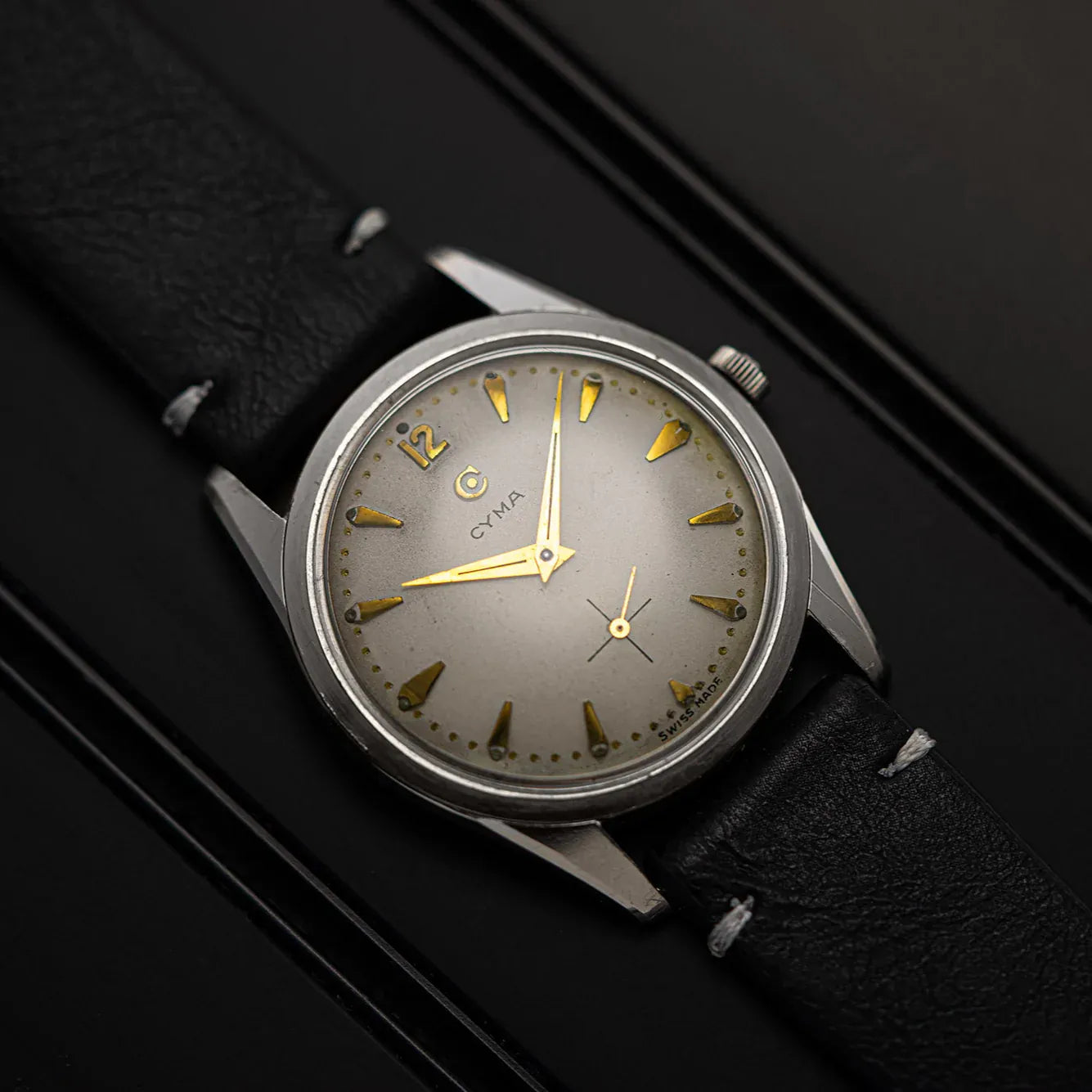


1940s Watch Design: Military Influence and Civilian Elegance
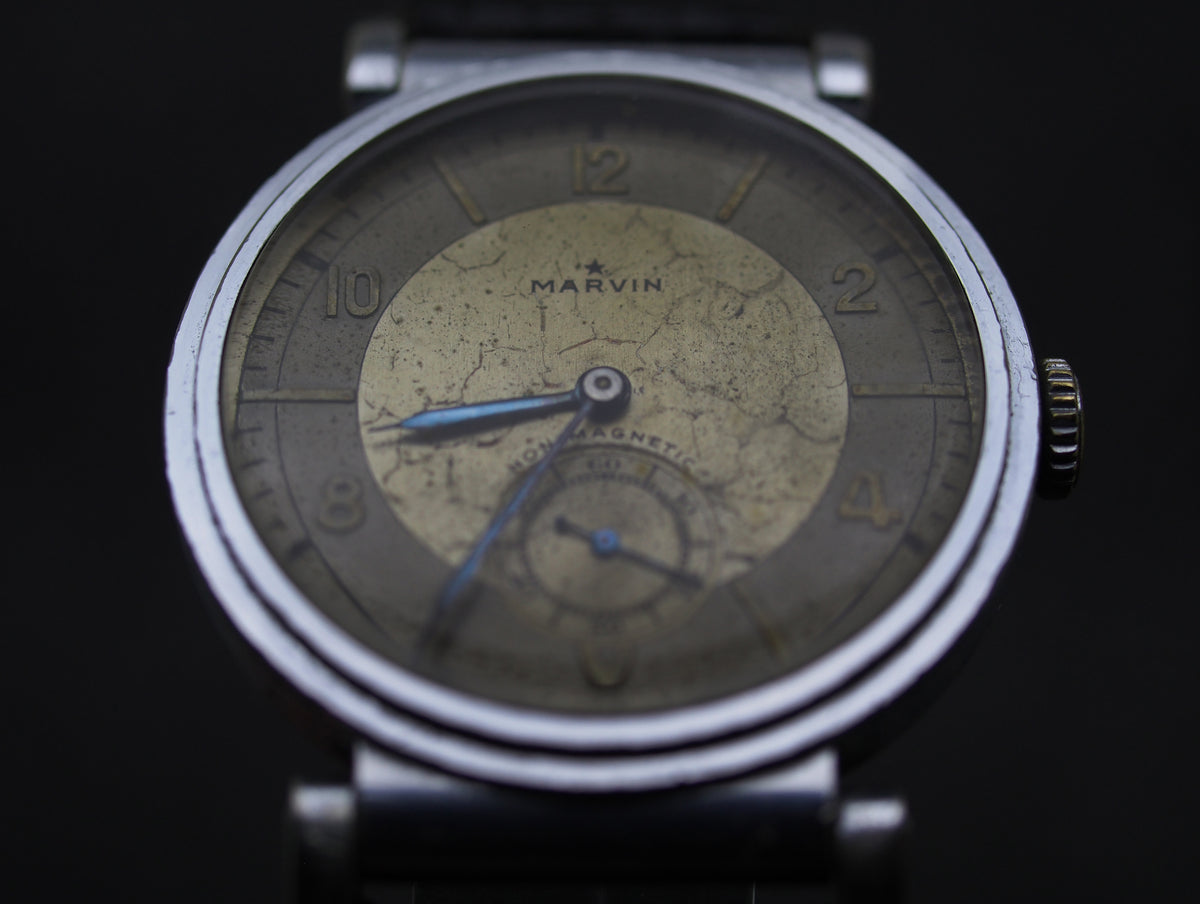
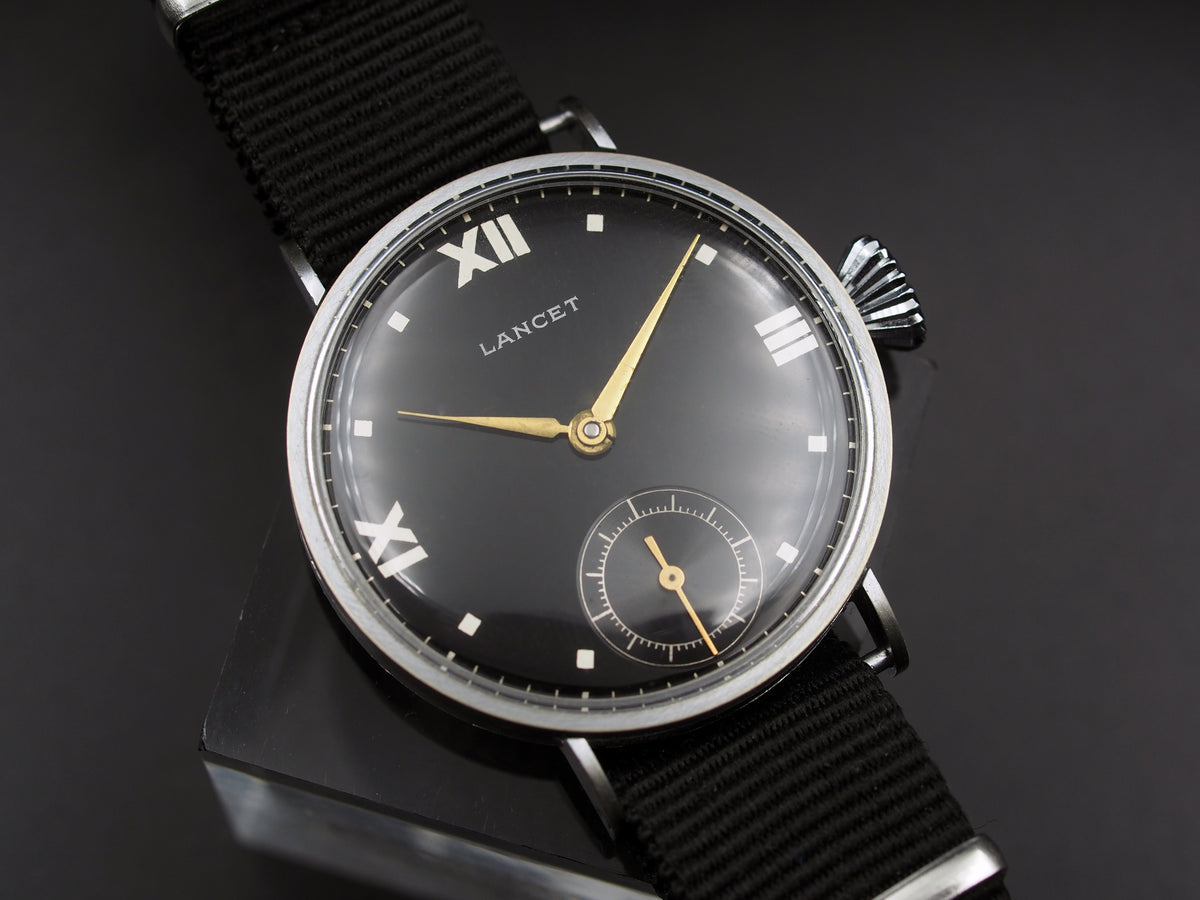
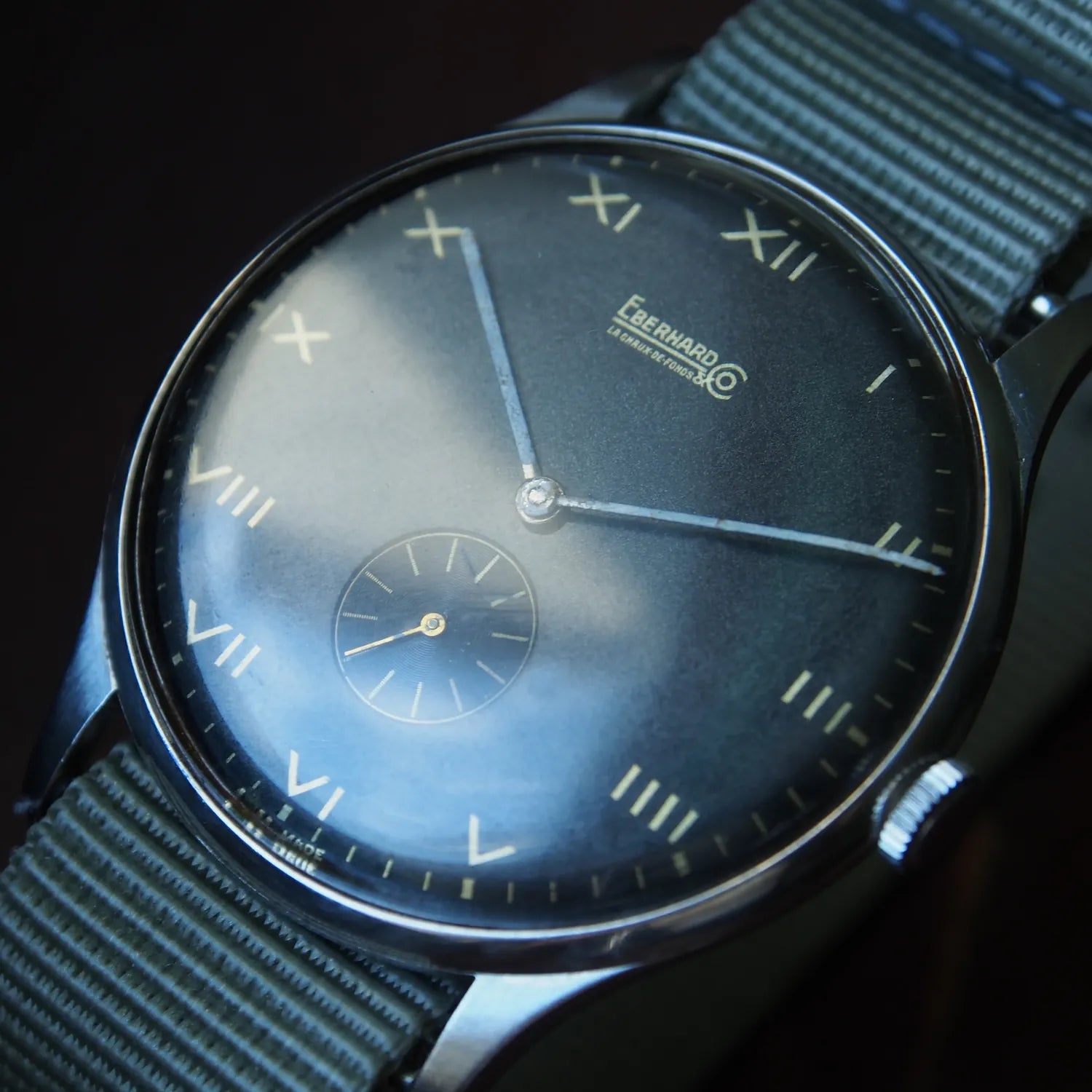
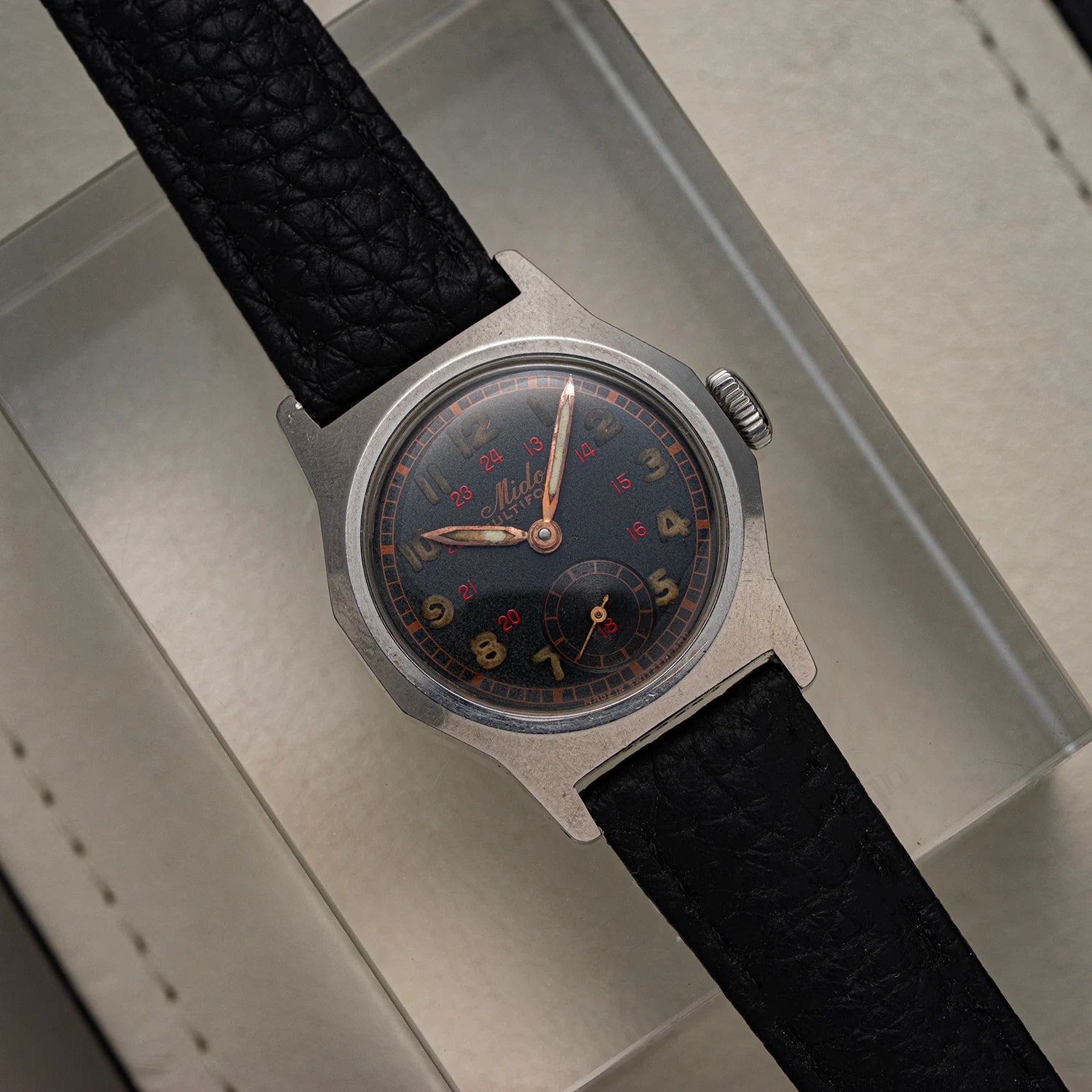
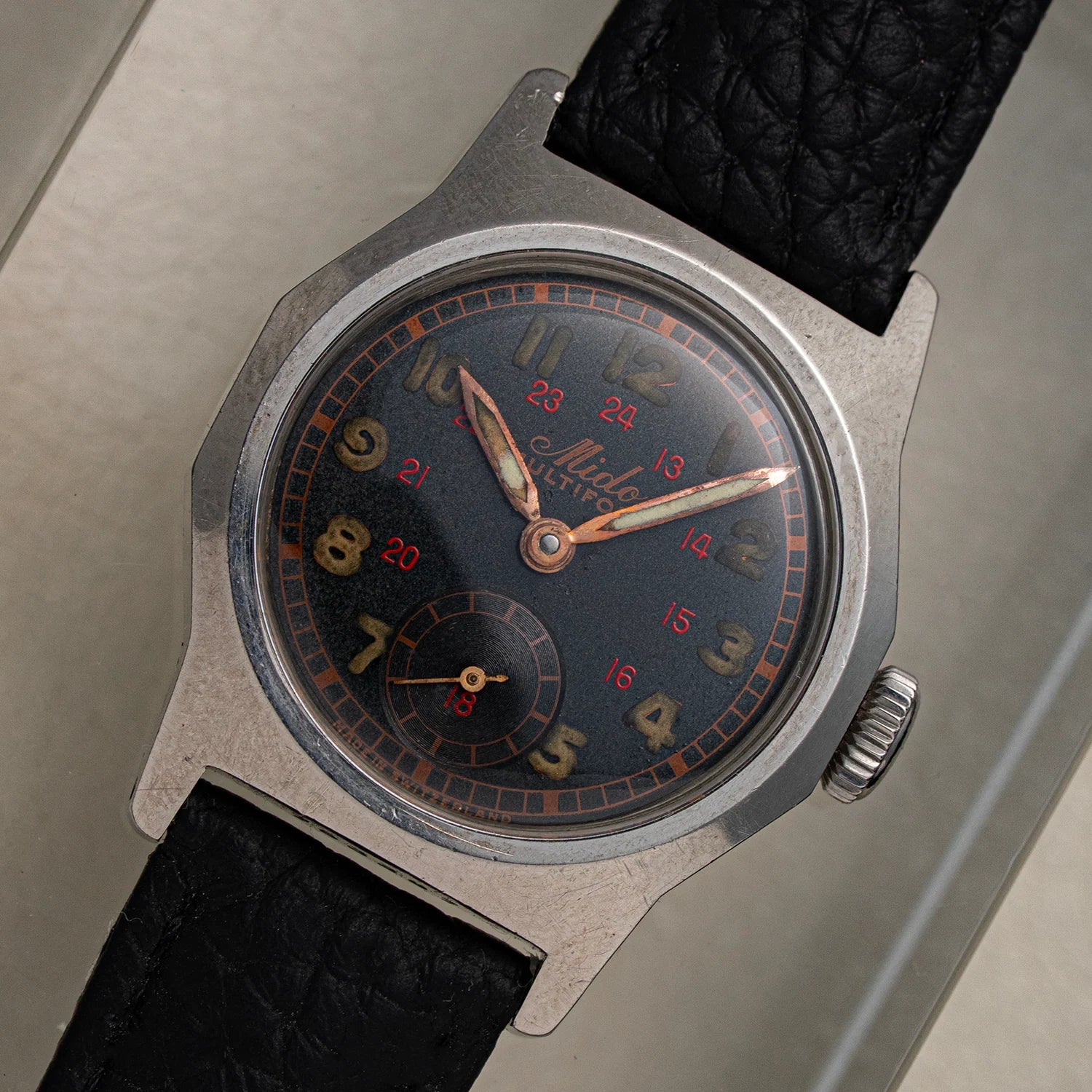
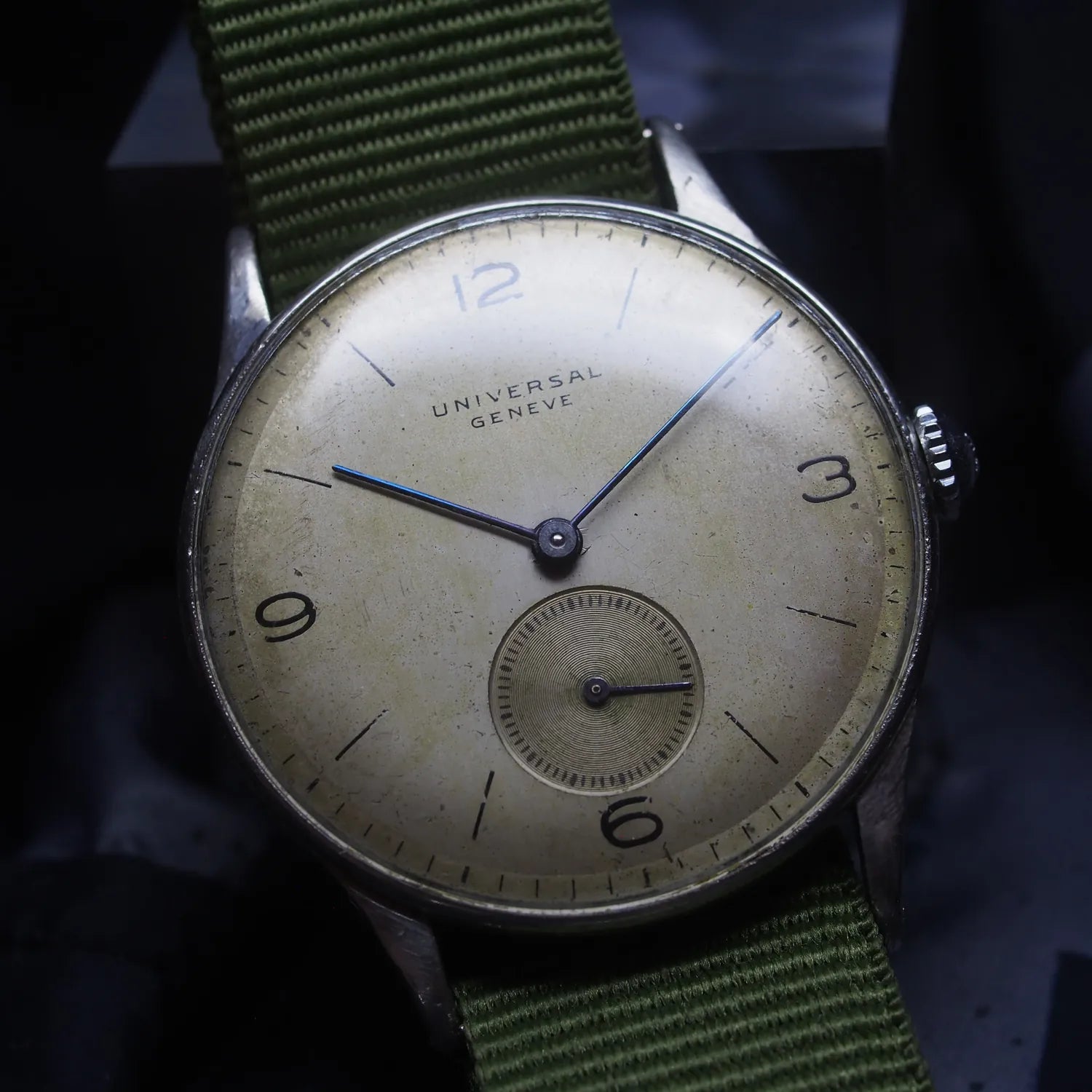
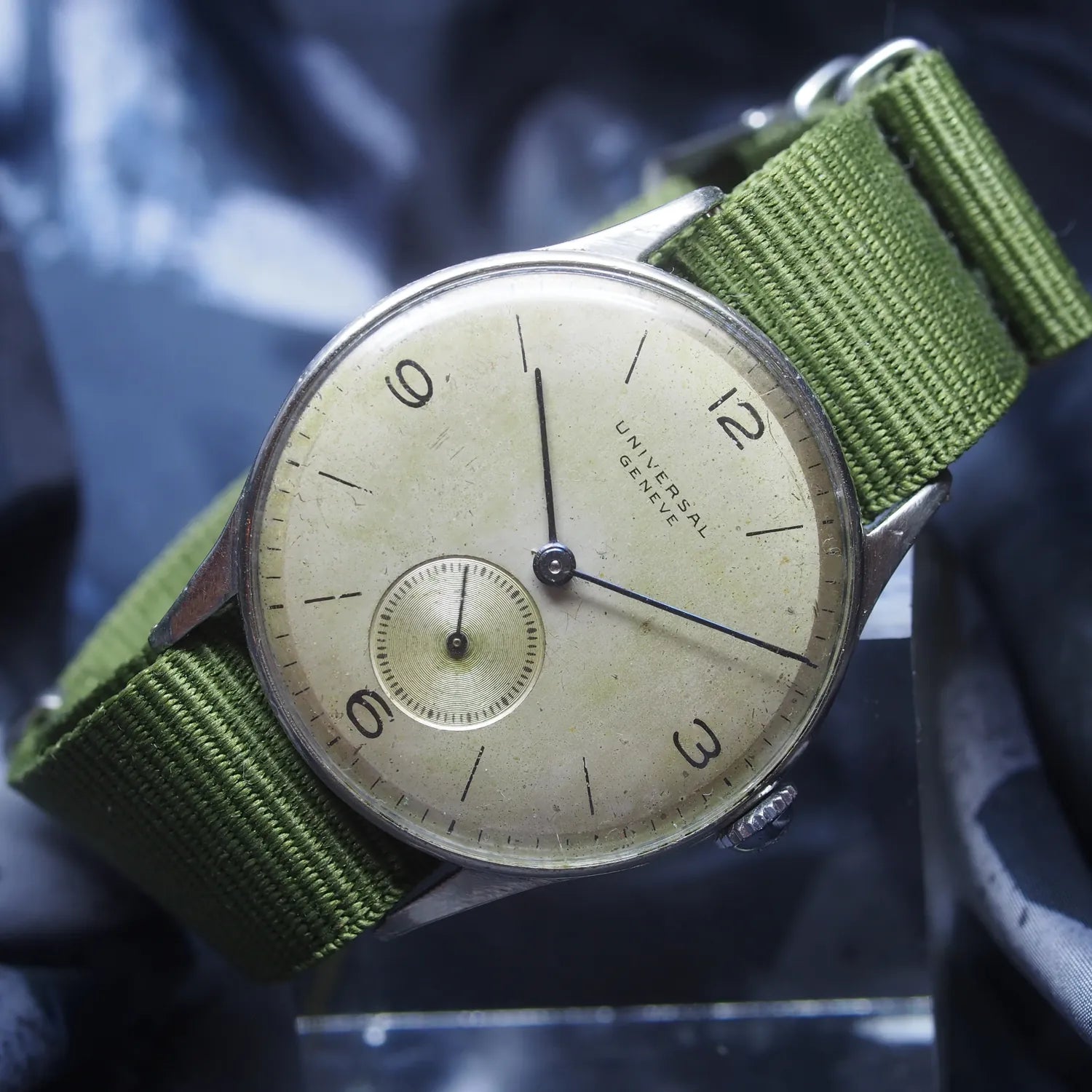
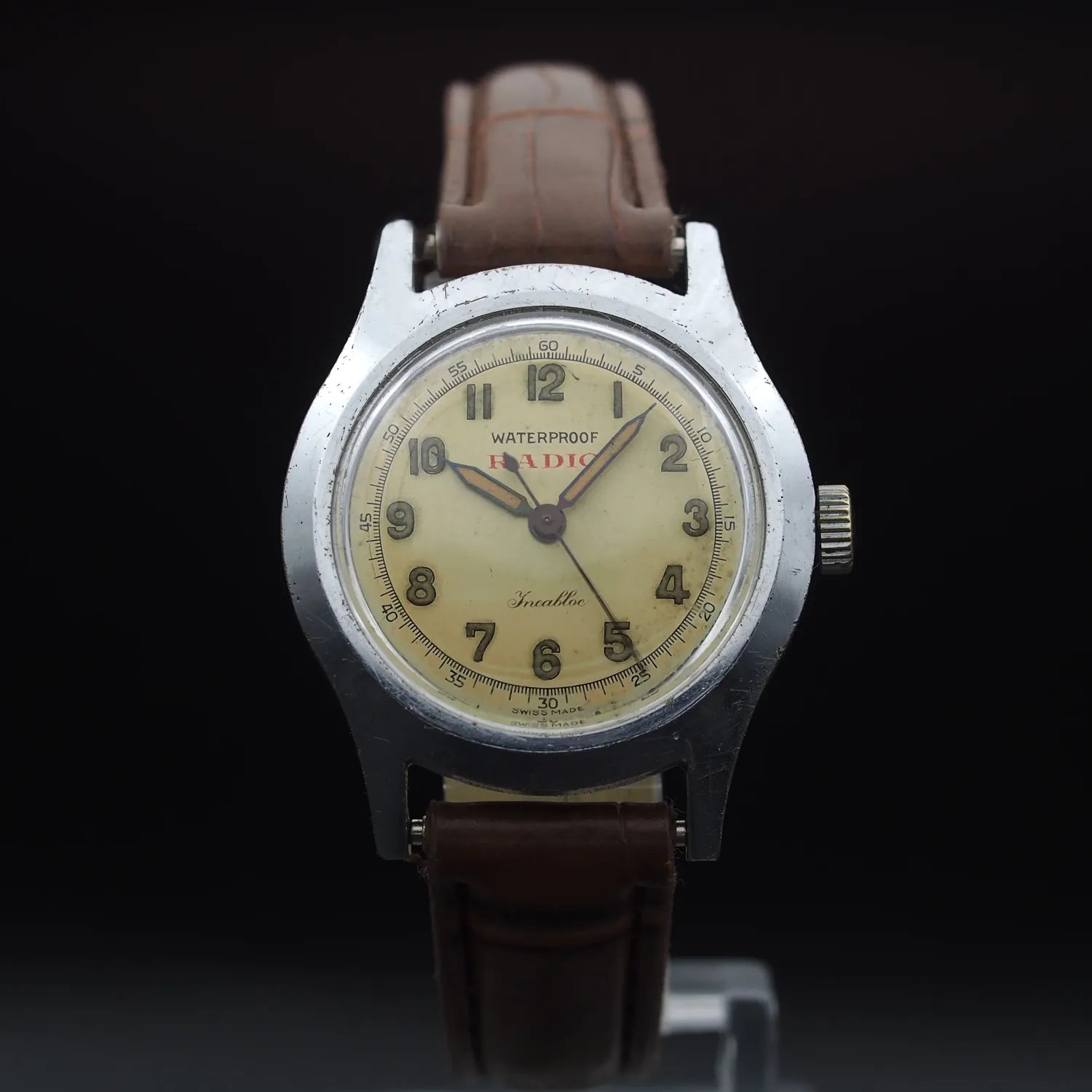
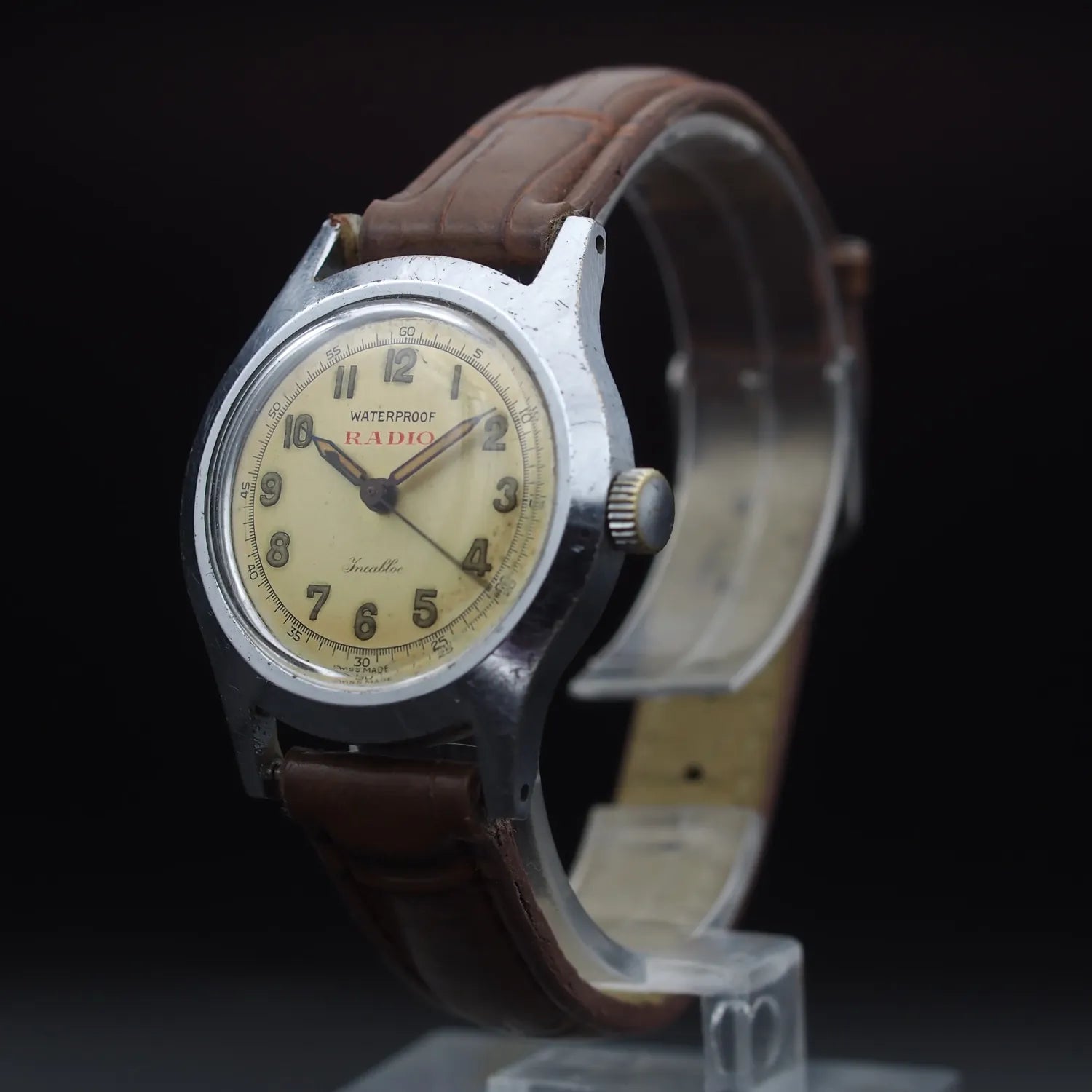
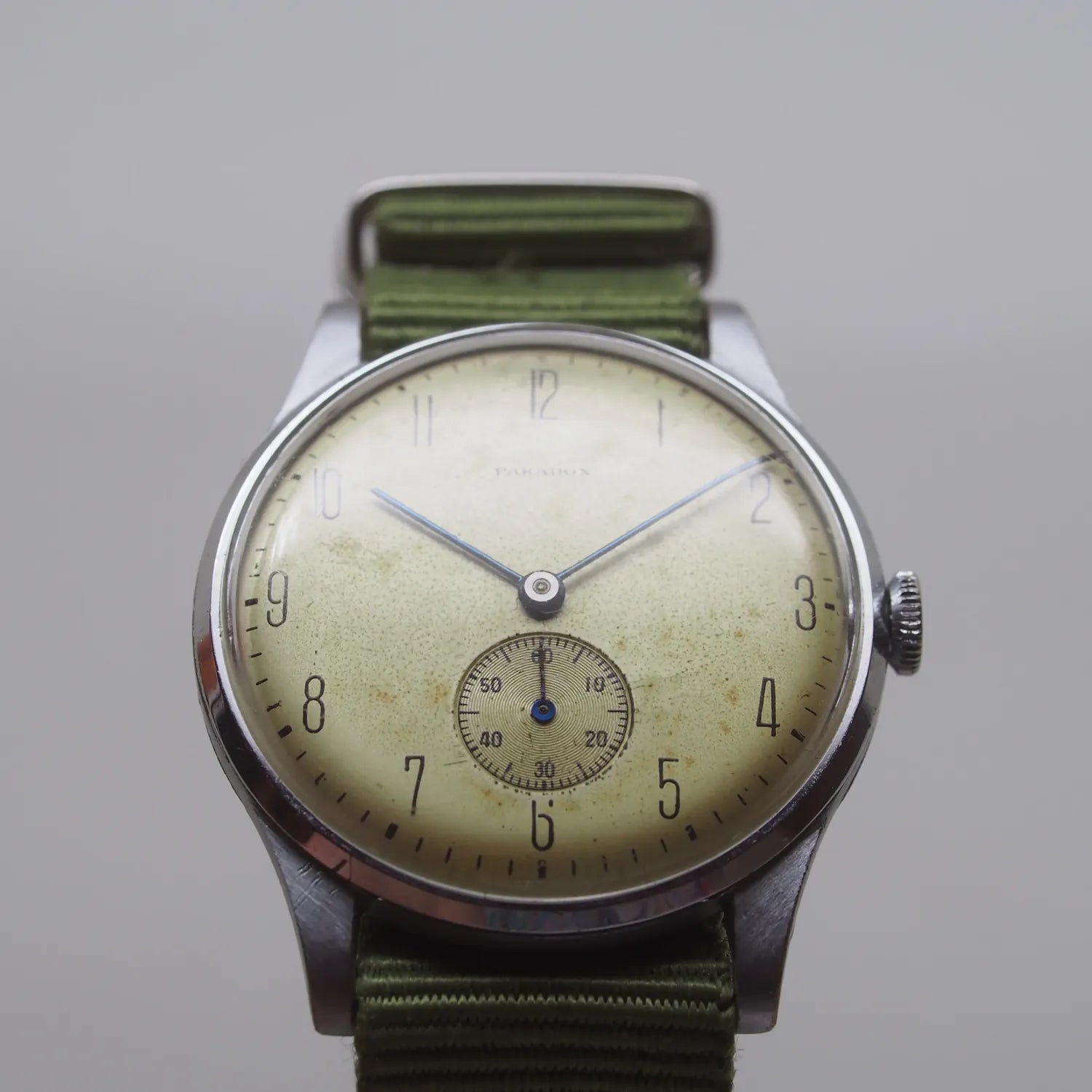
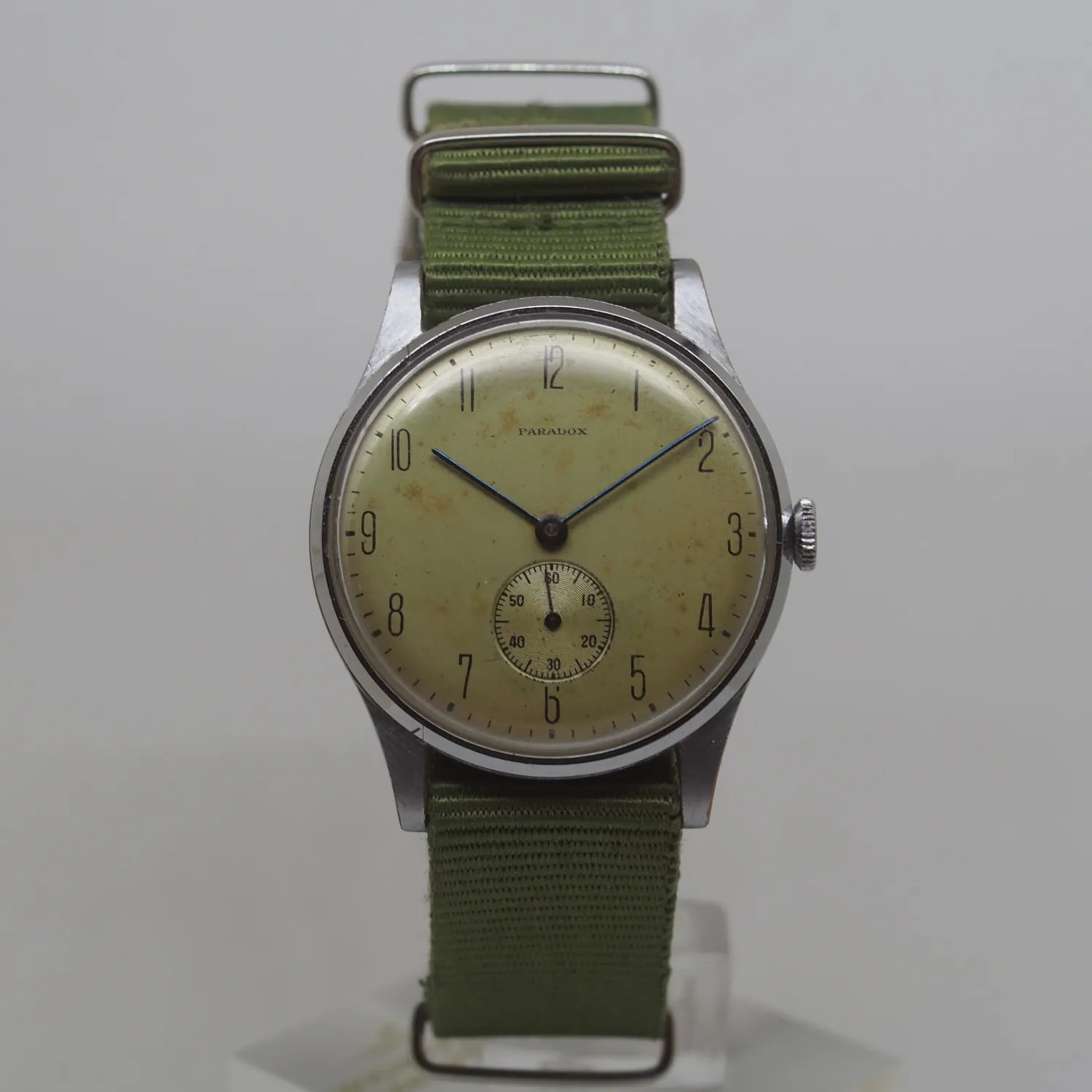
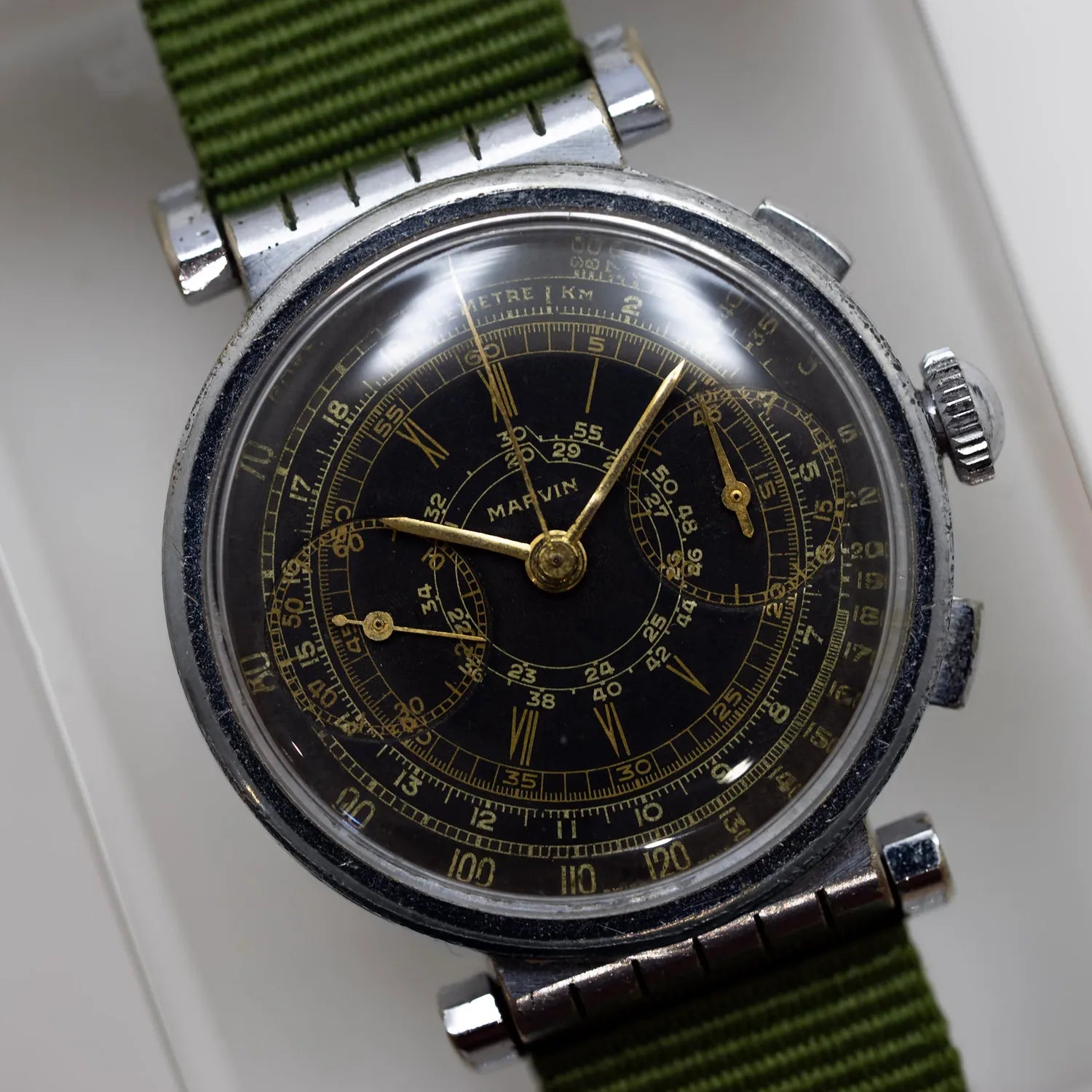
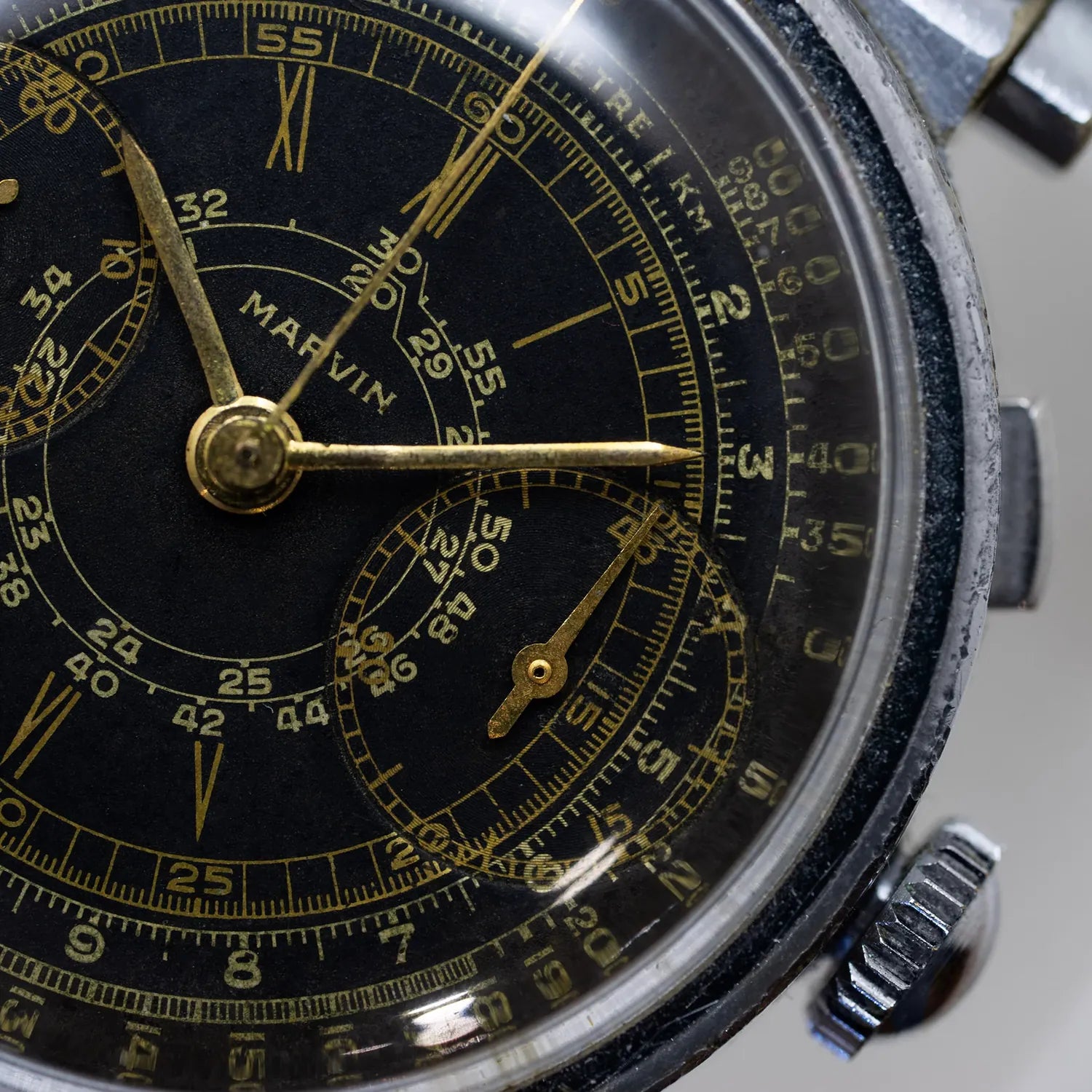
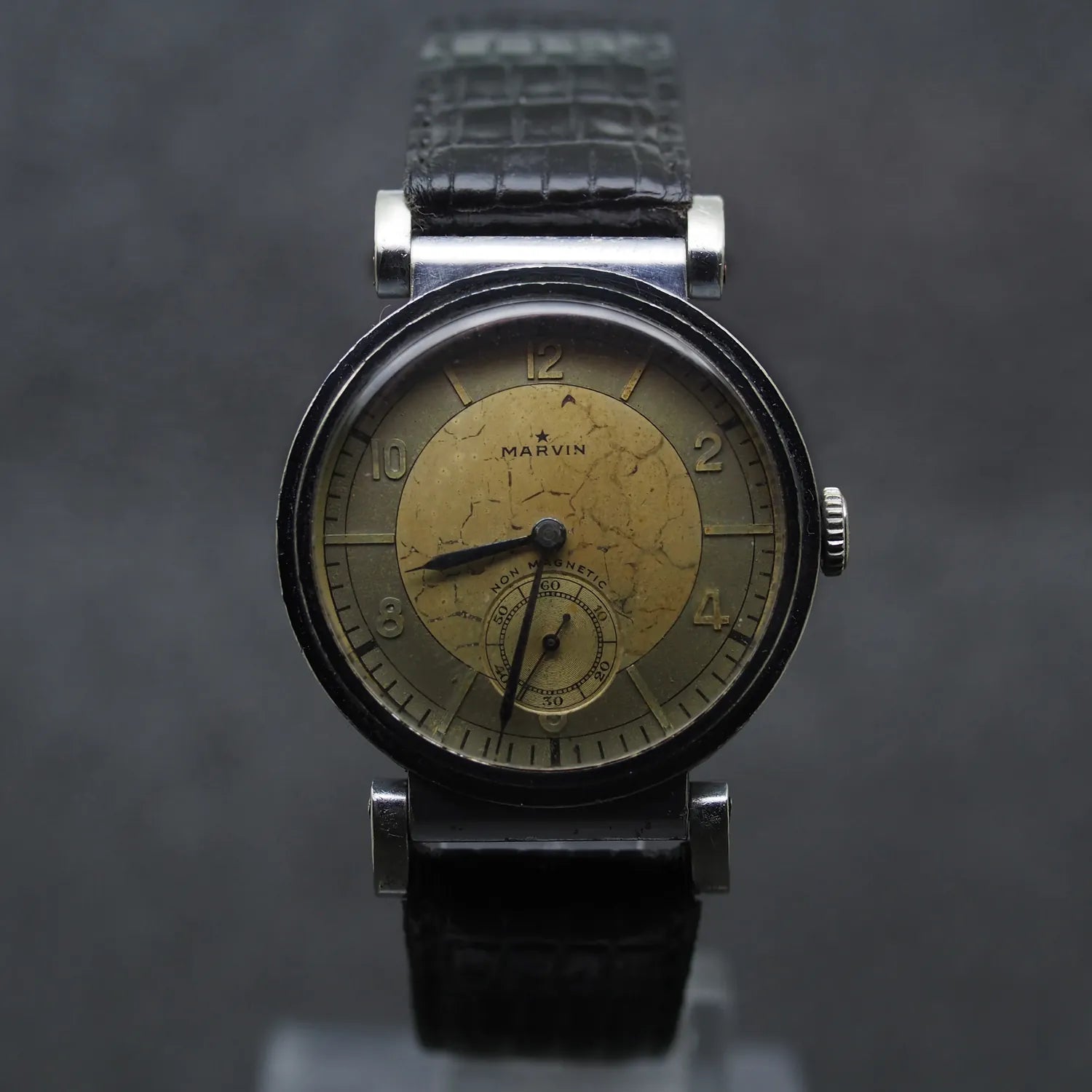
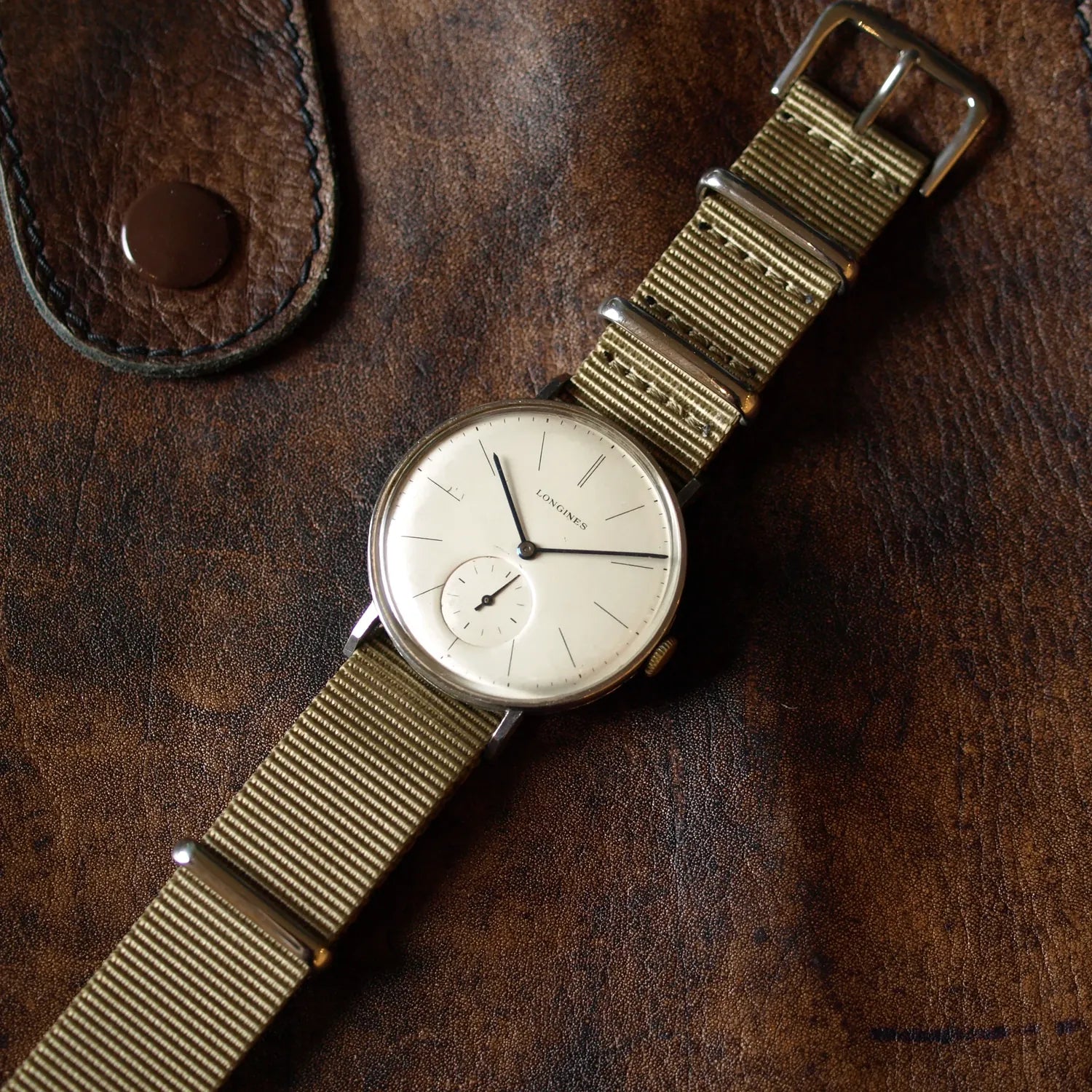
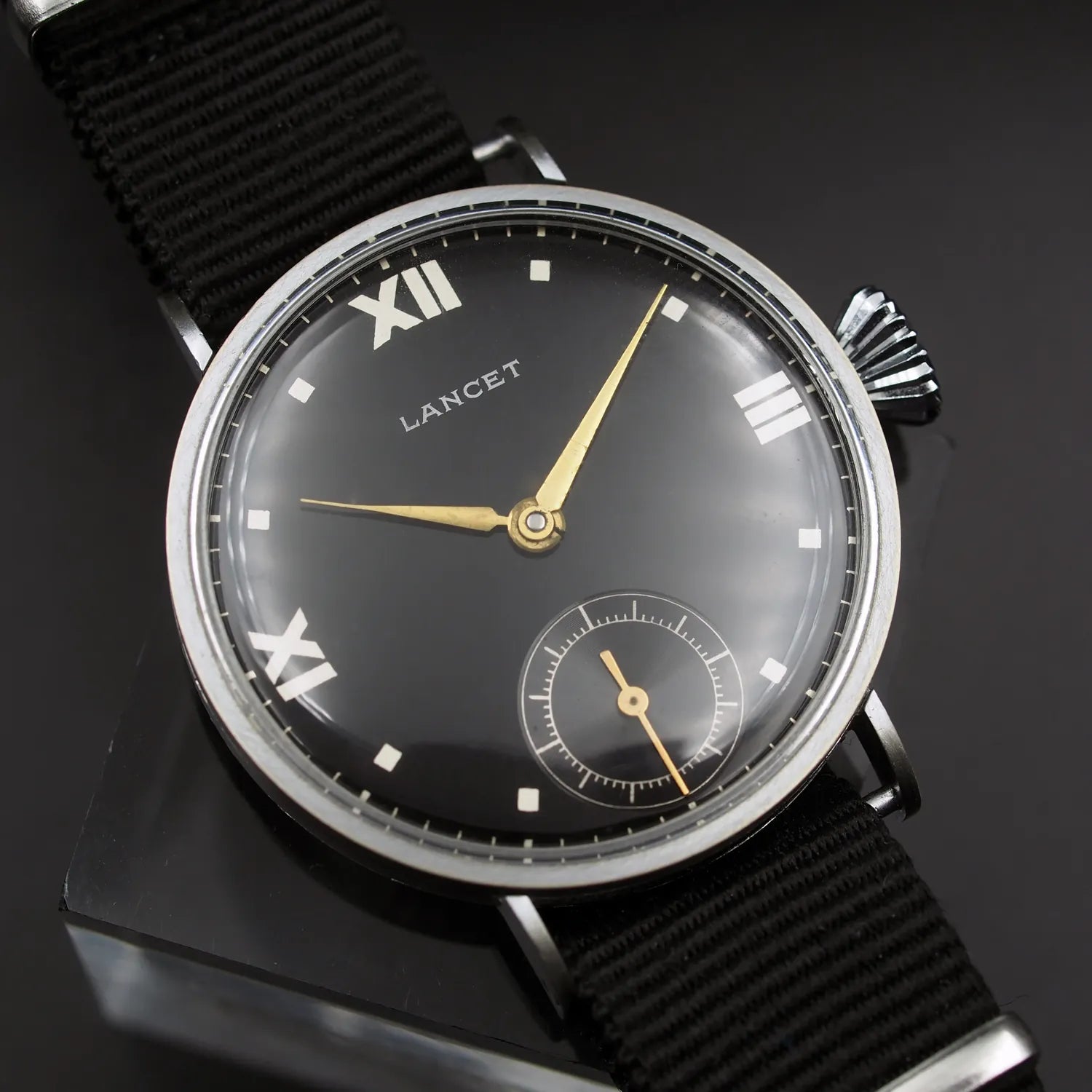
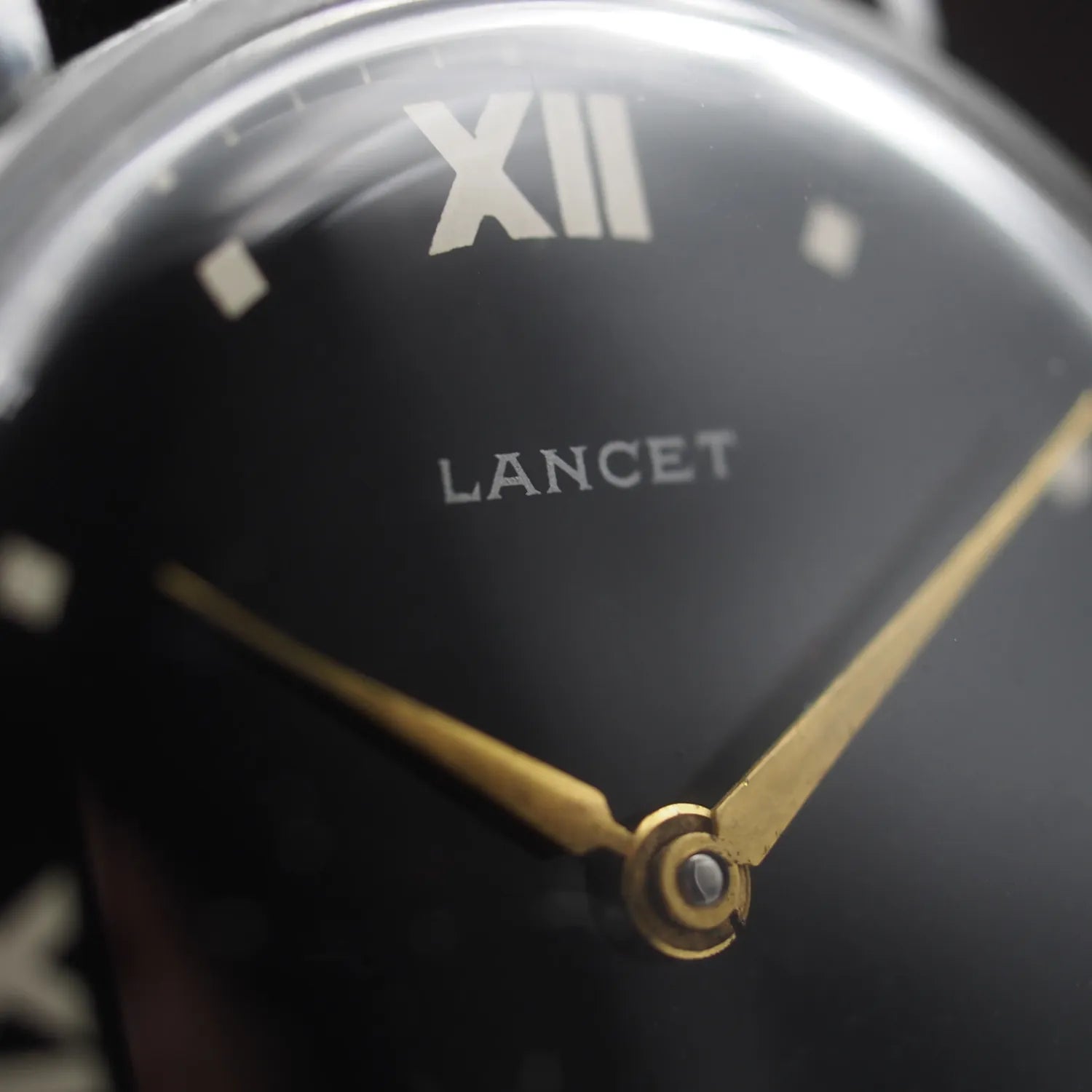
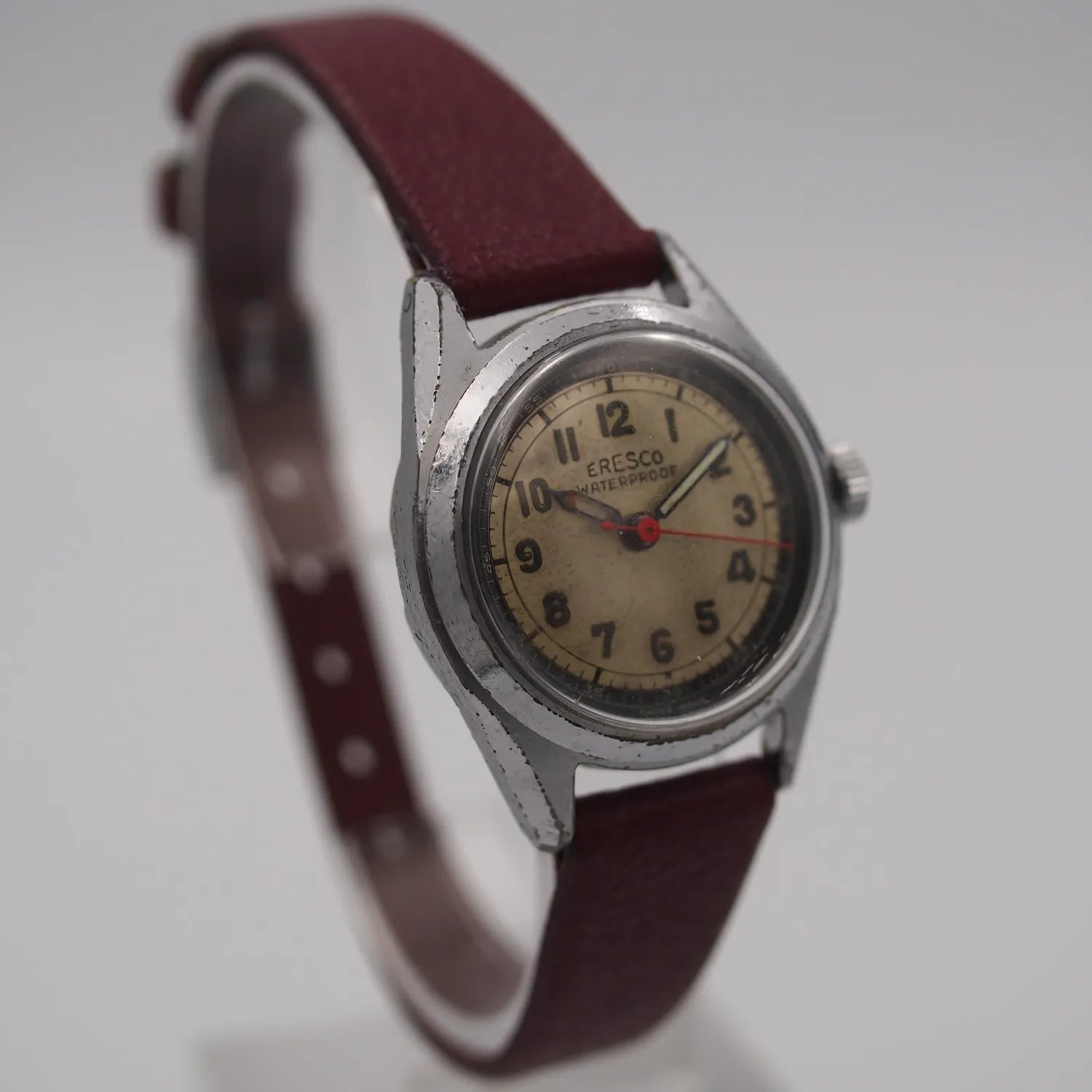
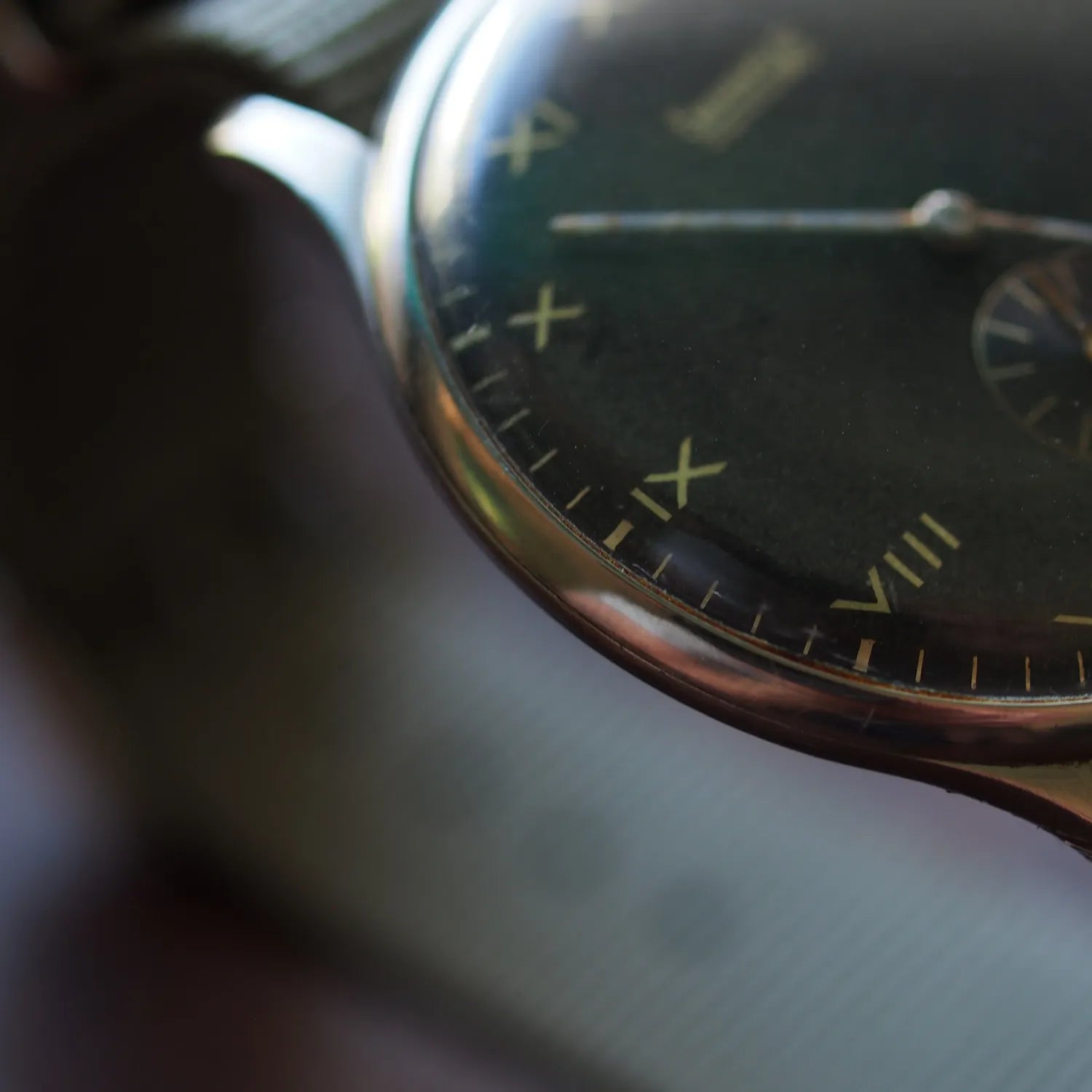
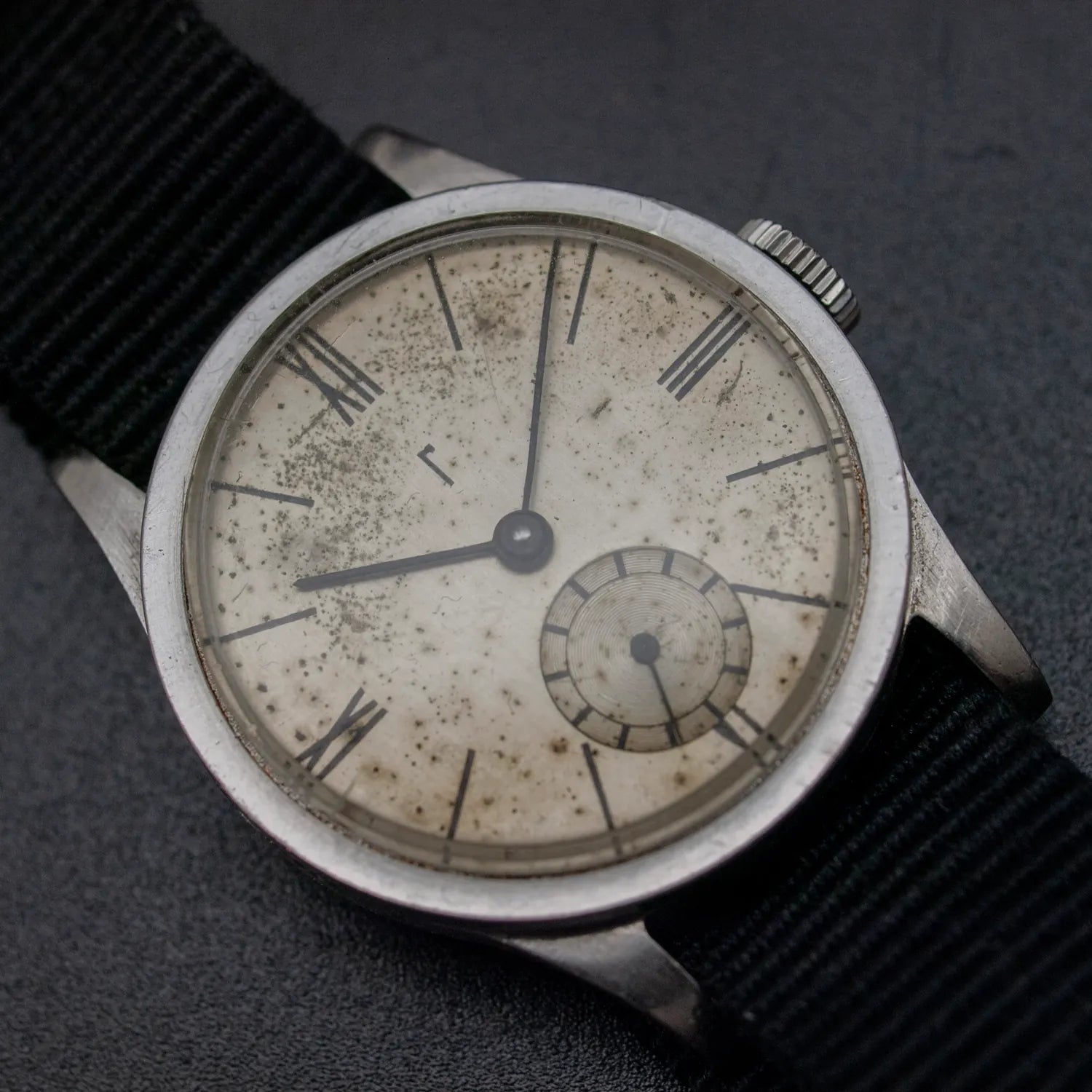
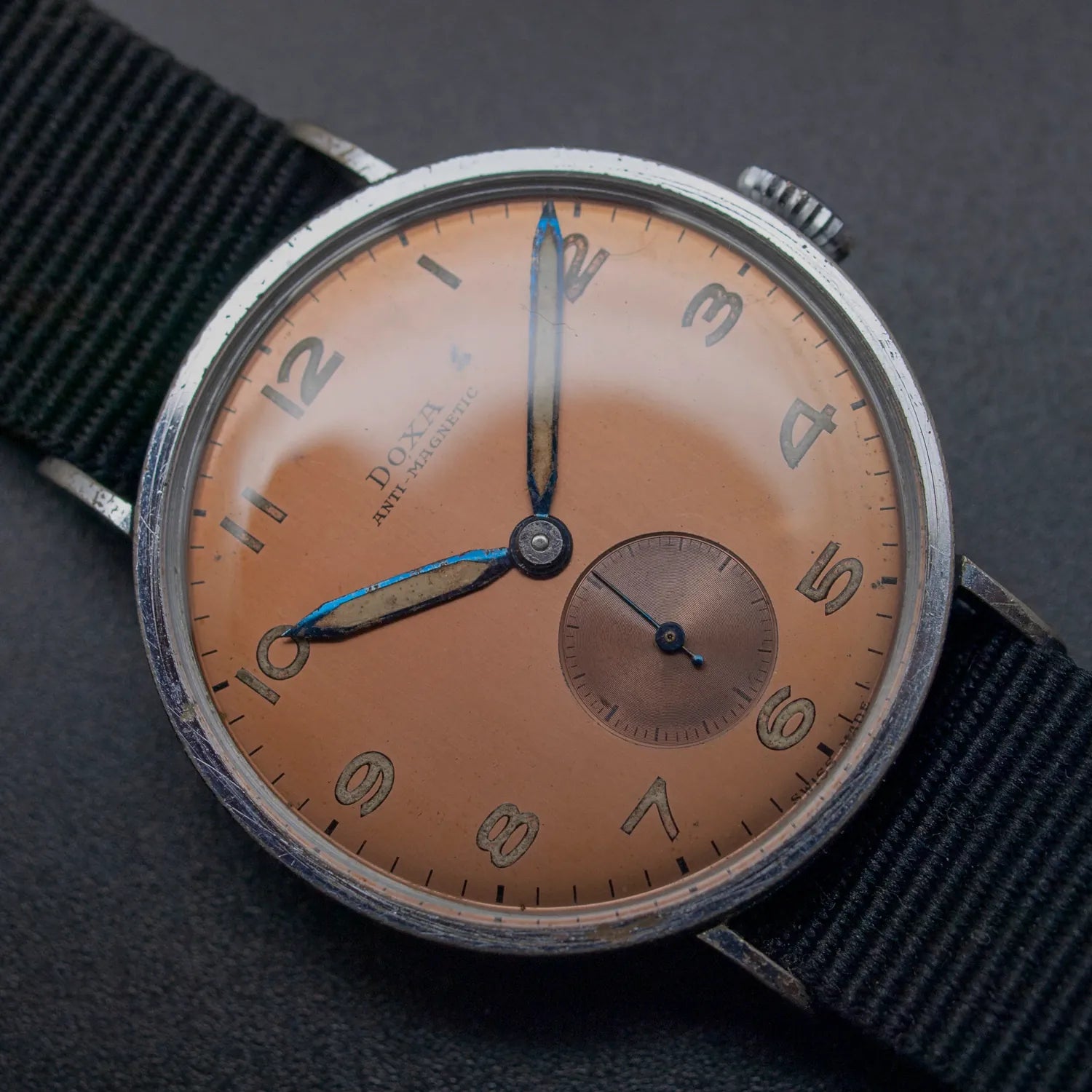
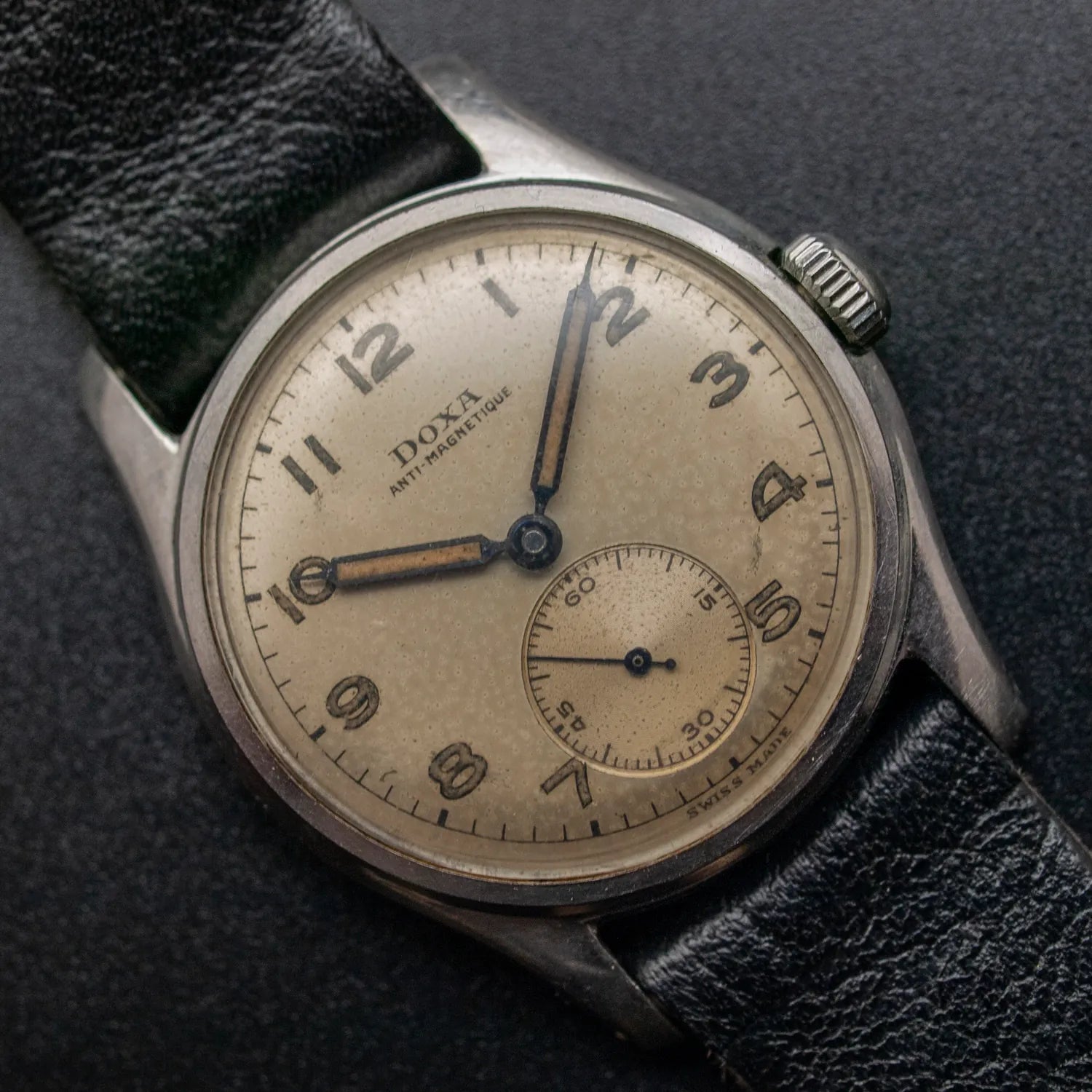
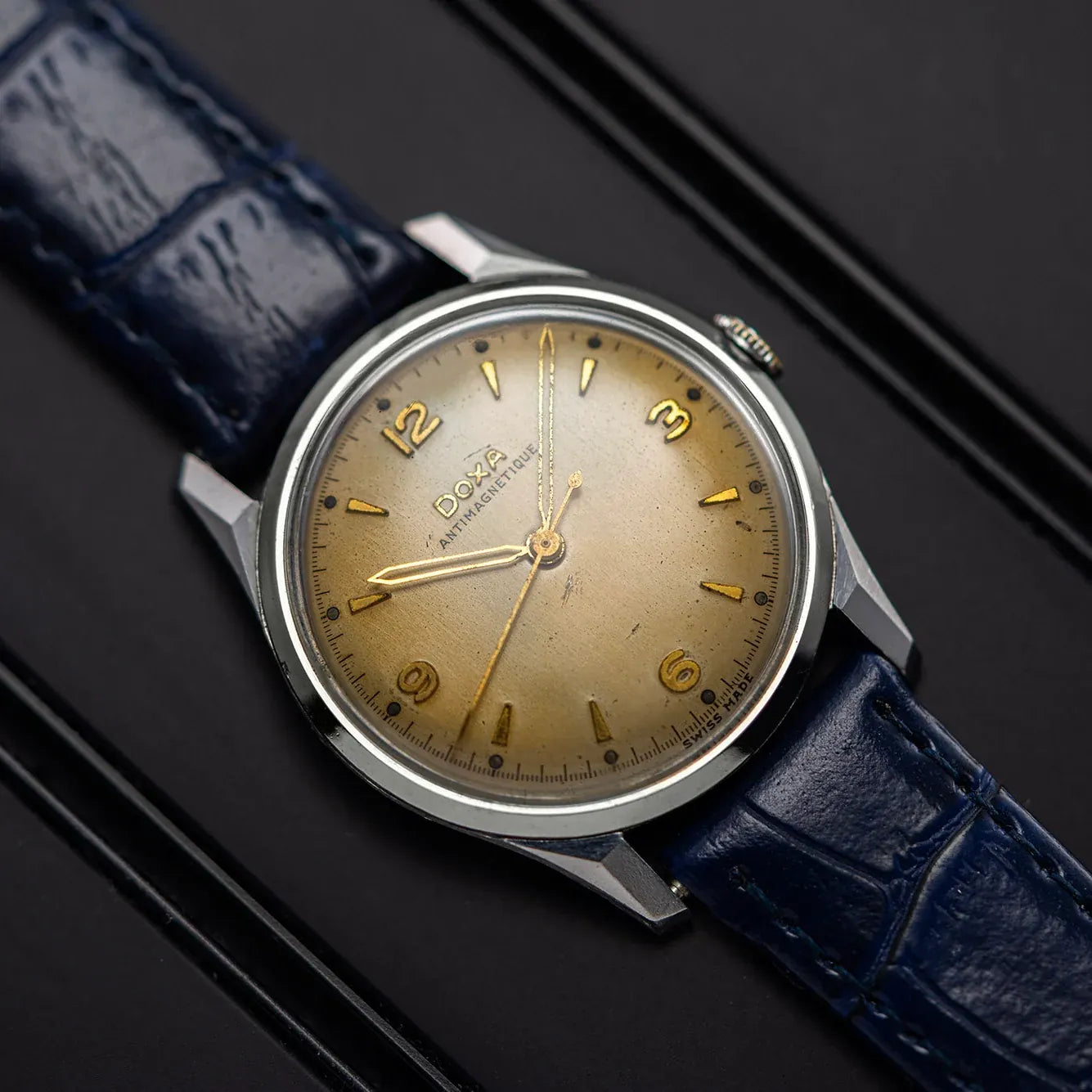
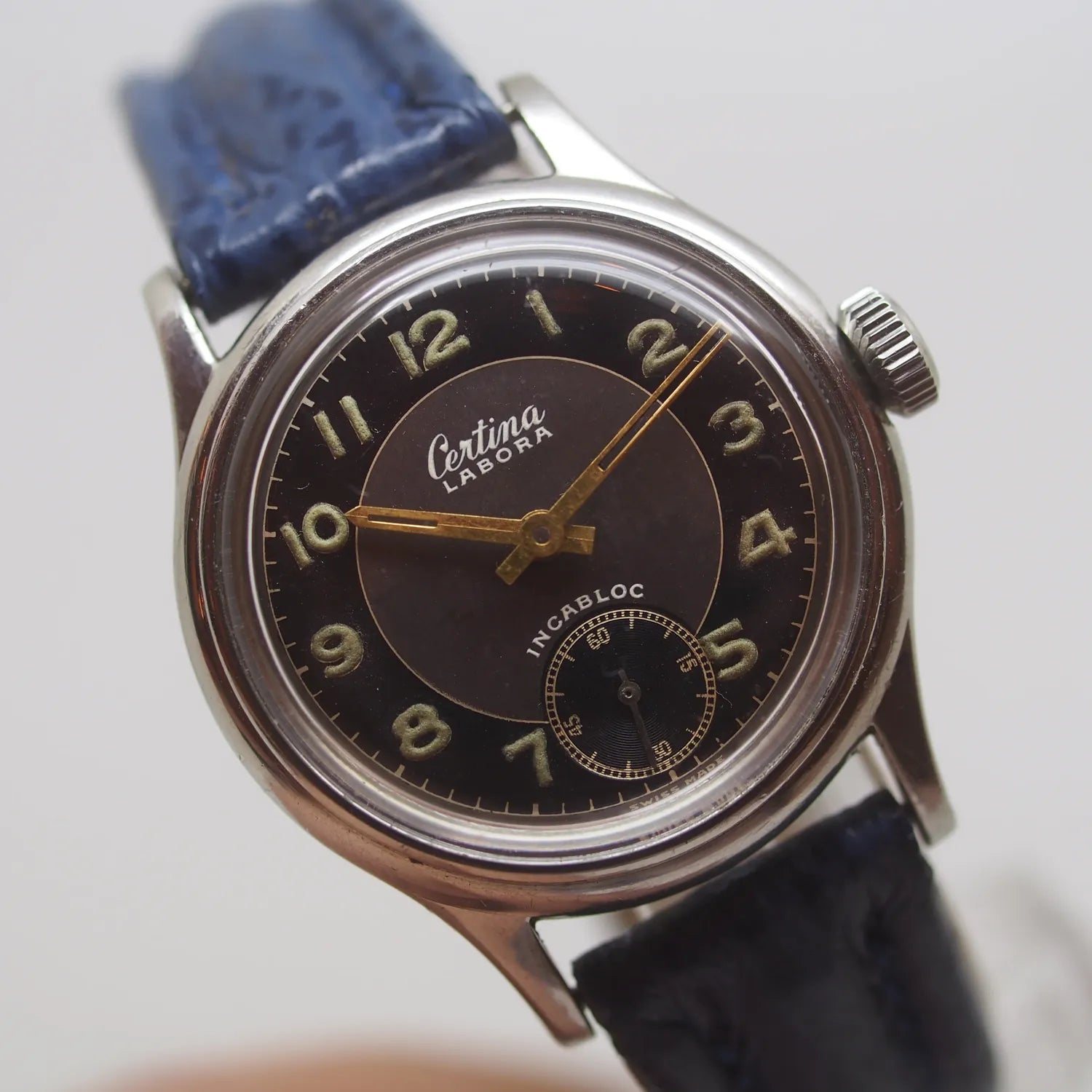
Watch design in the 1940s was influenced by the practical requirements of wartime timekeeping as well as established civilian preferences. Highly legible Arabic numerals, clearly divided minute tracks and contrasting hands appeared on many military and military-style wristwatches. Small seconds subdials remained common, while central seconds displays were also used. These features were not invented during the war, but their practical value became particularly evident in watches designed for demanding conditions.
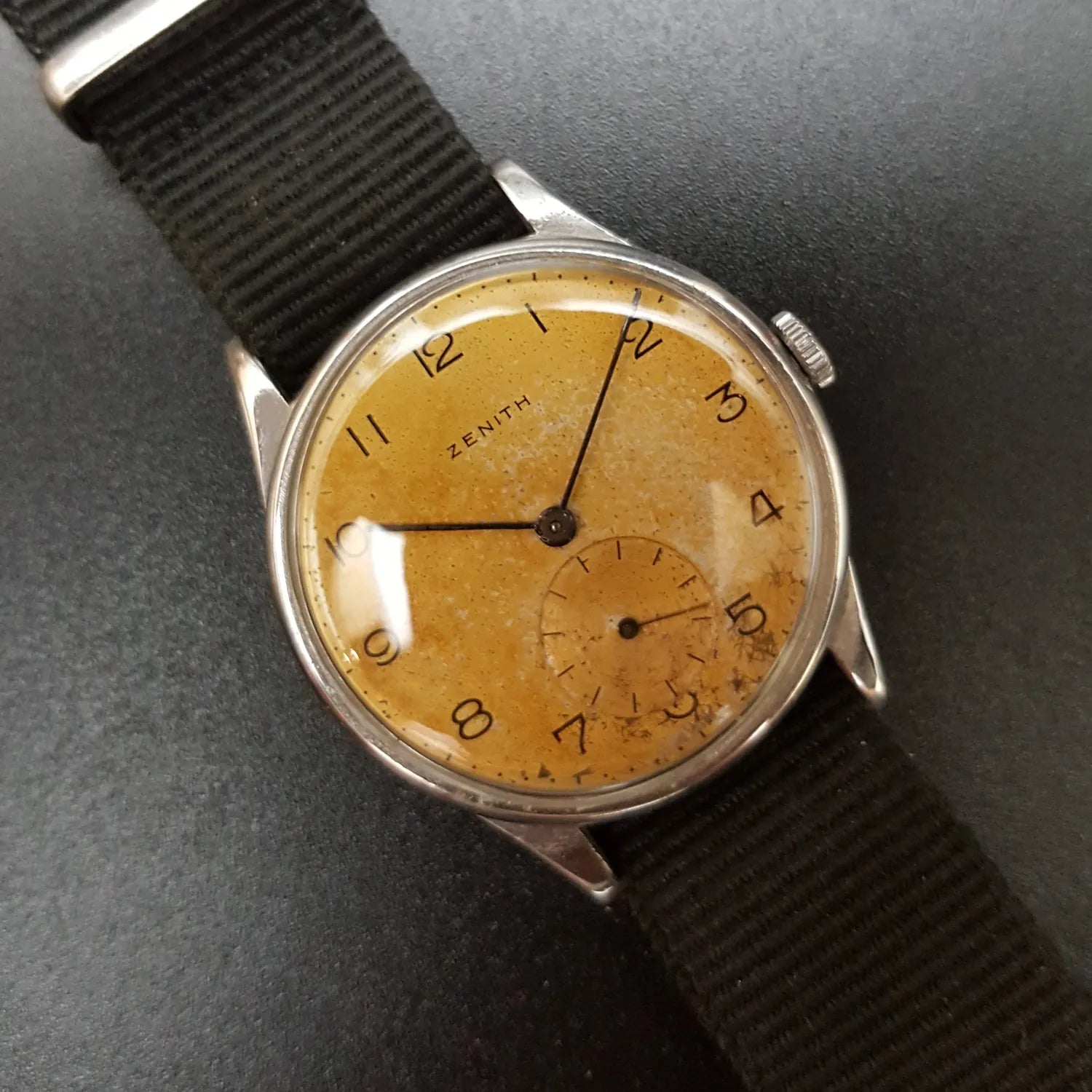
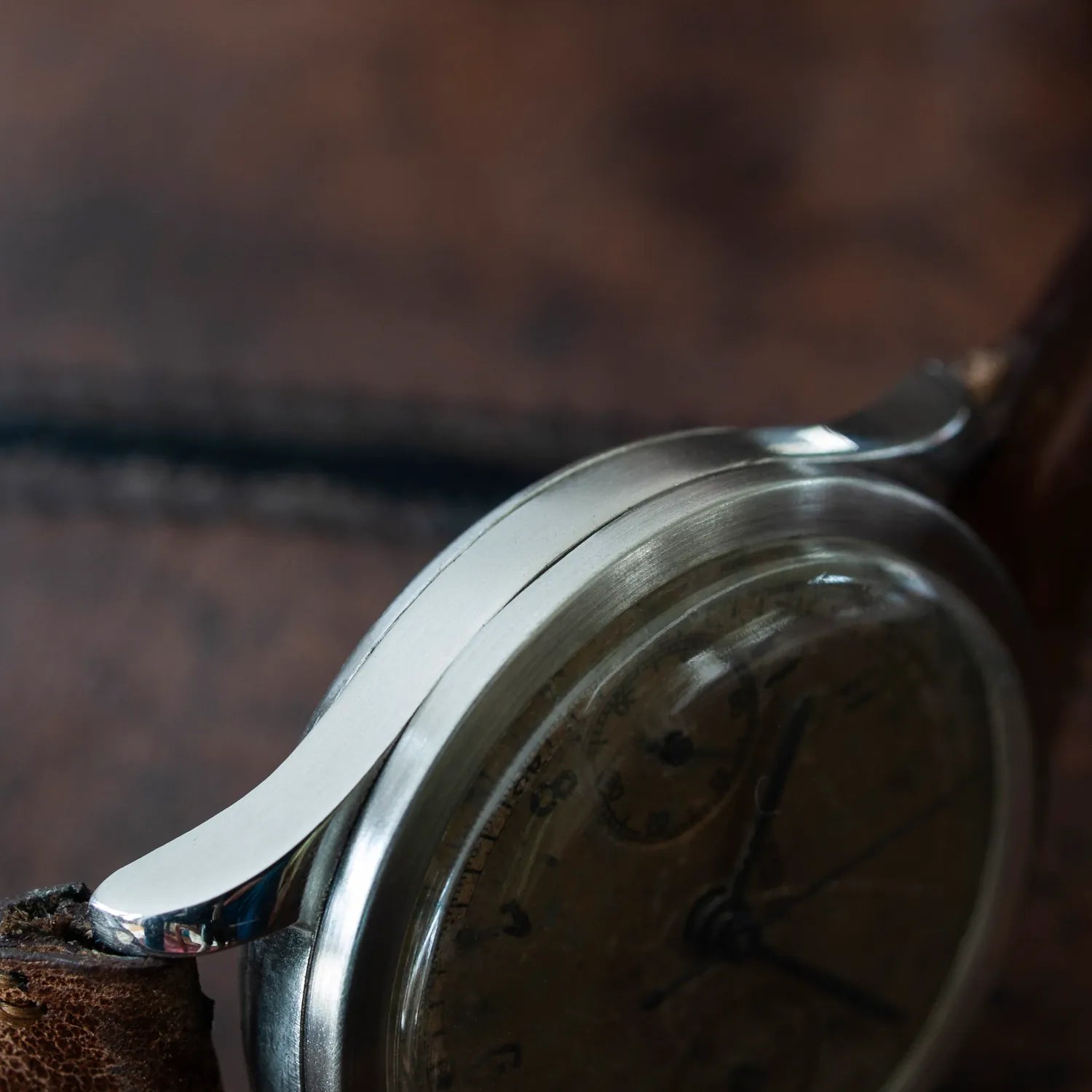
Case sizes were generally modest by modern standards. Men's wristwatches around 30–35 mm were common, although dimensions varied considerably by manufacturer and purpose. Stainless steel, nickel-plated and chrome-plated cases can all be found, making case construction and surviving condition important considerations for collectors. Some designs emphasized restraint and elegance, while others adopted a more functional, instrument-like appearance.
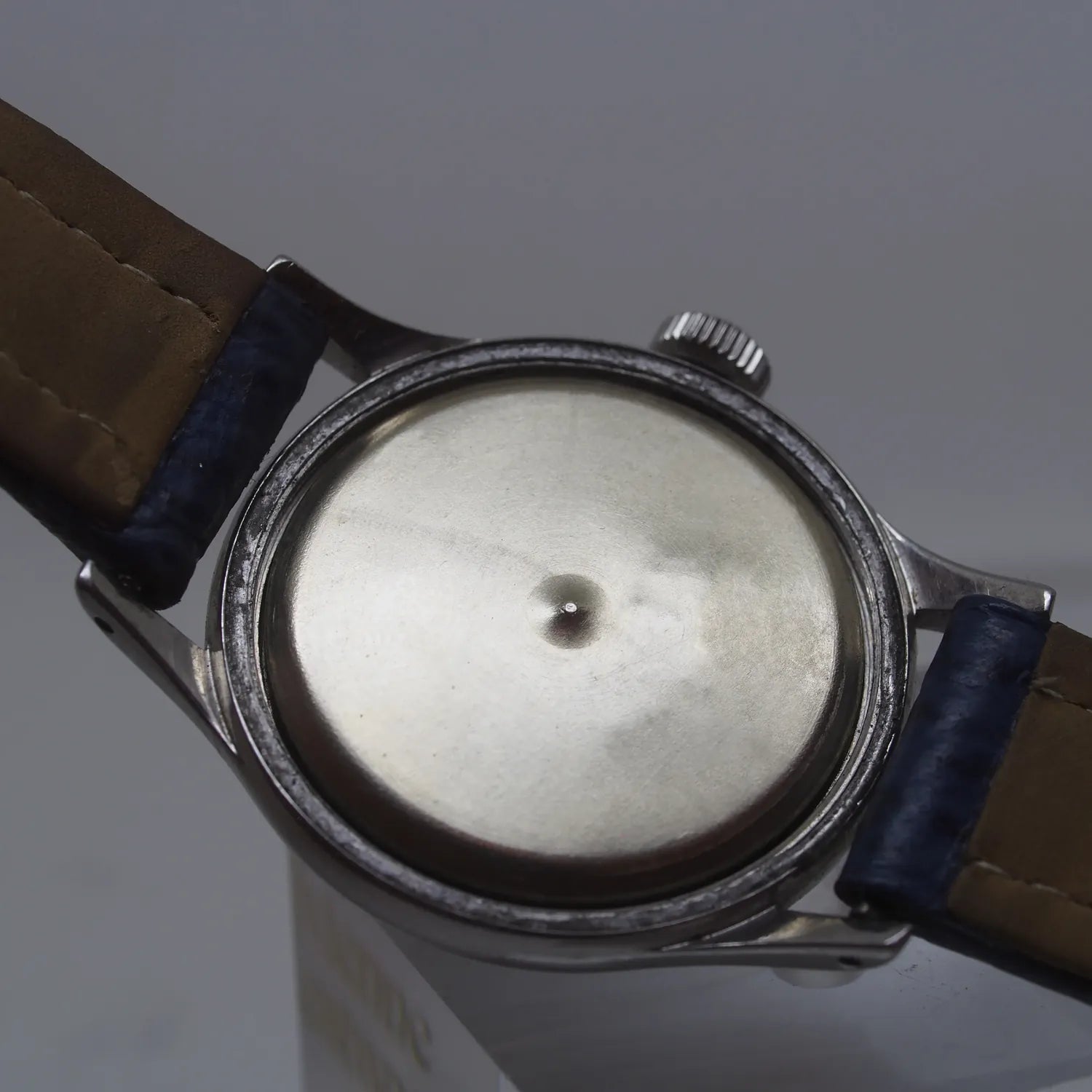
A 1940s watch with a black dial and luminous numerals may resemble military equipment, but appearance alone does not establish military service. Genuine issued watches require supporting evidence, such as appropriate caseback markings, documented specifications or reliable provenance. Collectors should distinguish between military-issued wristwatches and civilian watches inspired by the same design principles.
For a broader view of the transition into postwar watchmaking, explore our 1950s vintage watches.
Buying a 1940s Mechanical Watch: Movements, Condition and Originality
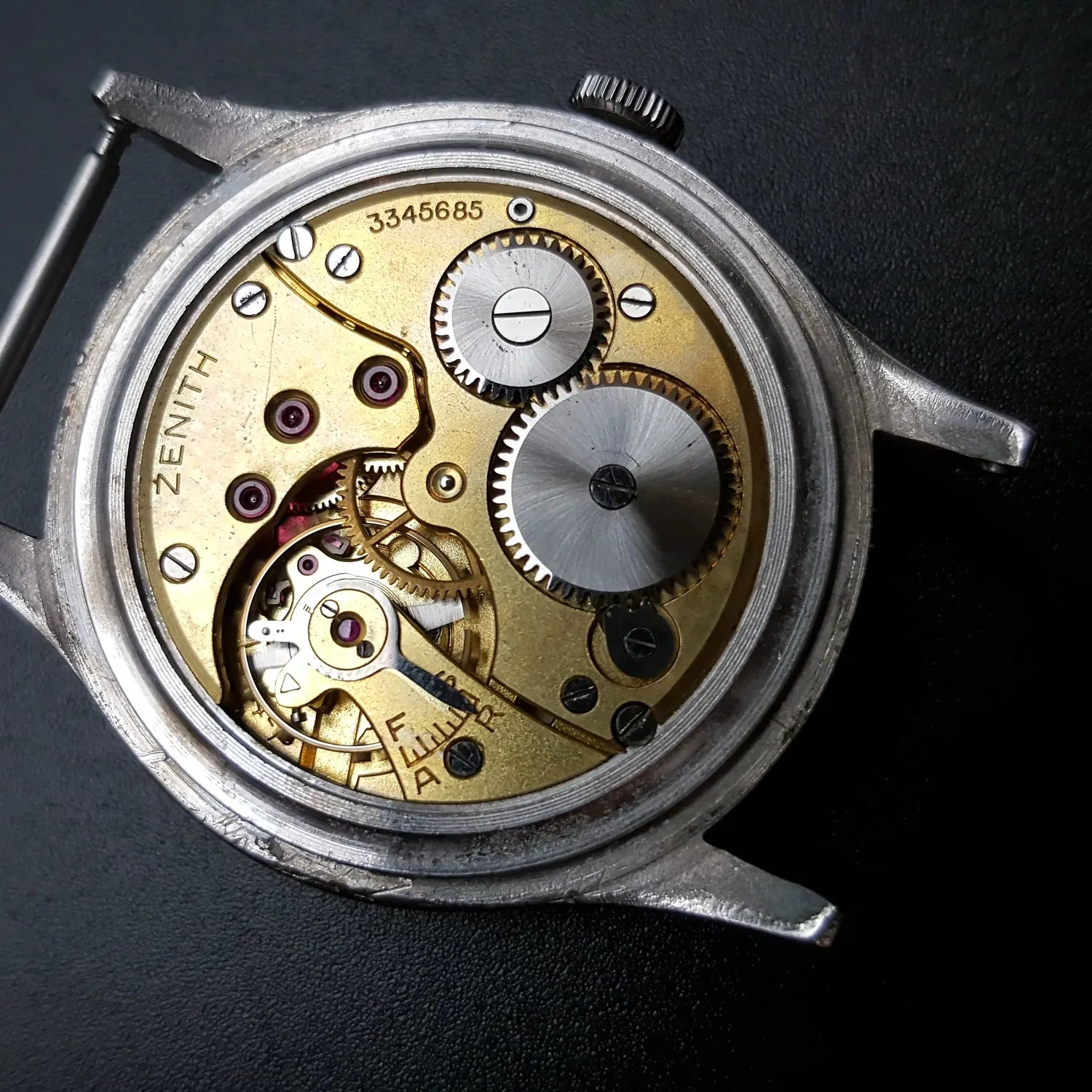
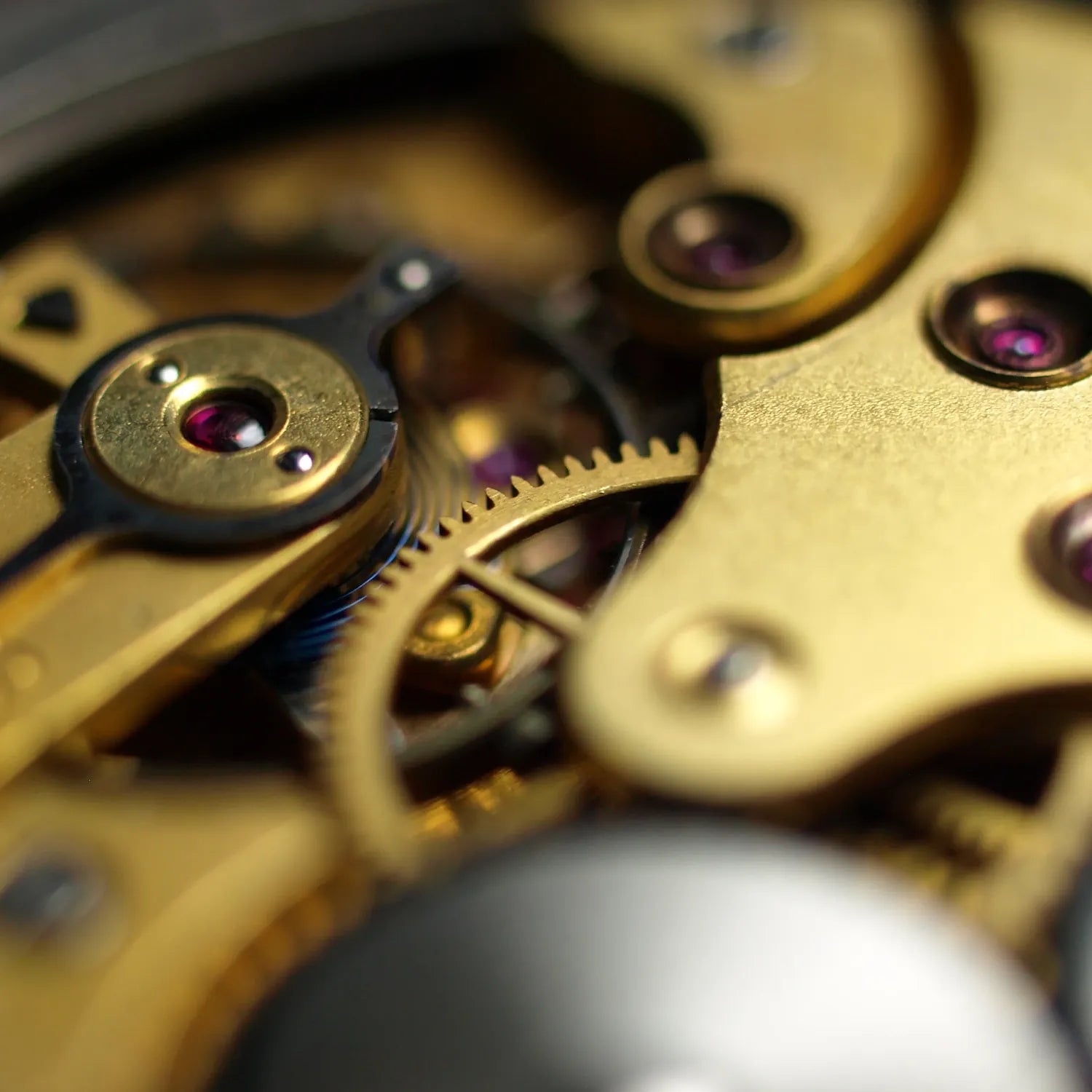
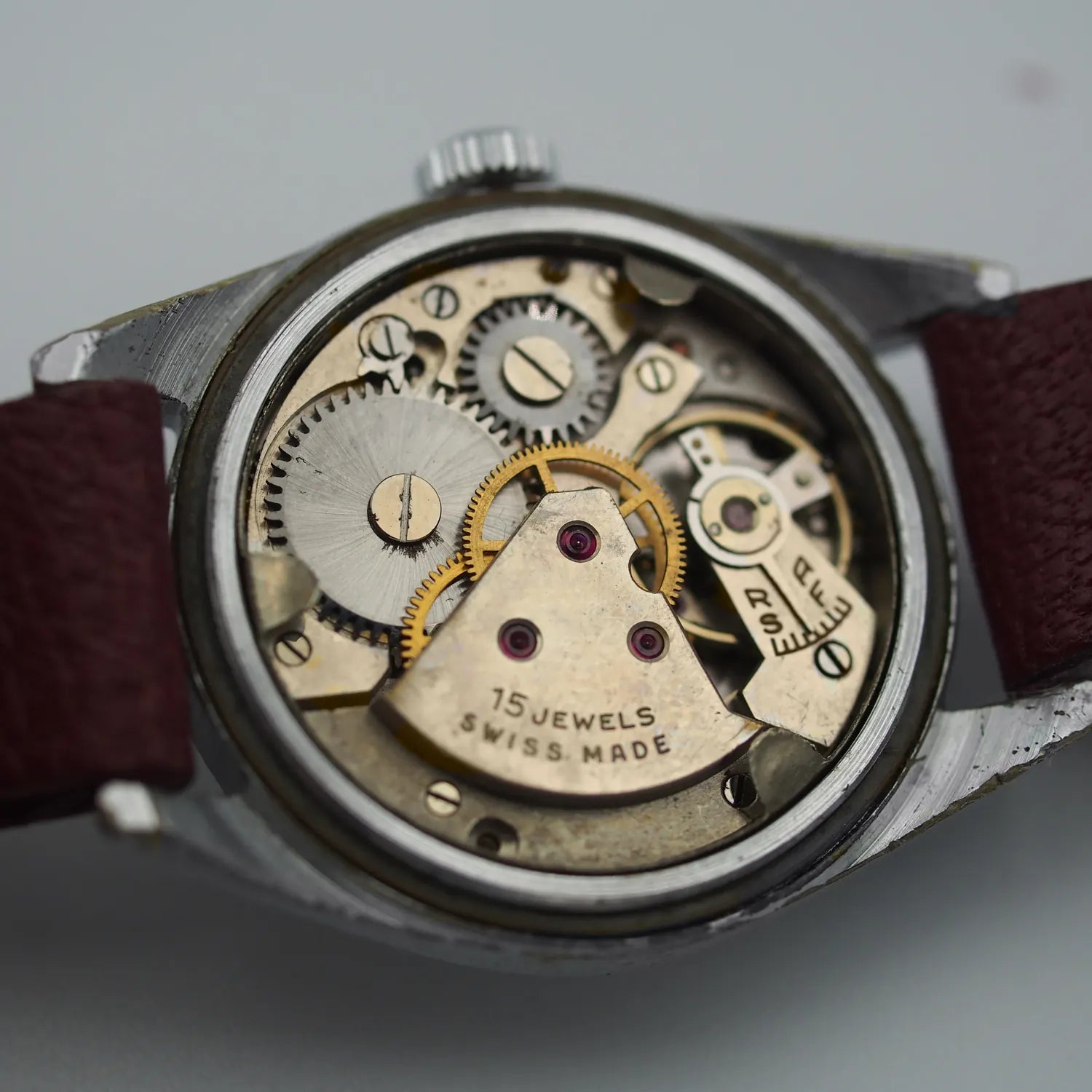
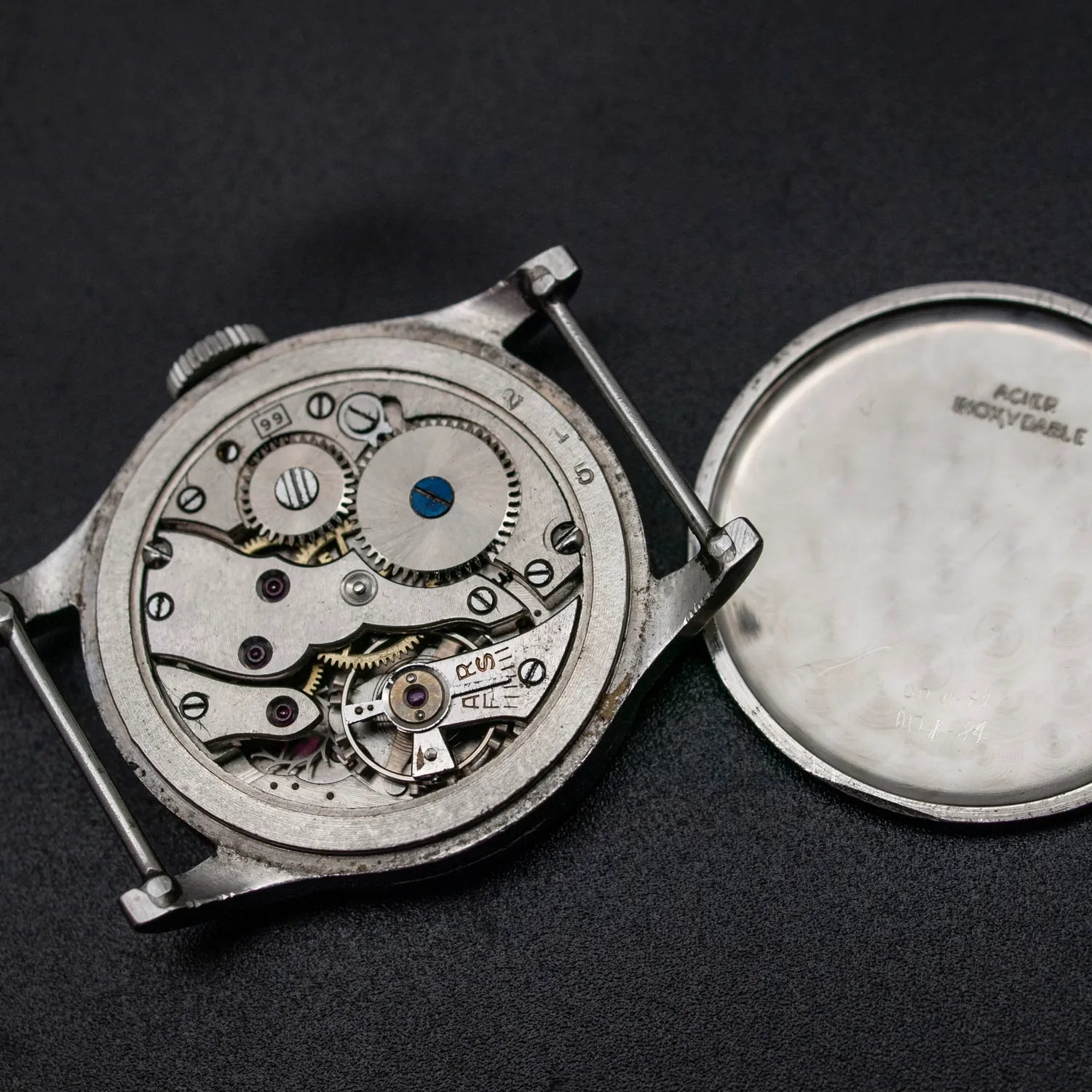
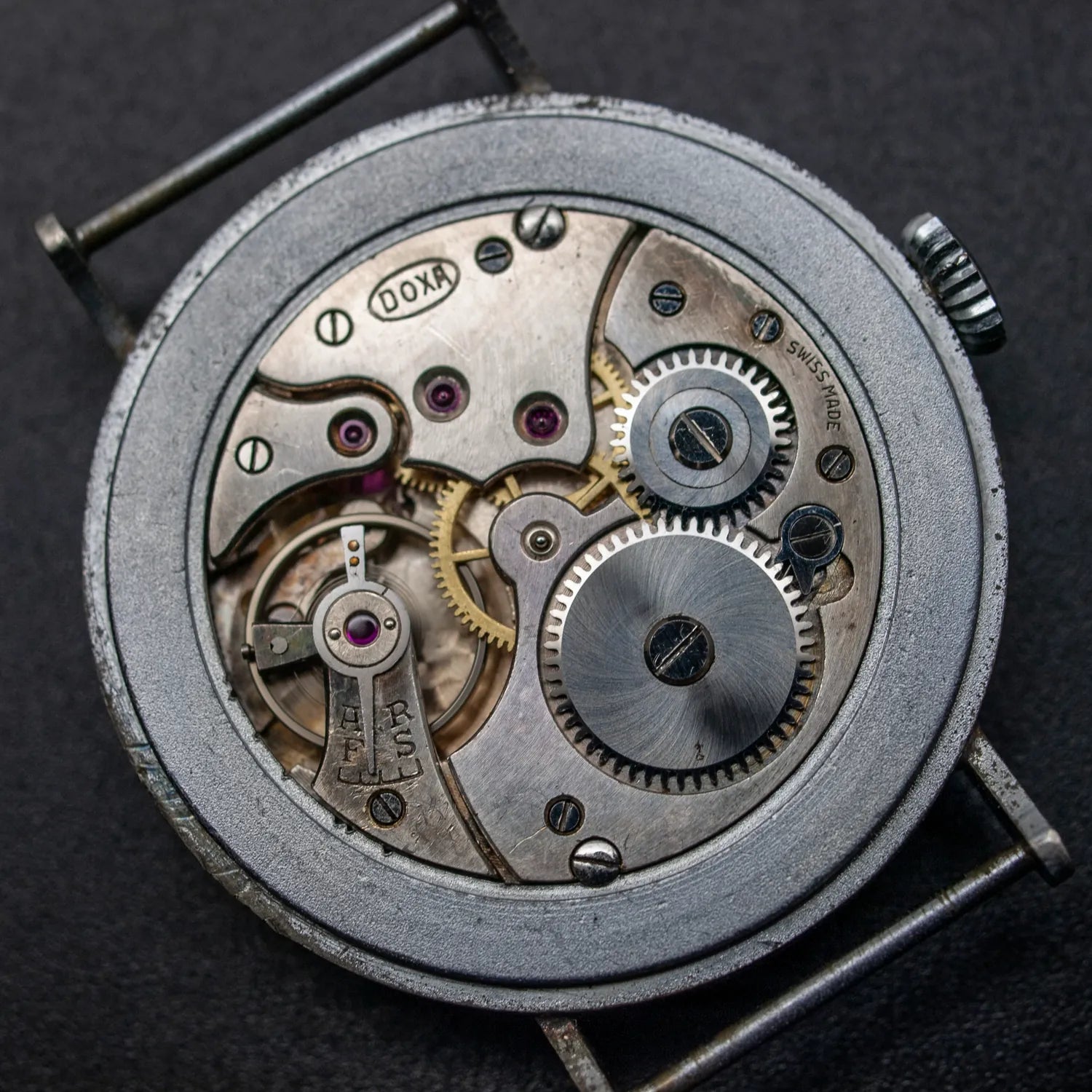
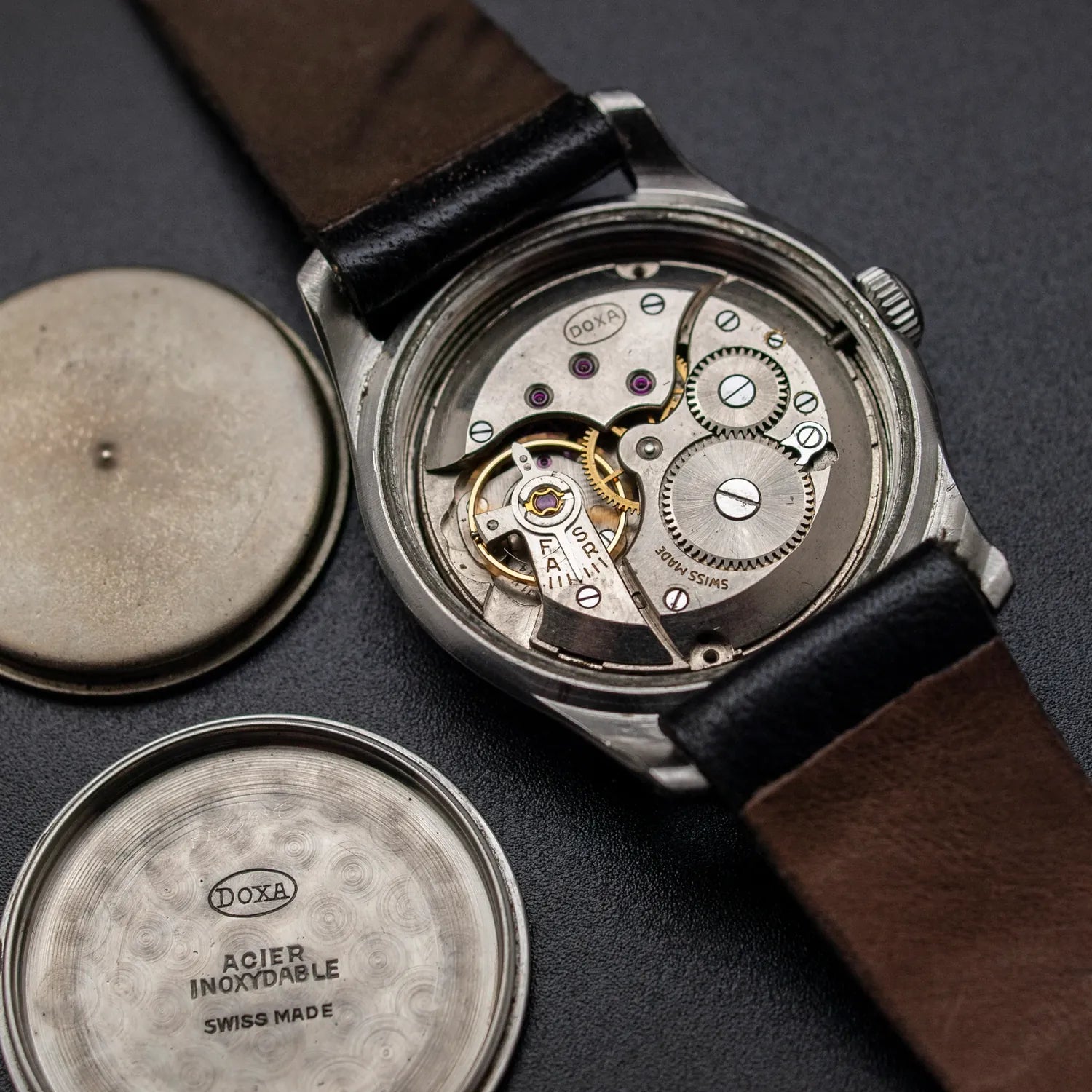
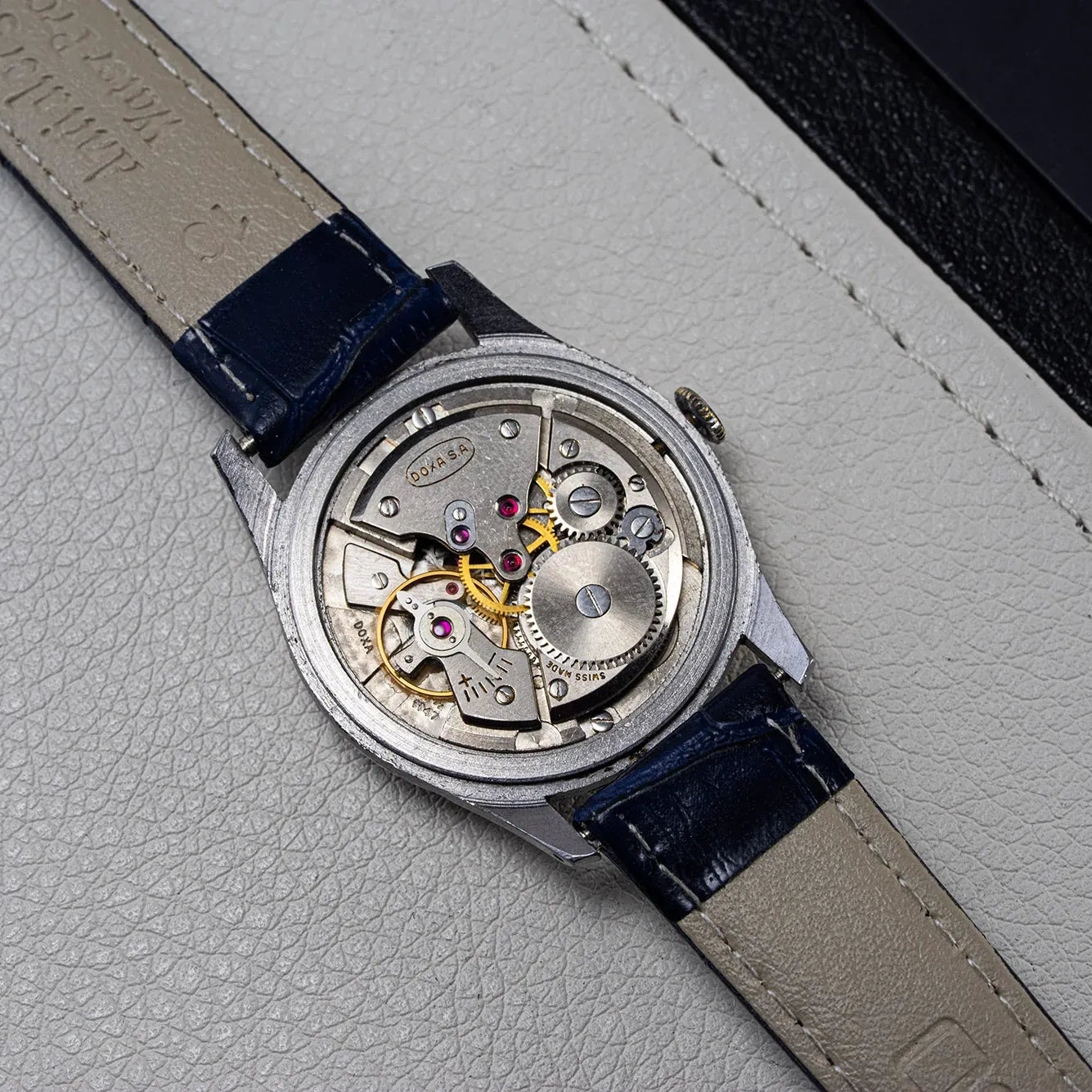
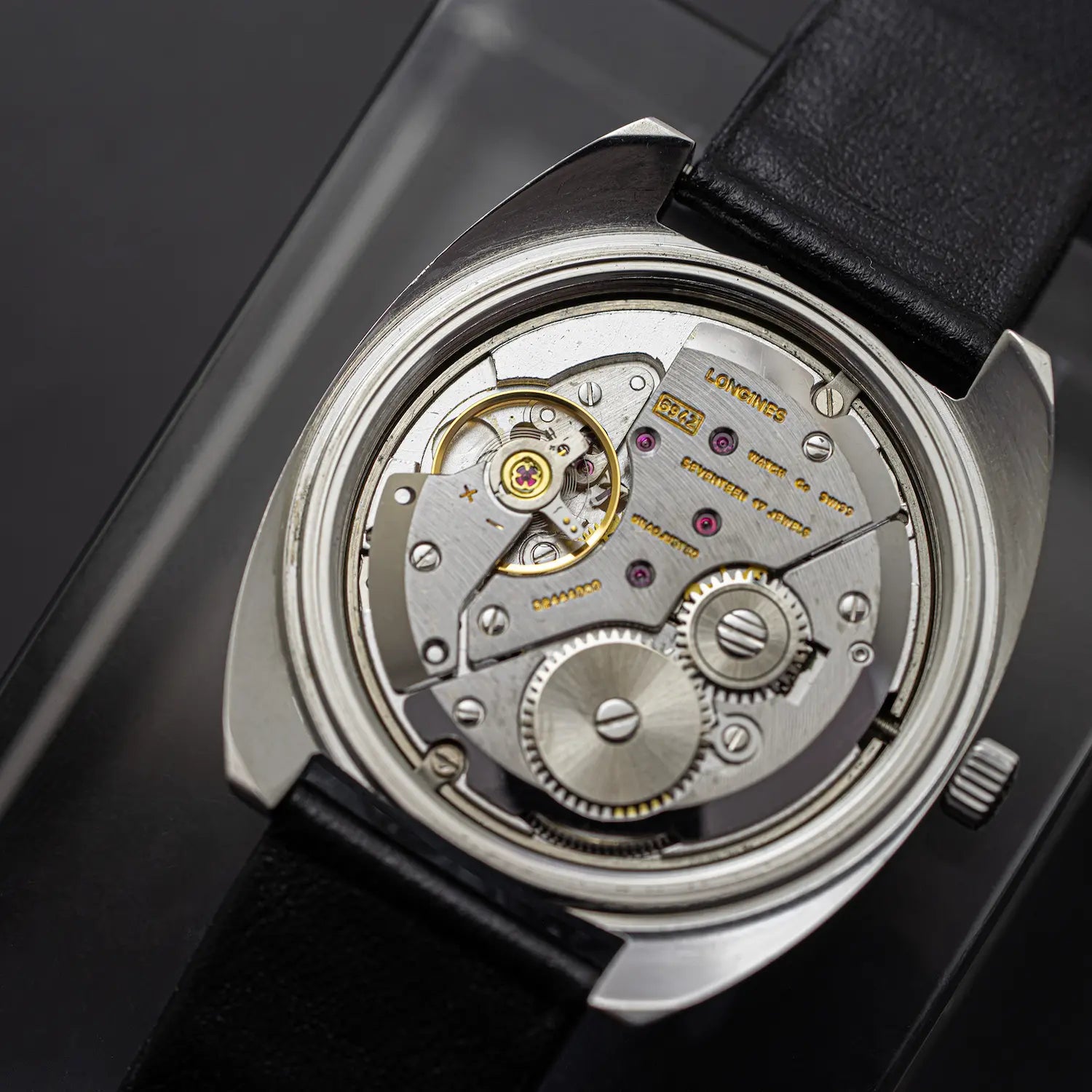
Most surviving wristwatches from the 1940s use mechanical movements, with manual winding especially prevalent. Automatic watches were already established before this decade, but hand-wound calibers remained widely used in both civilian and military-style designs. Many movements were built around straightforward mechanical layouts that could be maintained by a skilled watchmaker, although replacement parts can now be difficult to obtain.
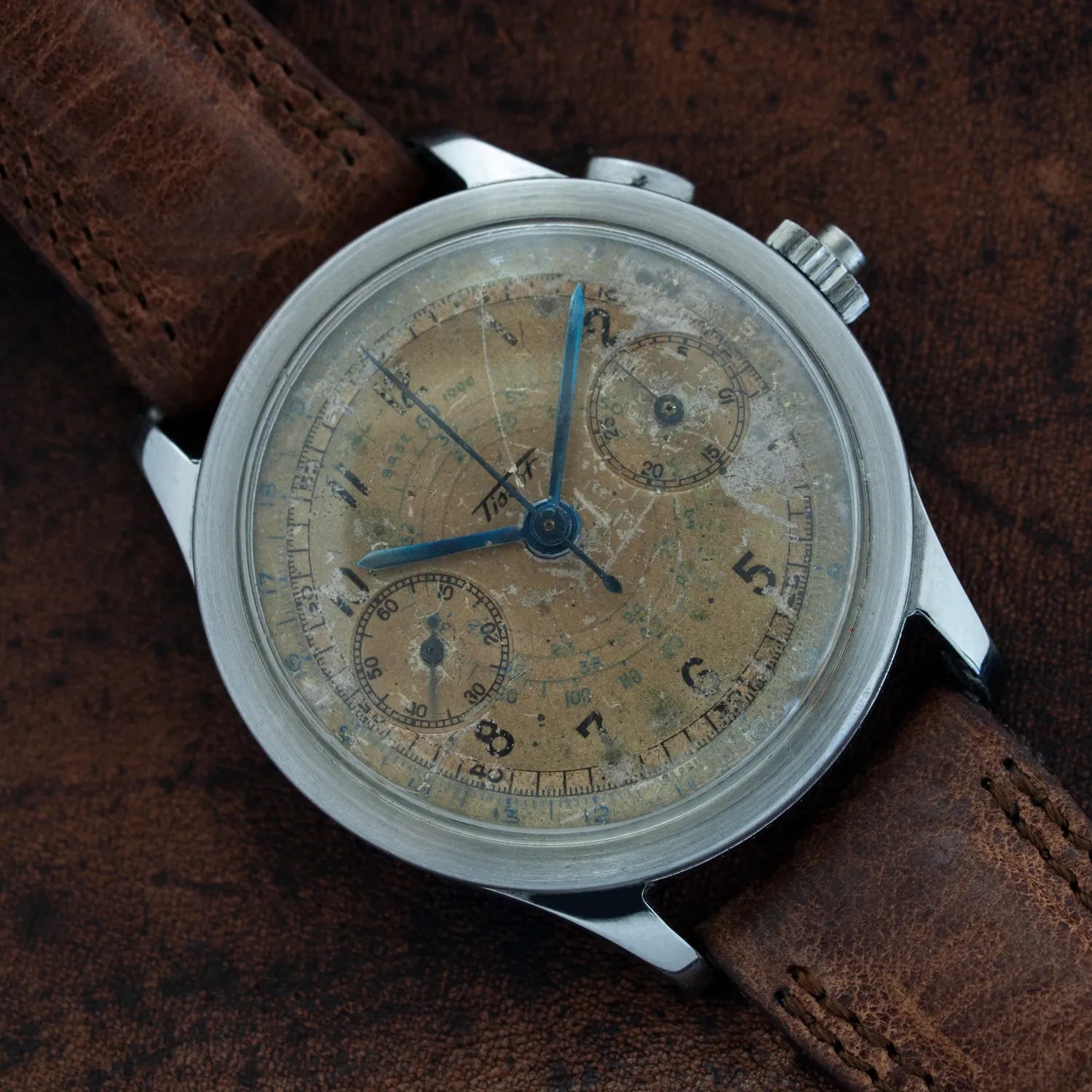
When evaluating a watch from this period, the condition of the movement matters as much as its appearance. Wear in the winding mechanism, balance pivots, bearings and escapement can affect performance. Hardened lubricants, corrosion and previous repairs may create additional challenges. A movement that runs is not necessarily one that has been properly serviced, and the ability to restore reliable operation depends on the condition of its components.
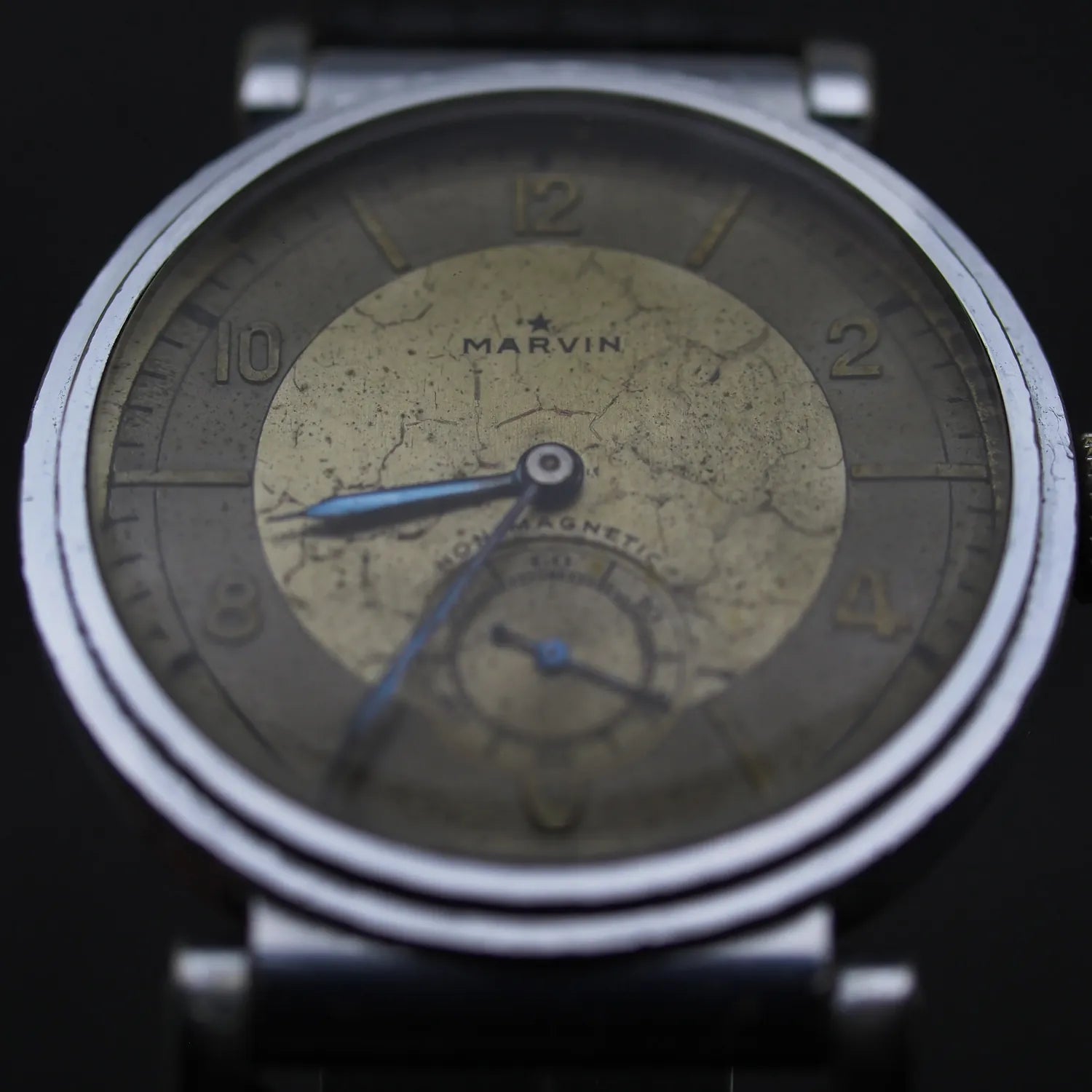
Originality requires equally careful assessment. A naturally aged dial can be desirable, but discoloration alone does not prove authenticity. Refinished dials, replacement hands, modified cases and incorrectly matched components may affect historical accuracy and collector value. Some watches also contain early luminous materials, potentially including radium, which should not be disturbed without appropriate precautions.
For these reasons, condition photographs, movement identification, accurate measurements and documented servicing are particularly valuable when buying an early vintage wristwatch. Vintage Watch Studio professionally services its mechanical watches and photographs each individual piece, allowing collectors to examine the actual watch offered rather than relying on representative images.
Explore our manual winding vintage watches to discover more traditional mechanical timepieces.


1940s Vintage Watches FAQ
Were all 1940s wristwatches military watches?
No. Although World War II strongly influenced watch design, many wristwatches produced during the 1940s were intended for civilian use. Military-style features such as luminous numerals, black dials and clearly marked minute tracks do not automatically indicate military issue. Confirming military provenance generally requires appropriate markings, documentation or reliable historical evidence.
Are watches from the 1940s suitable for everyday wear?
Some serviced 1940s mechanical watches can be worn regularly with appropriate care. However, their age, delicate components and limited protection against moisture require more attention than a modern wristwatch. Avoid water exposure, strong impacts and unnecessary handling of fragile original parts. Even watches originally marketed as water-resistant should not be assumed to retain that protection today.
How can I tell whether a 1940s watch is original?
Examine the dial printing, hands, case construction, movement markings and overall consistency with known examples from the period. Original components may show age-related wear, but patina alone cannot establish authenticity. Refinished dials and replacement parts are common in older watches. Detailed photographs and a clear condition description are essential when assessing originality.
Why are 1940s vintage watches often smaller than modern watches?
Wristwatch proportions and fashion standards were different during the 1940s. Many men's watches measured approximately 30–35 mm in diameter, although smaller and larger examples existed. These dimensions reflected contemporary preferences, available movements and case designs. Collectors who appreciate understated proportions often find 1940s watches particularly appealing.
Recognized & Reliable Worldwide
Trusted Partners in Security, Shipping, and Service



Store
Vintage Watch Studio
- Drinke Pavlovic 3, 11130 Belgrade
- Visiting Hours: Monday – Friday: 10:00 – 17:00 CET
- +381 61 653 4298
- vintagewatchstudio@gmail.com
- Online Chat 24/7