



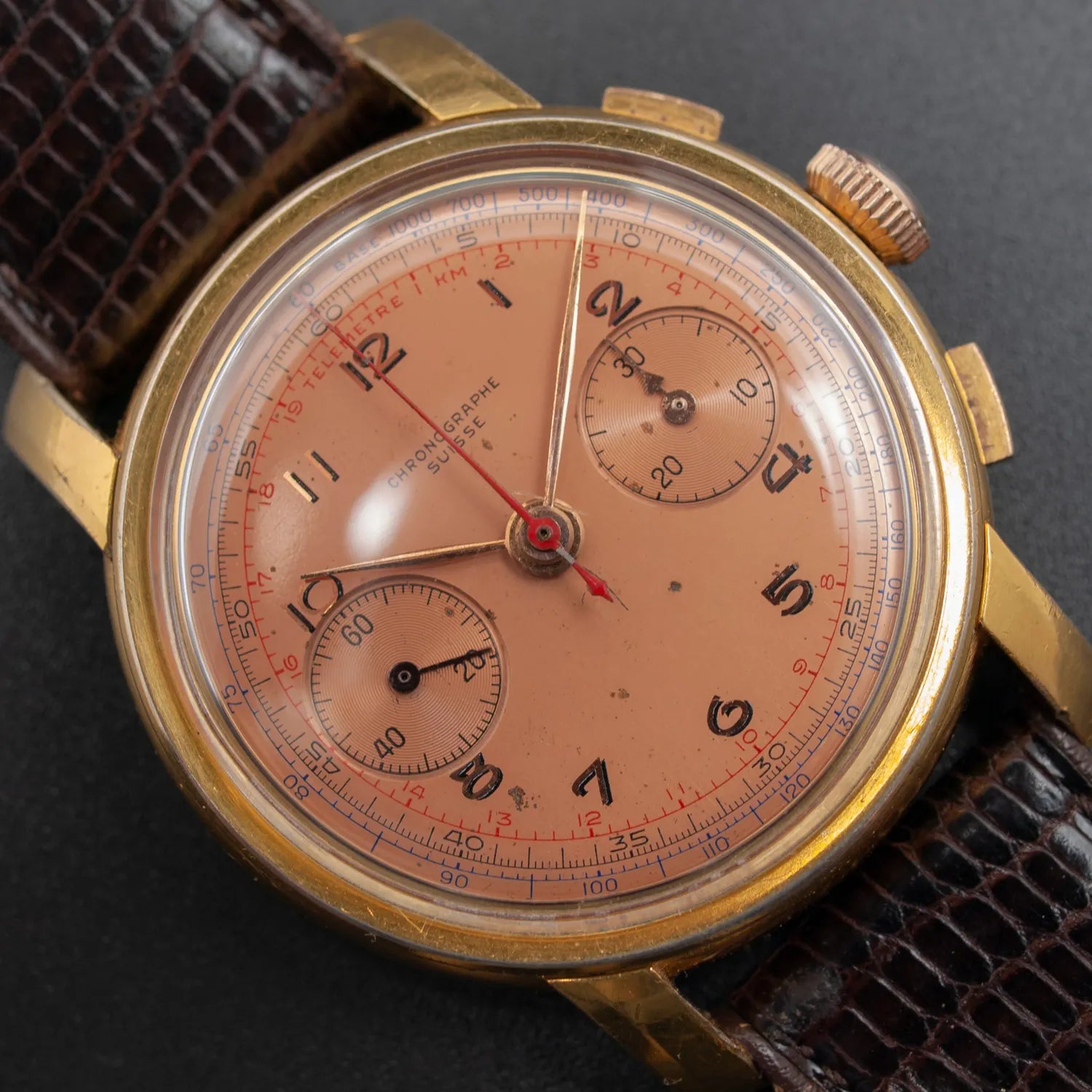
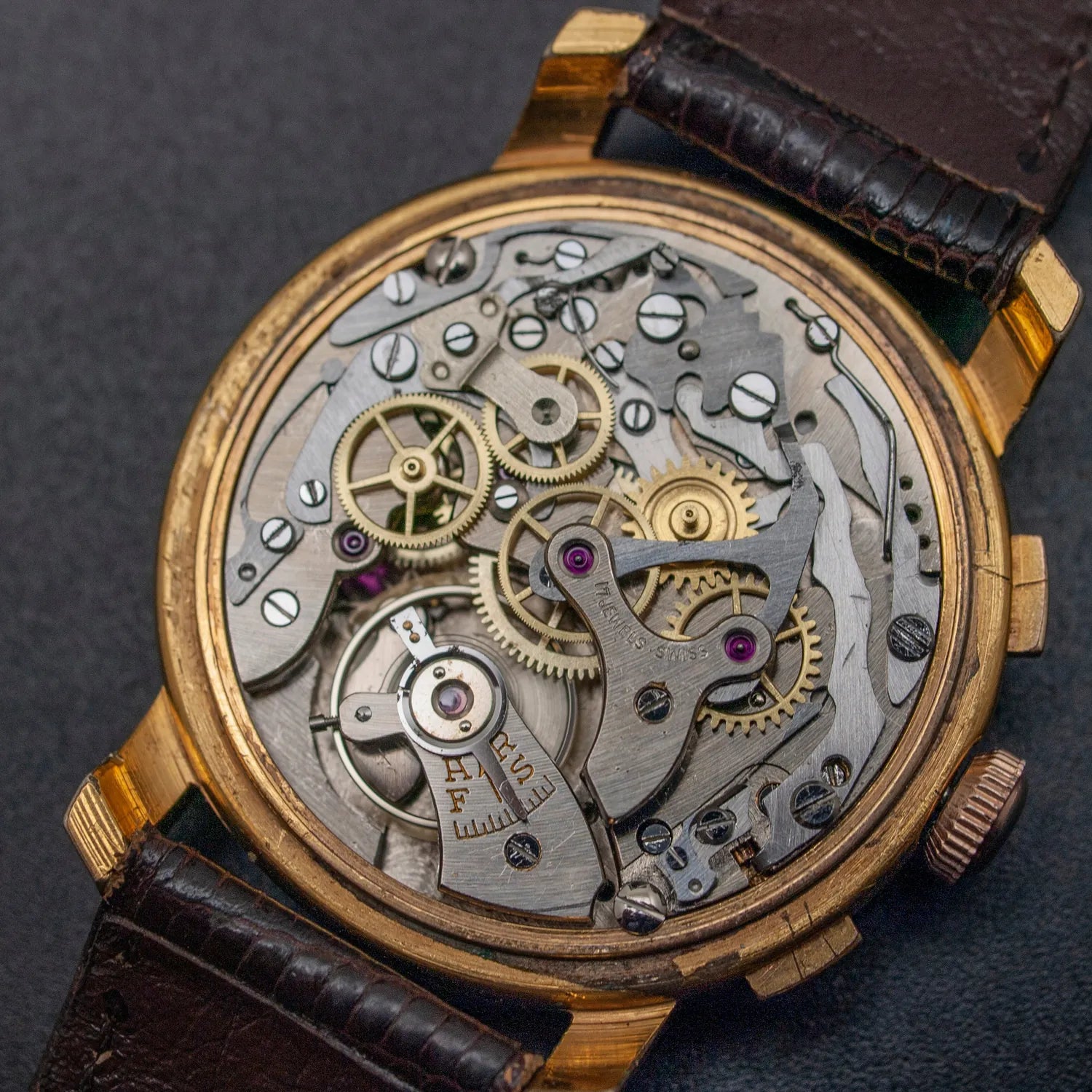
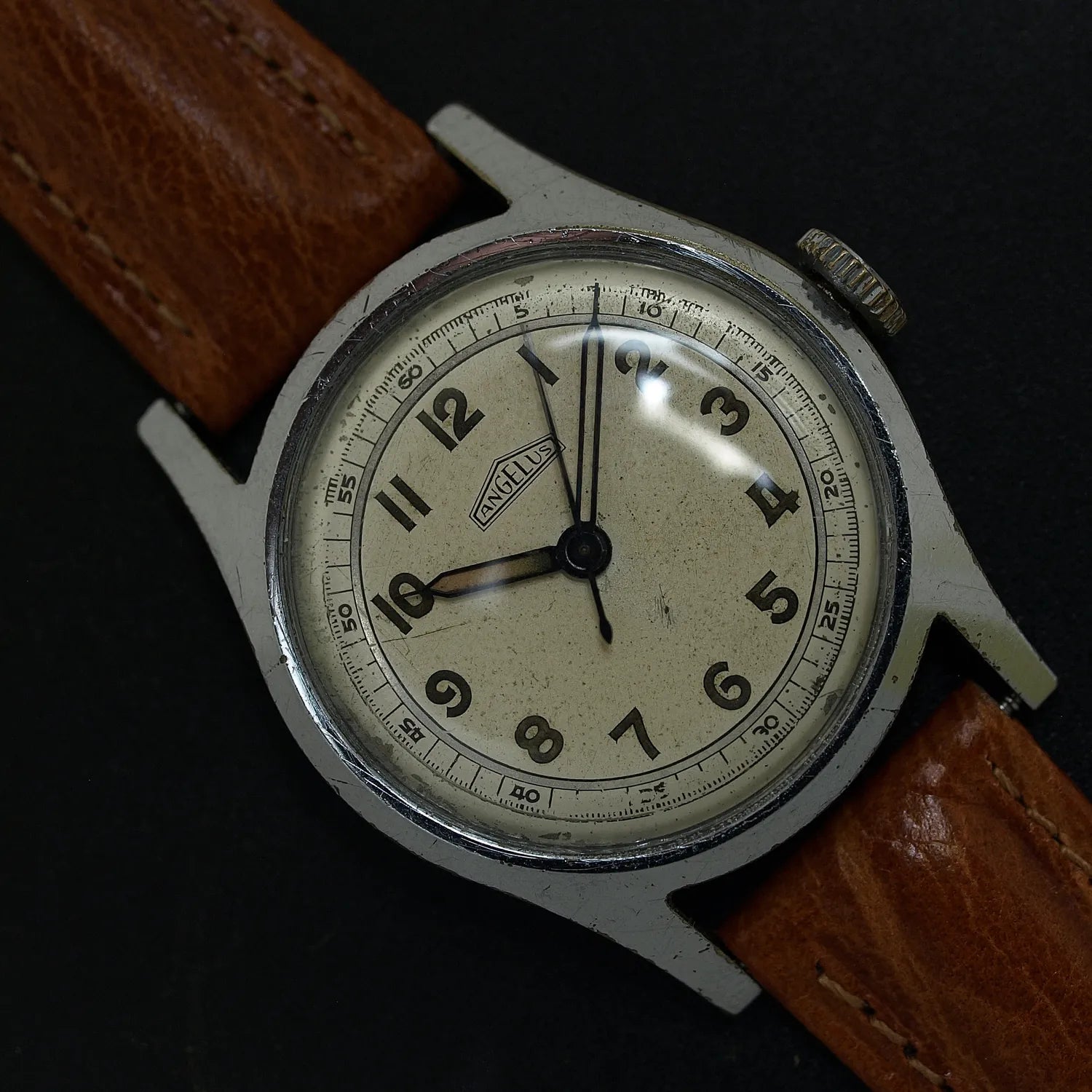
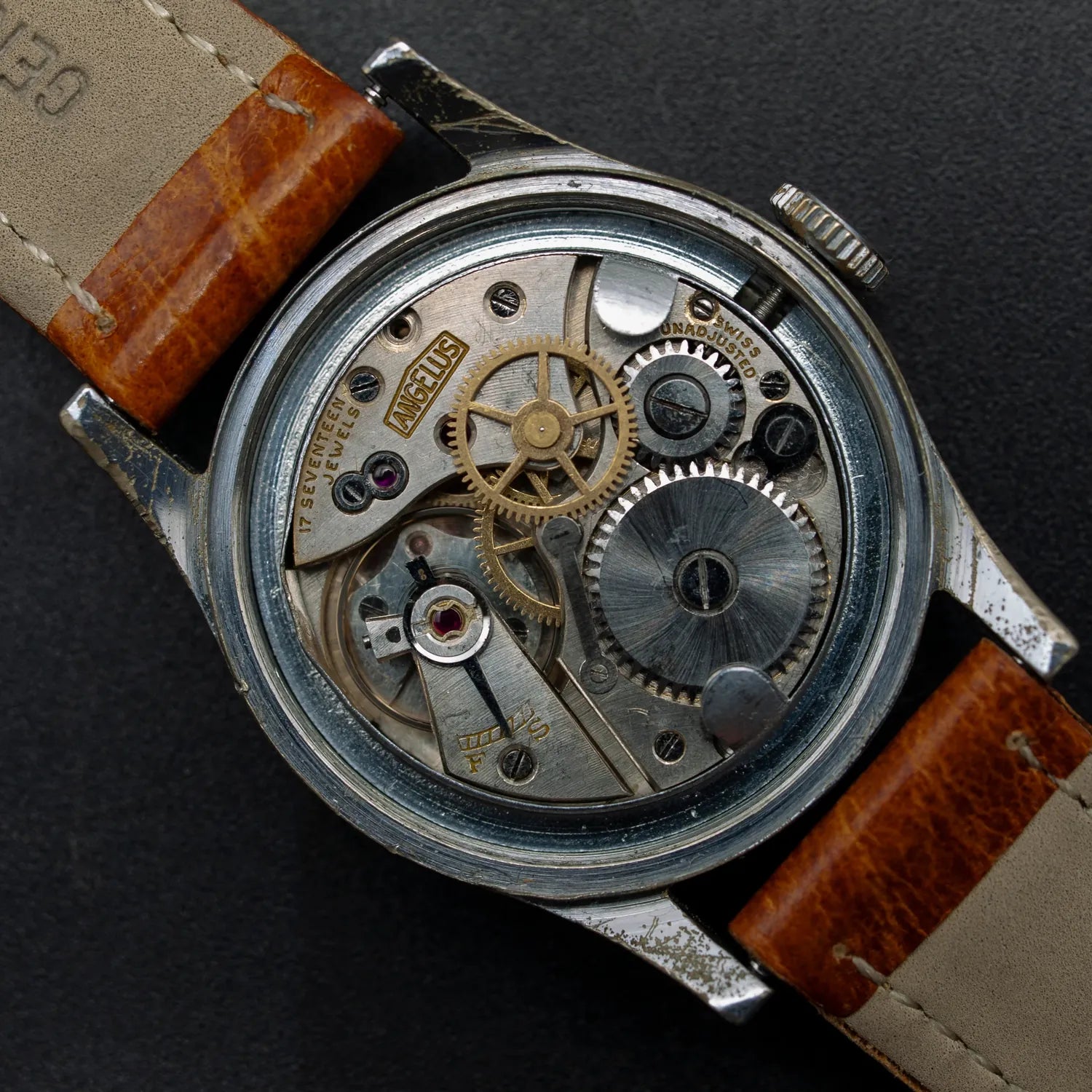
Didn’t find the reference you had in mind? Explore our vintage watches — fully serviced with a 12-month warranty.
EXPLORE MID-CENTURY WATCHMAKING
Discover Related Vintage Watch Collections
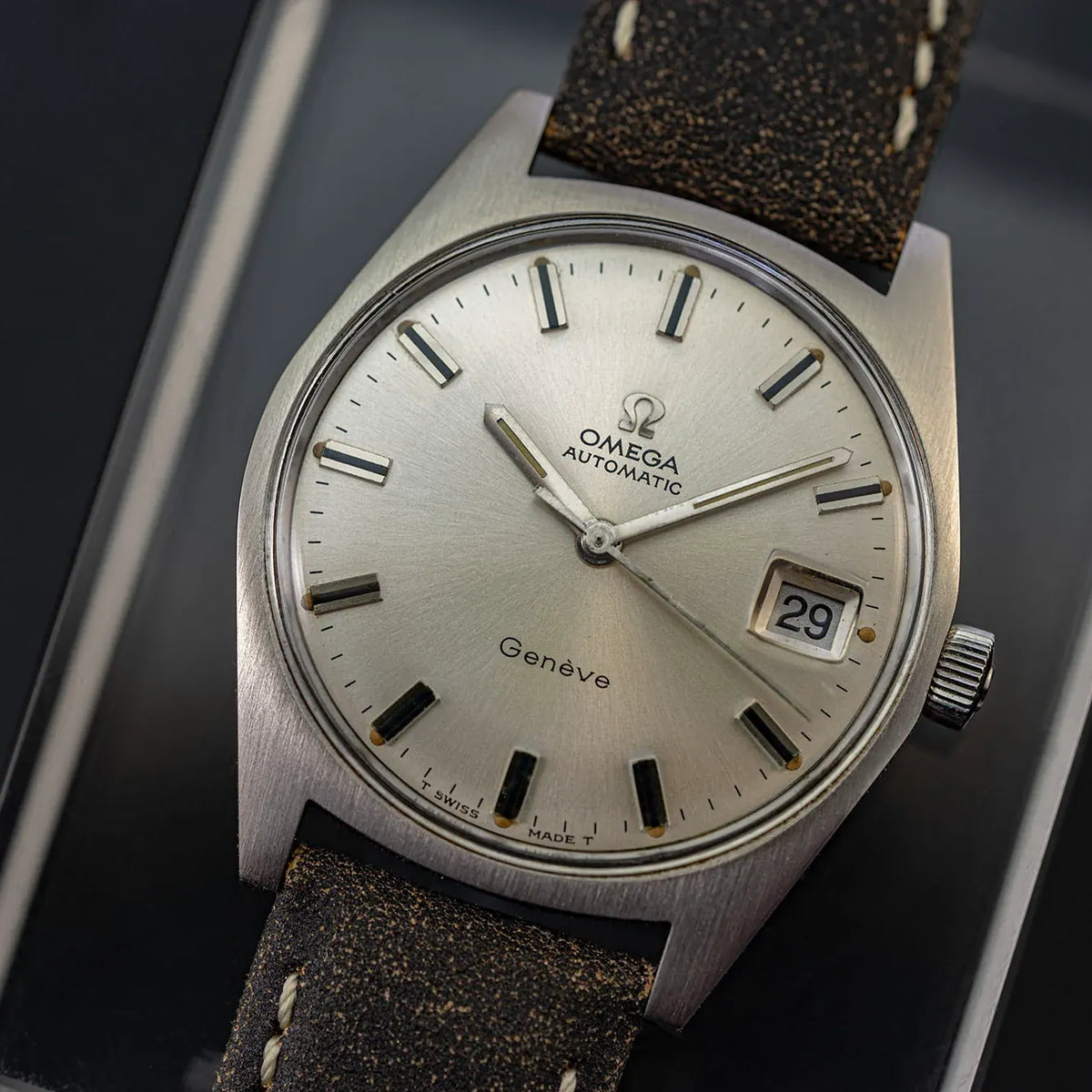
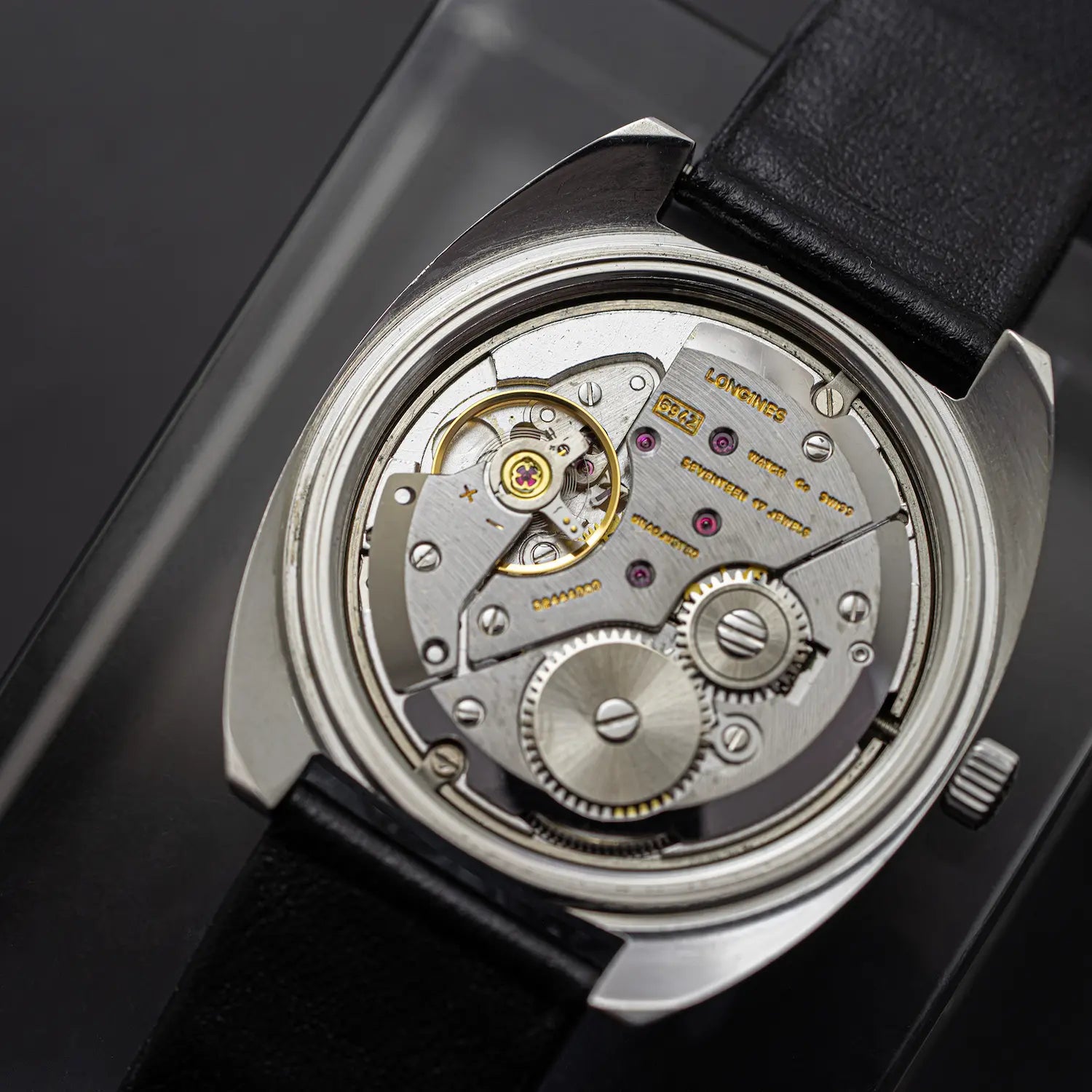
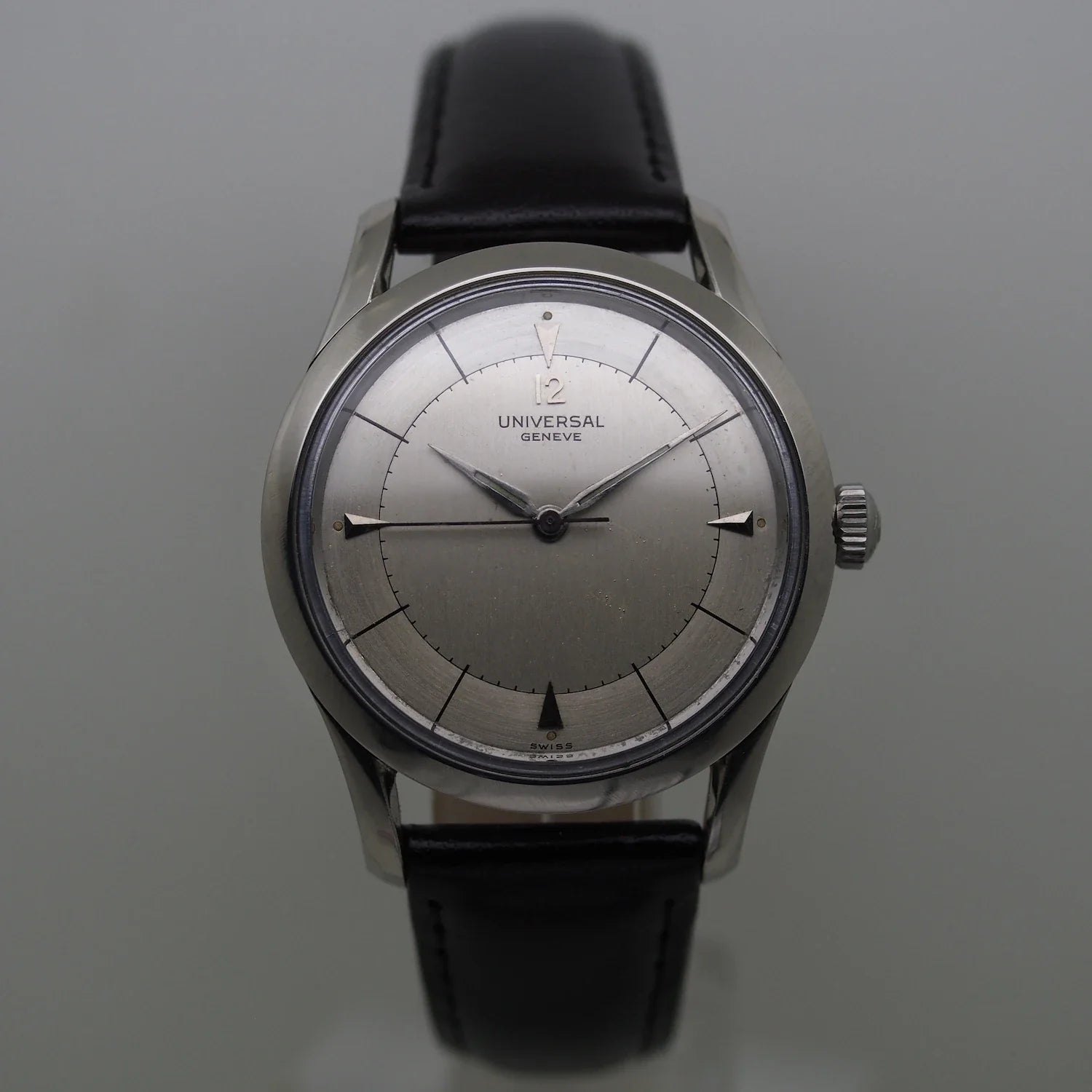


1950s Watch Design: Smaller Cases, Distinctive Details
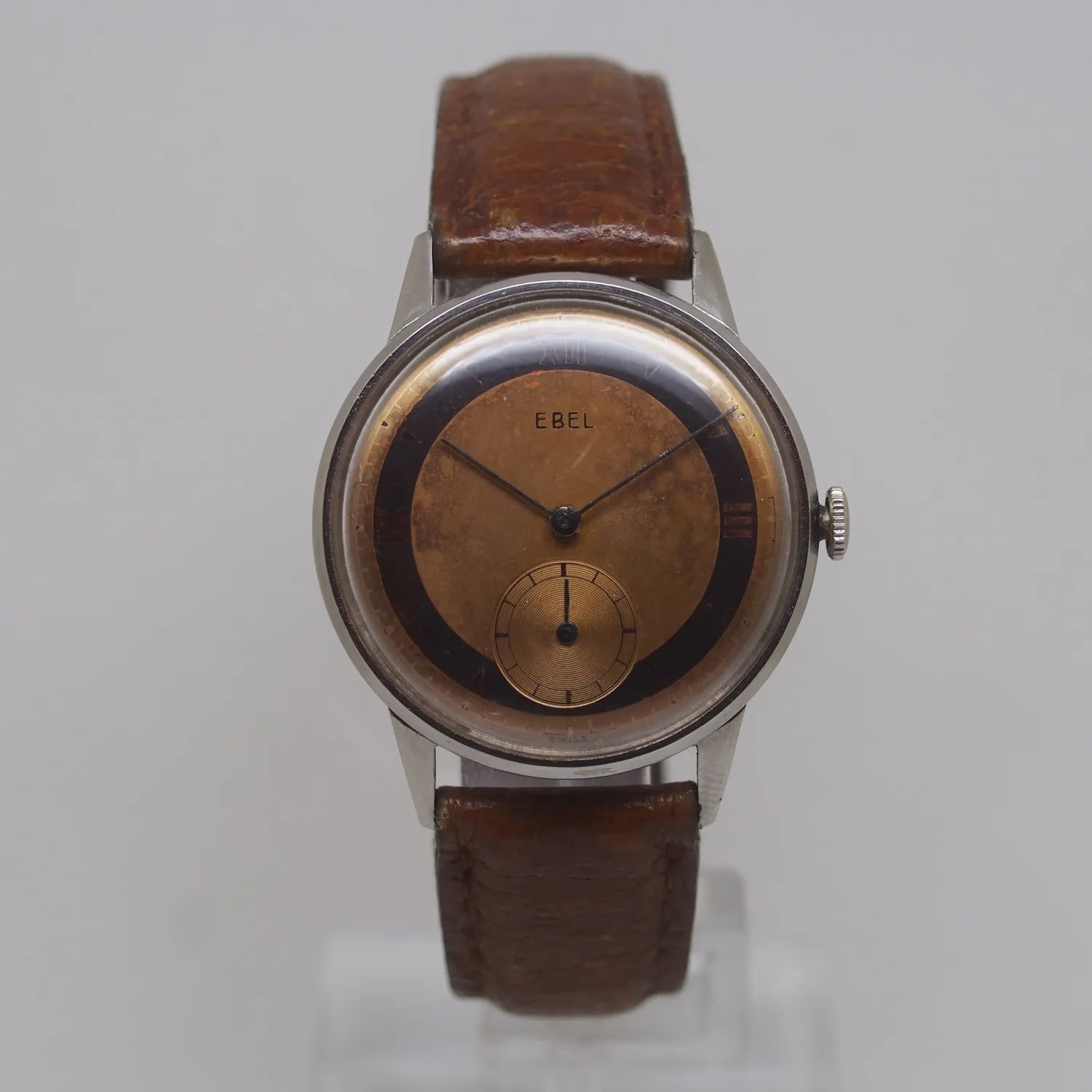
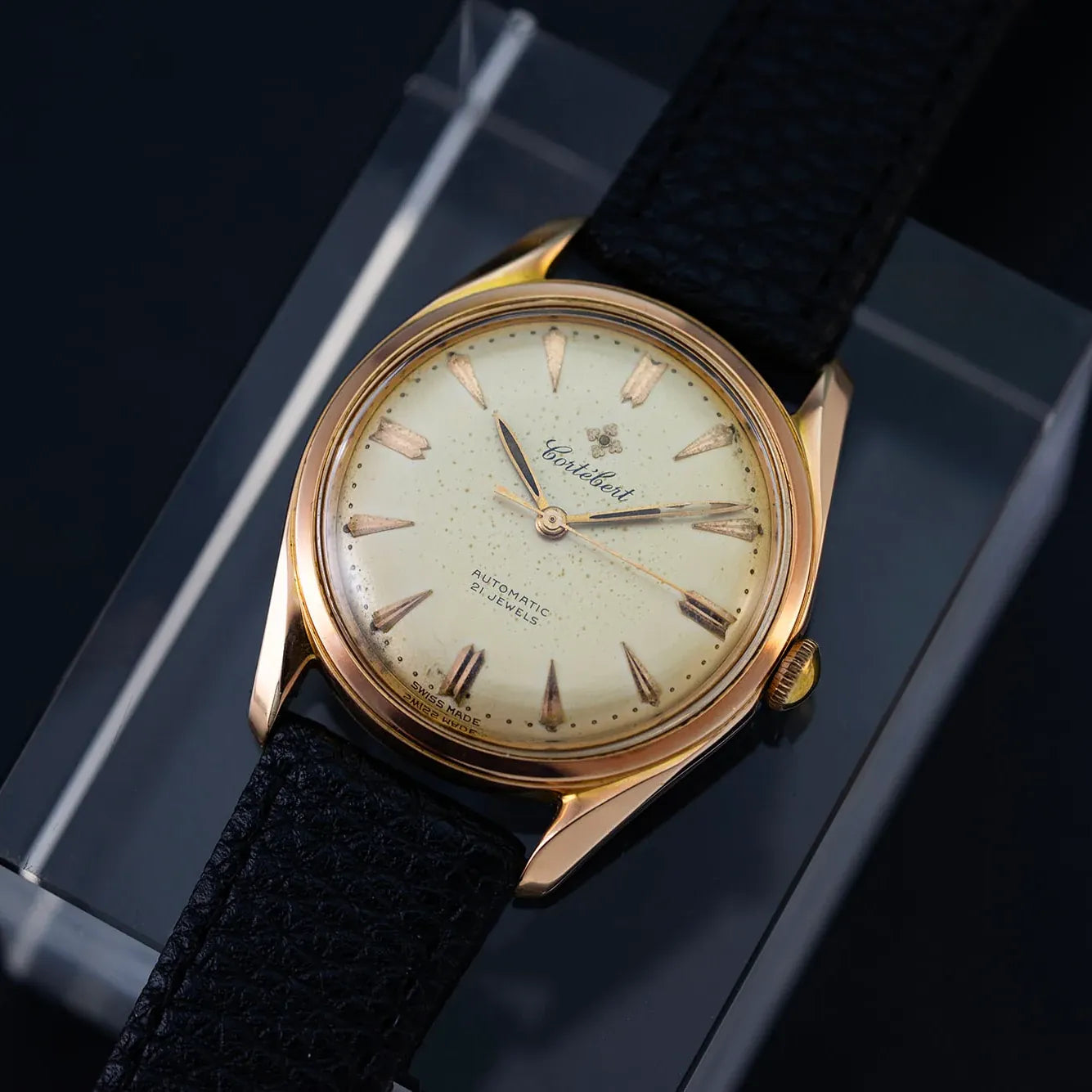
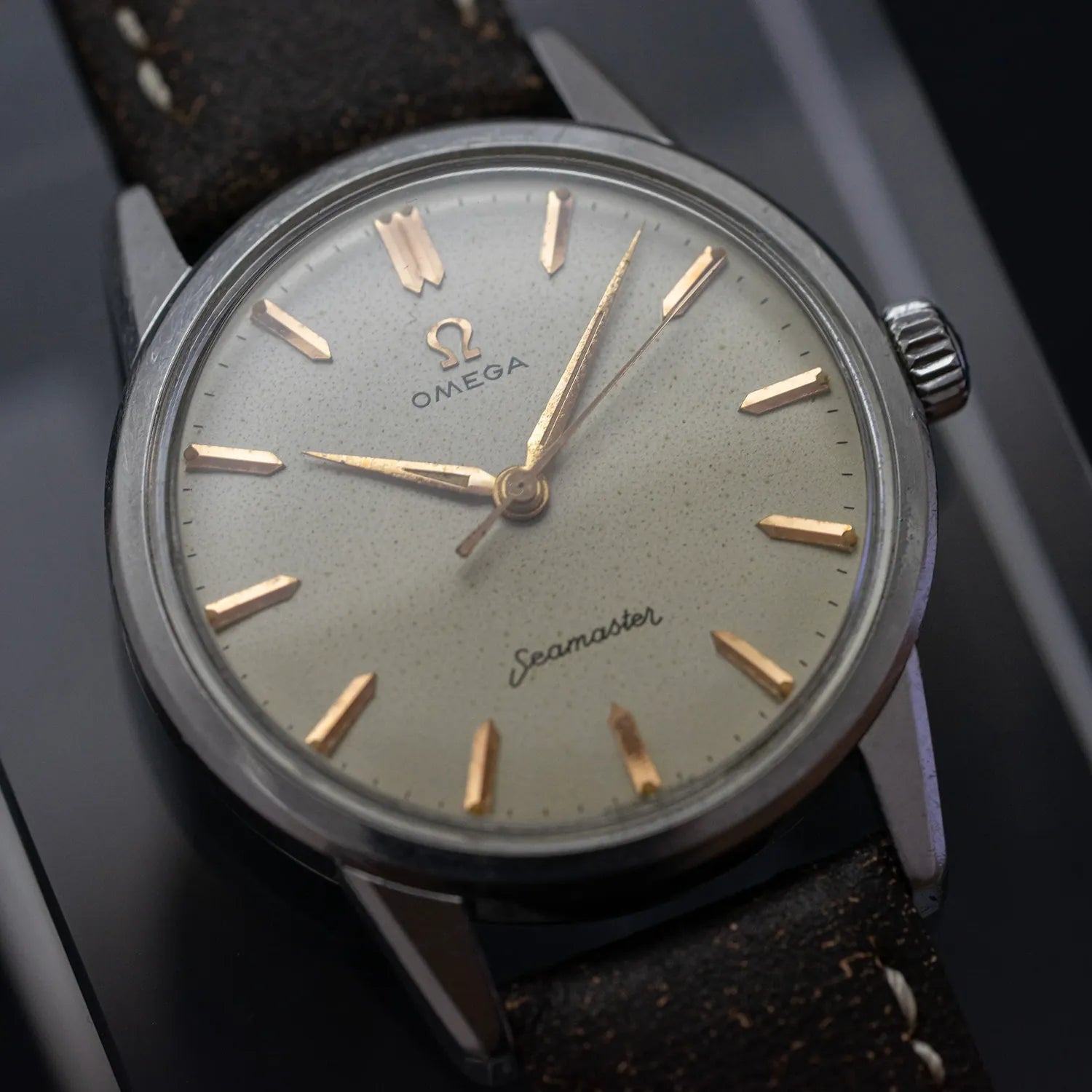
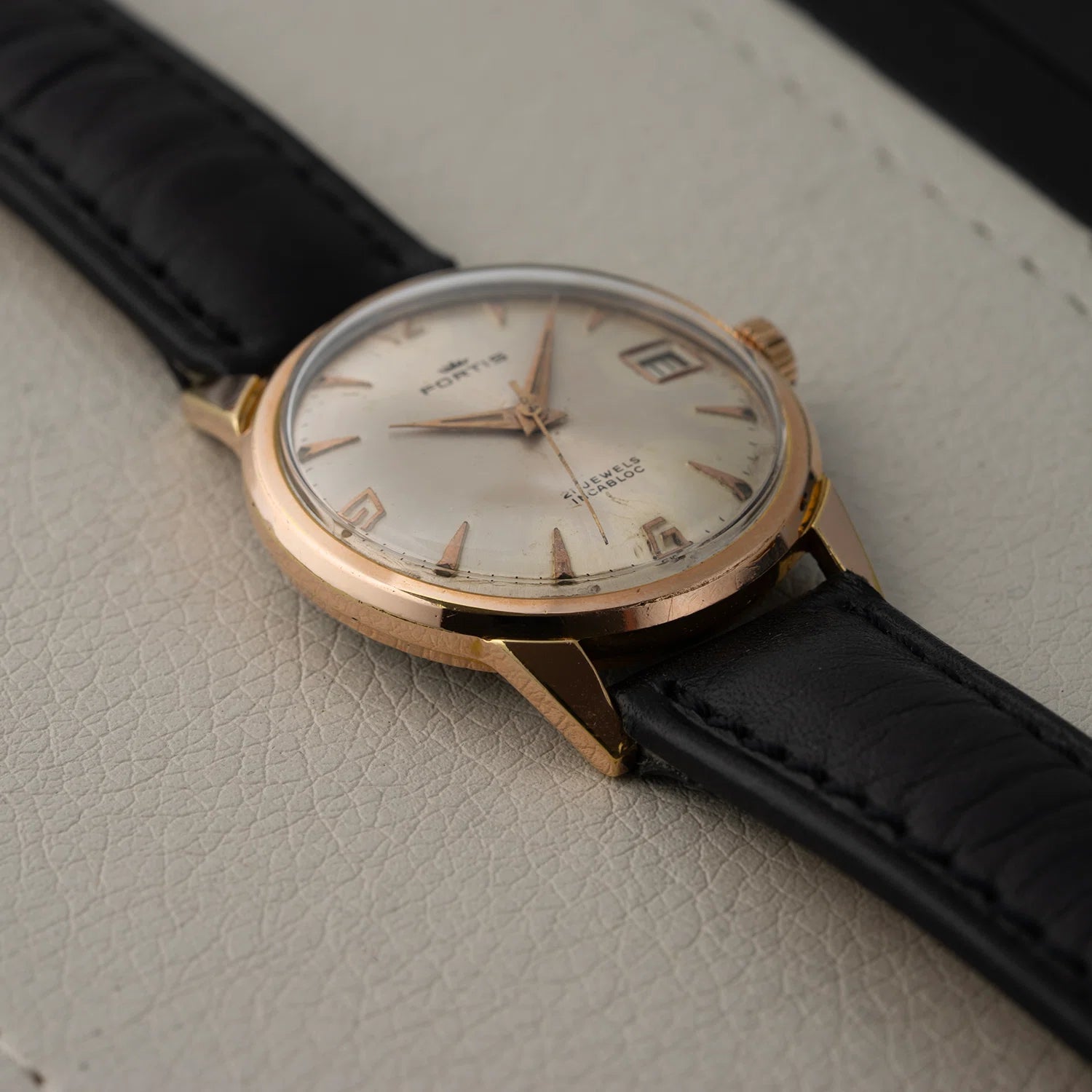
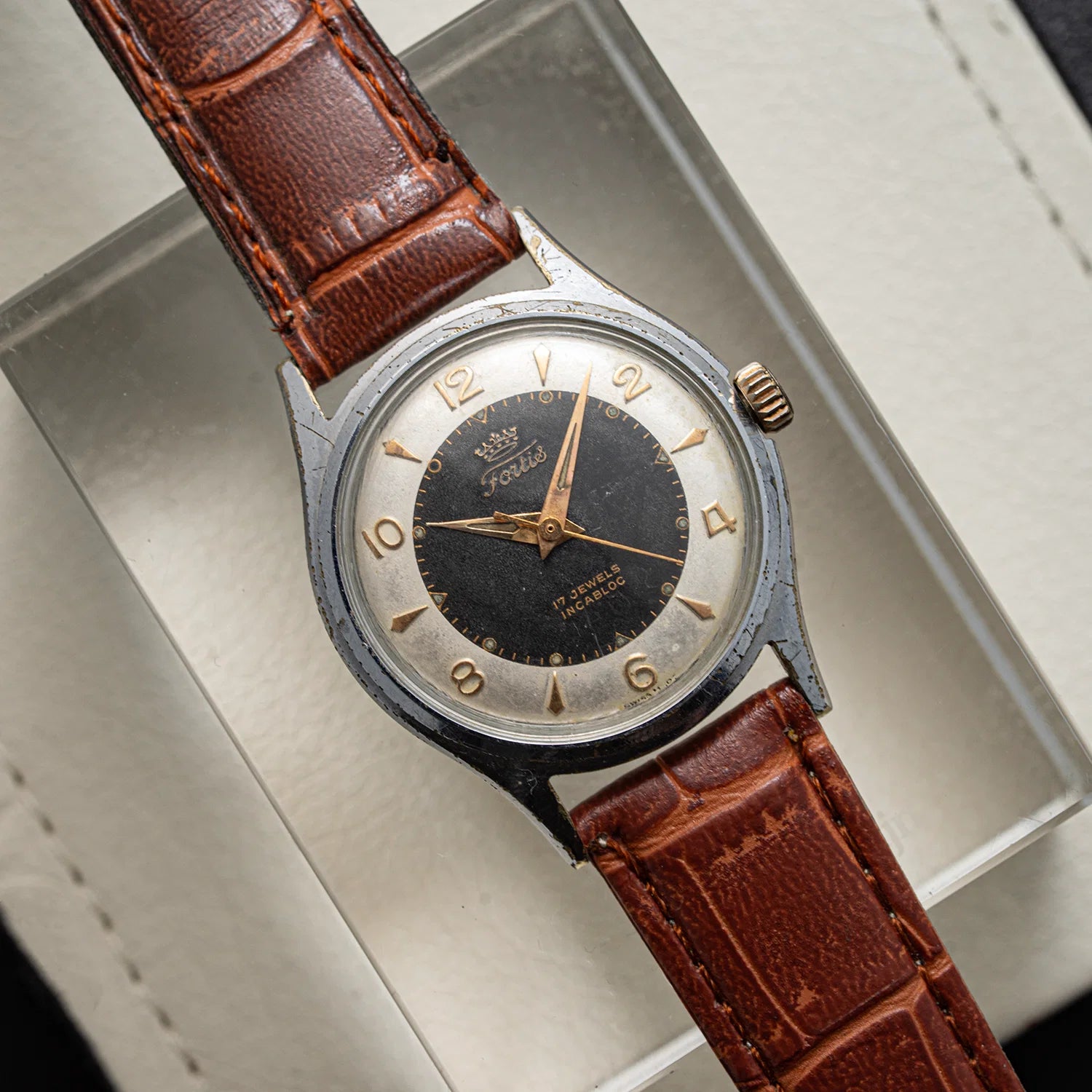
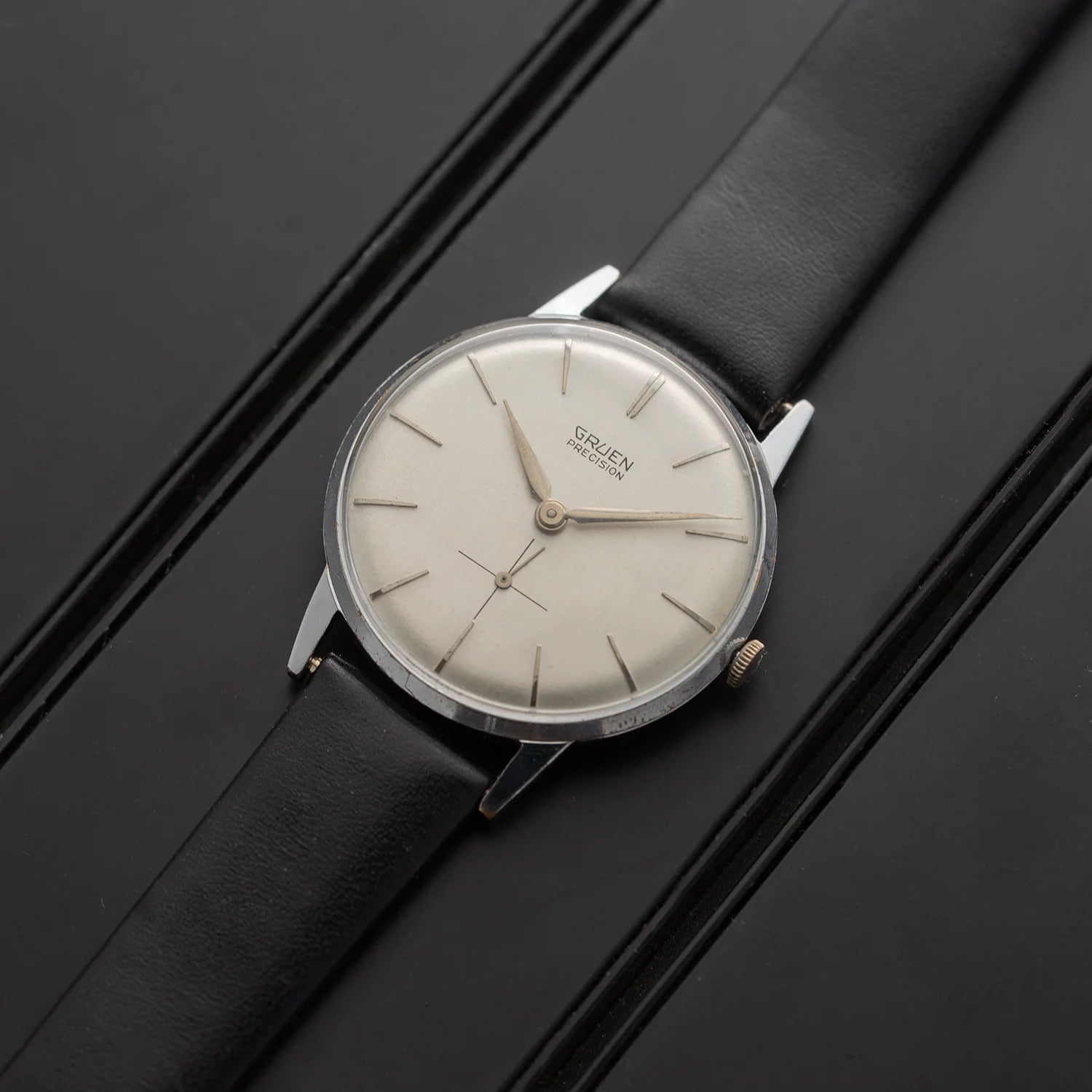
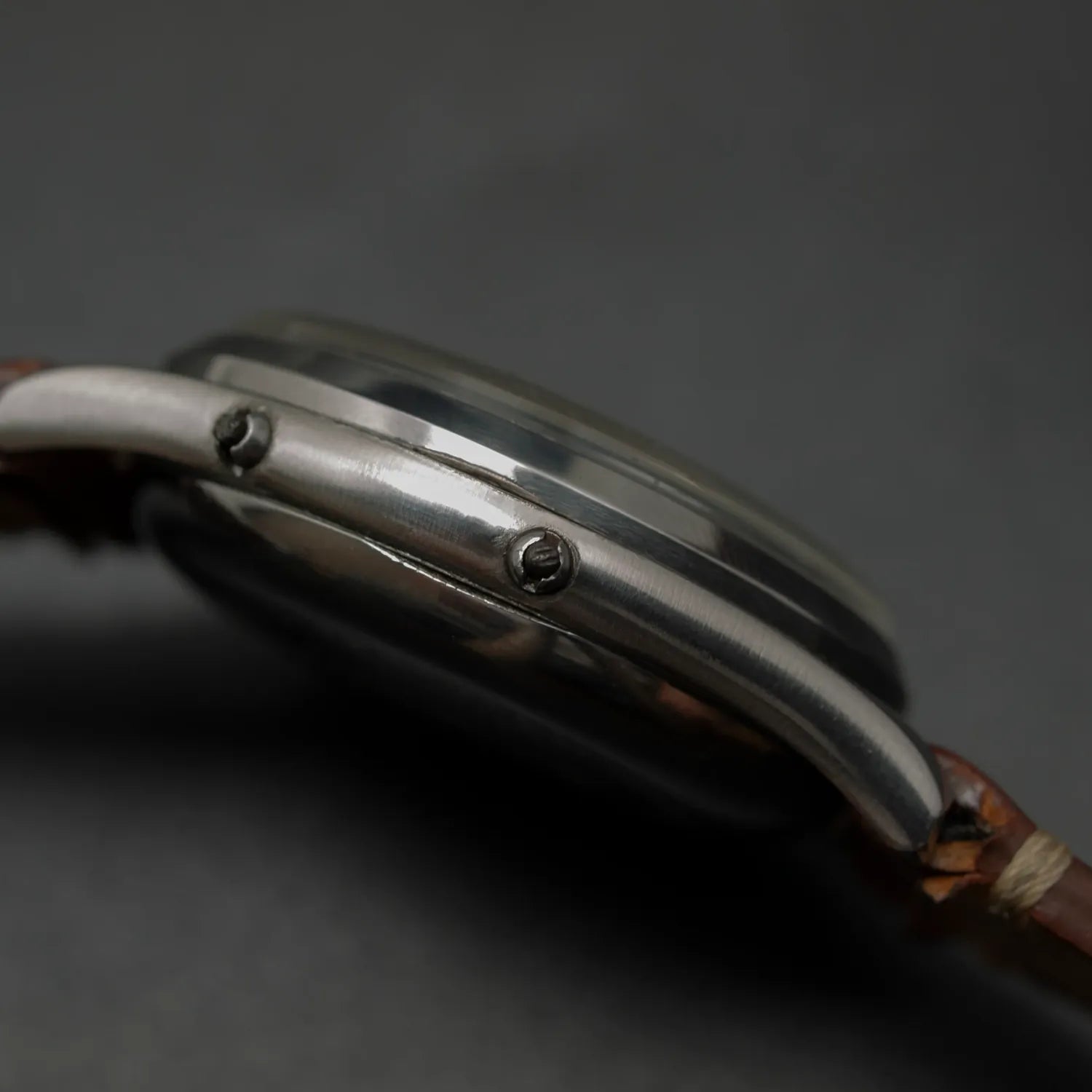
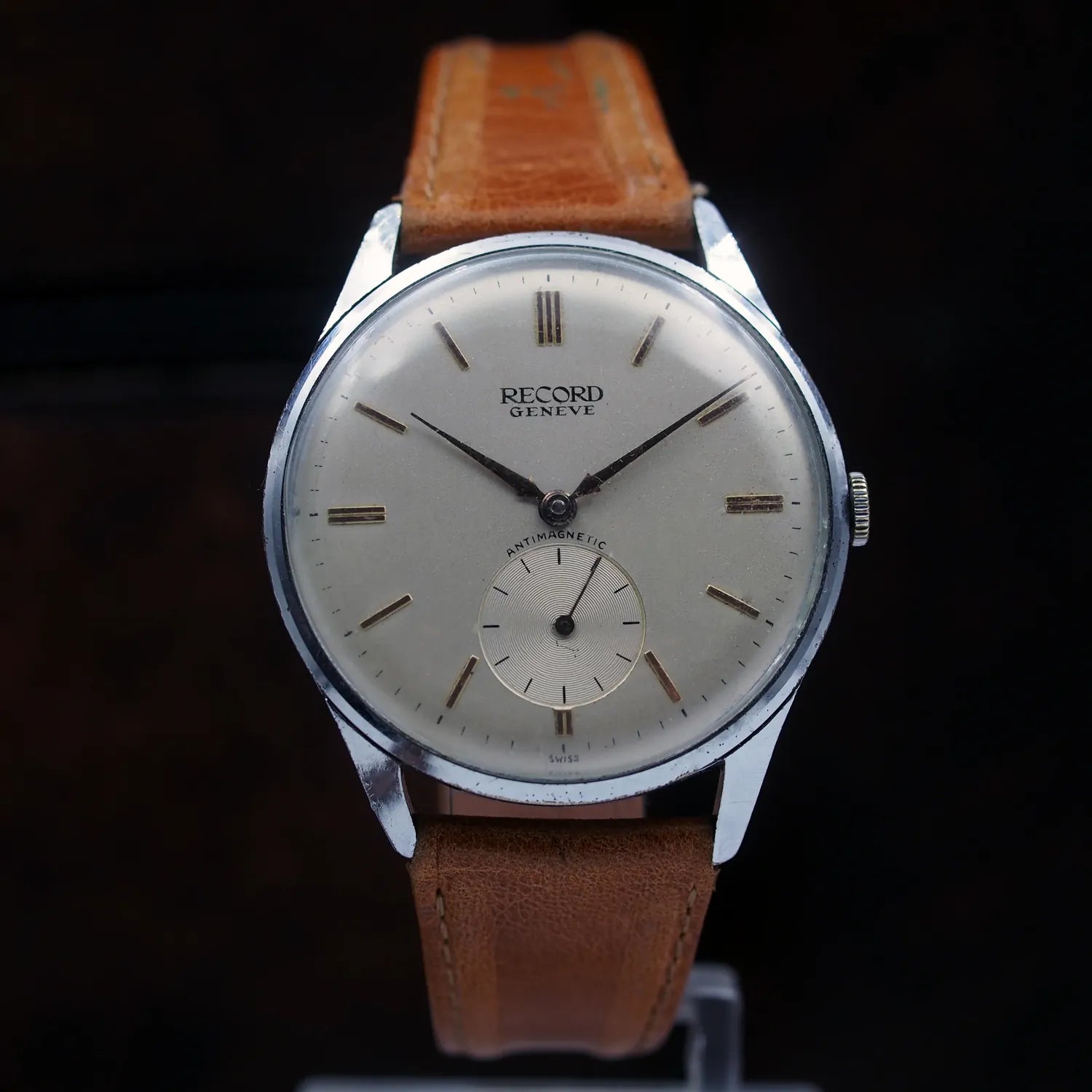
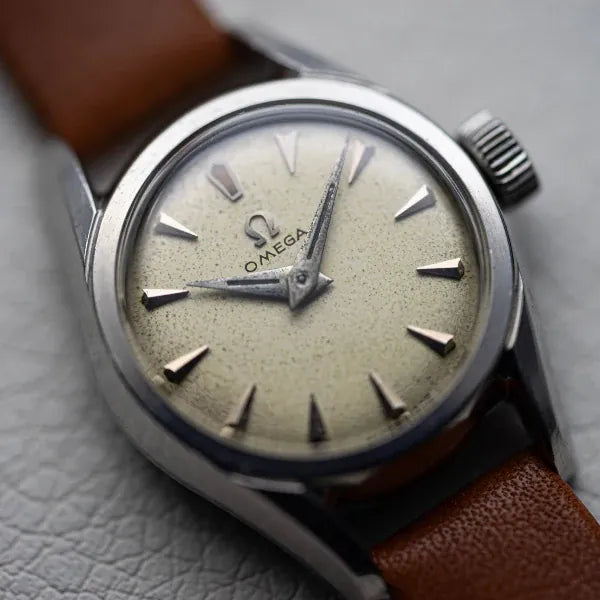
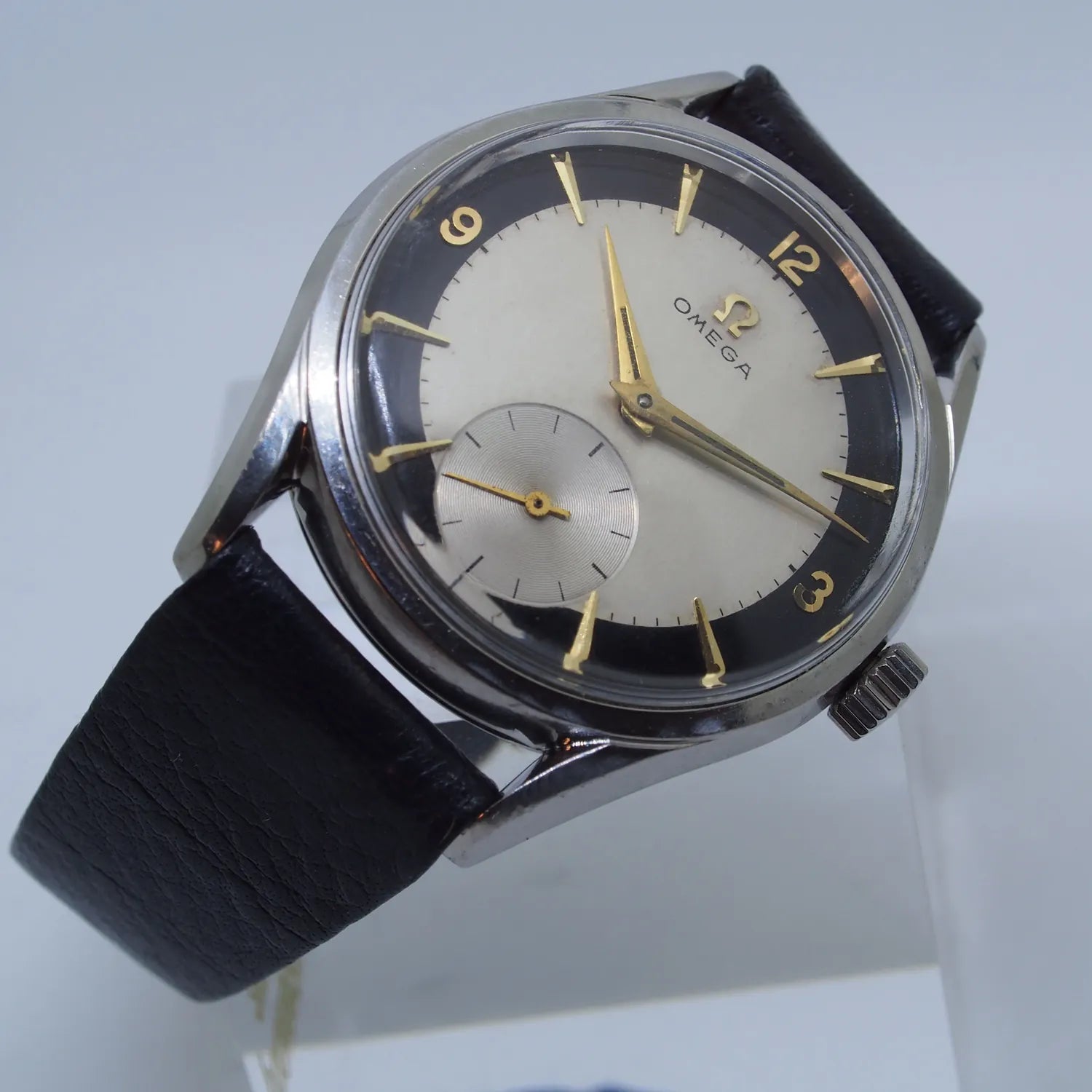
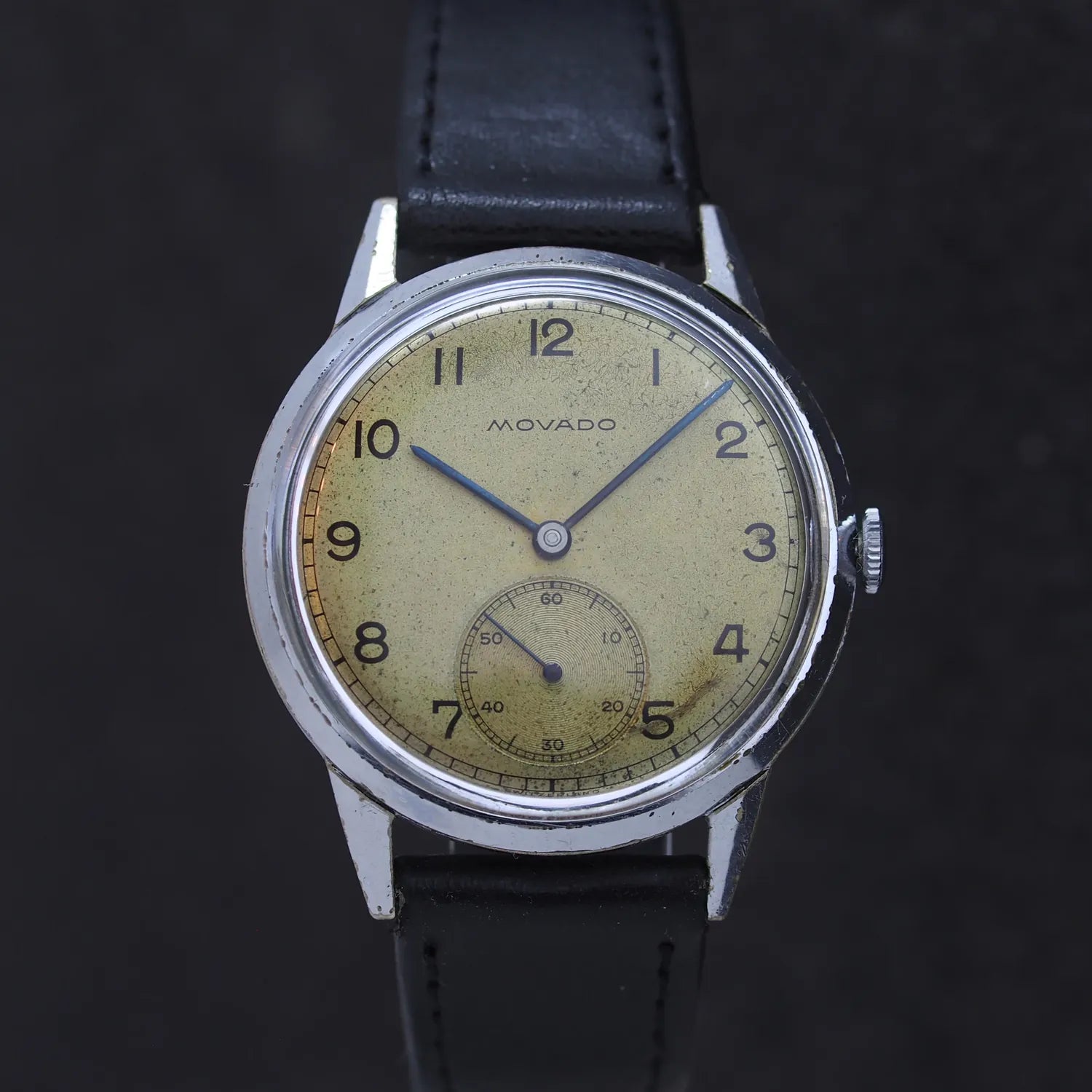
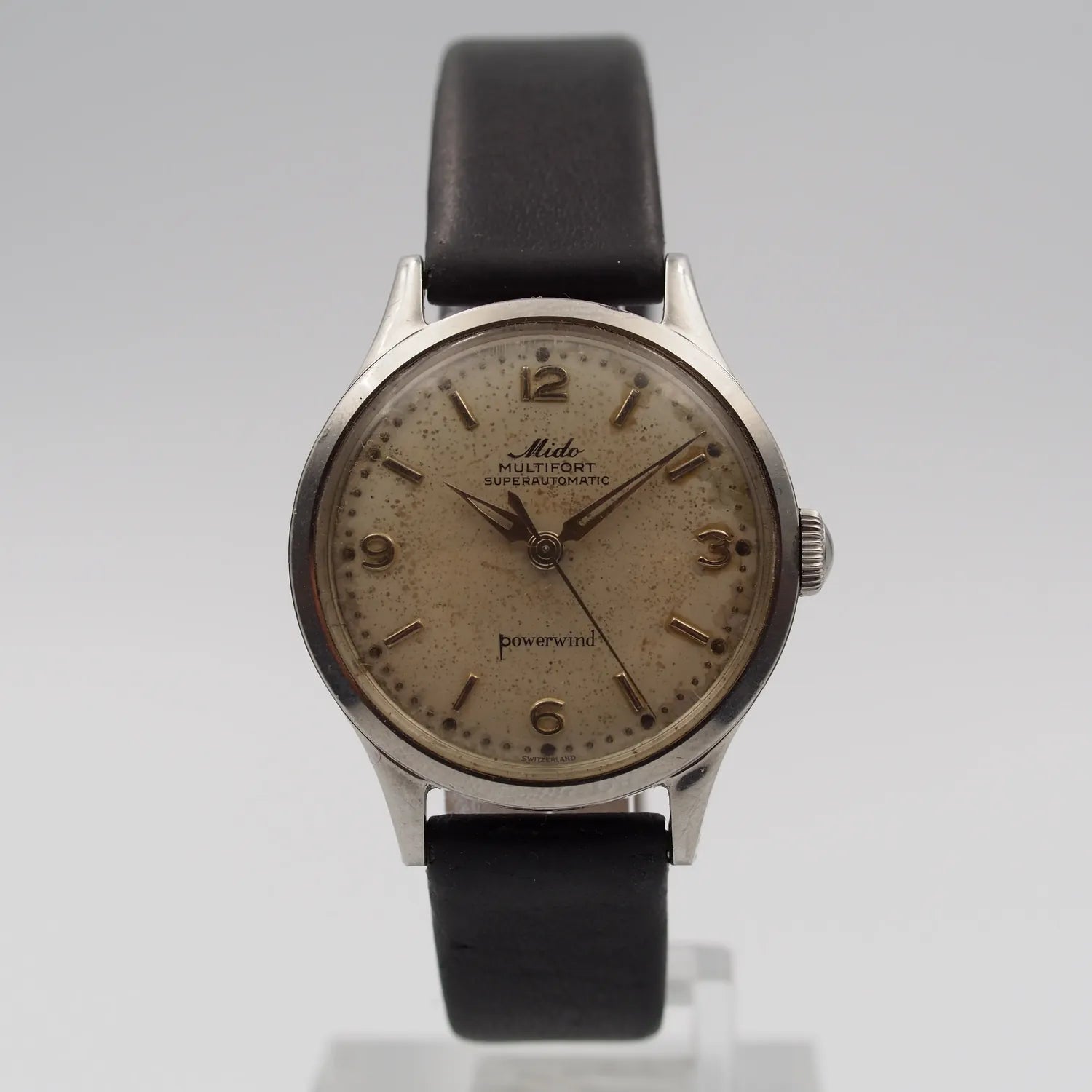
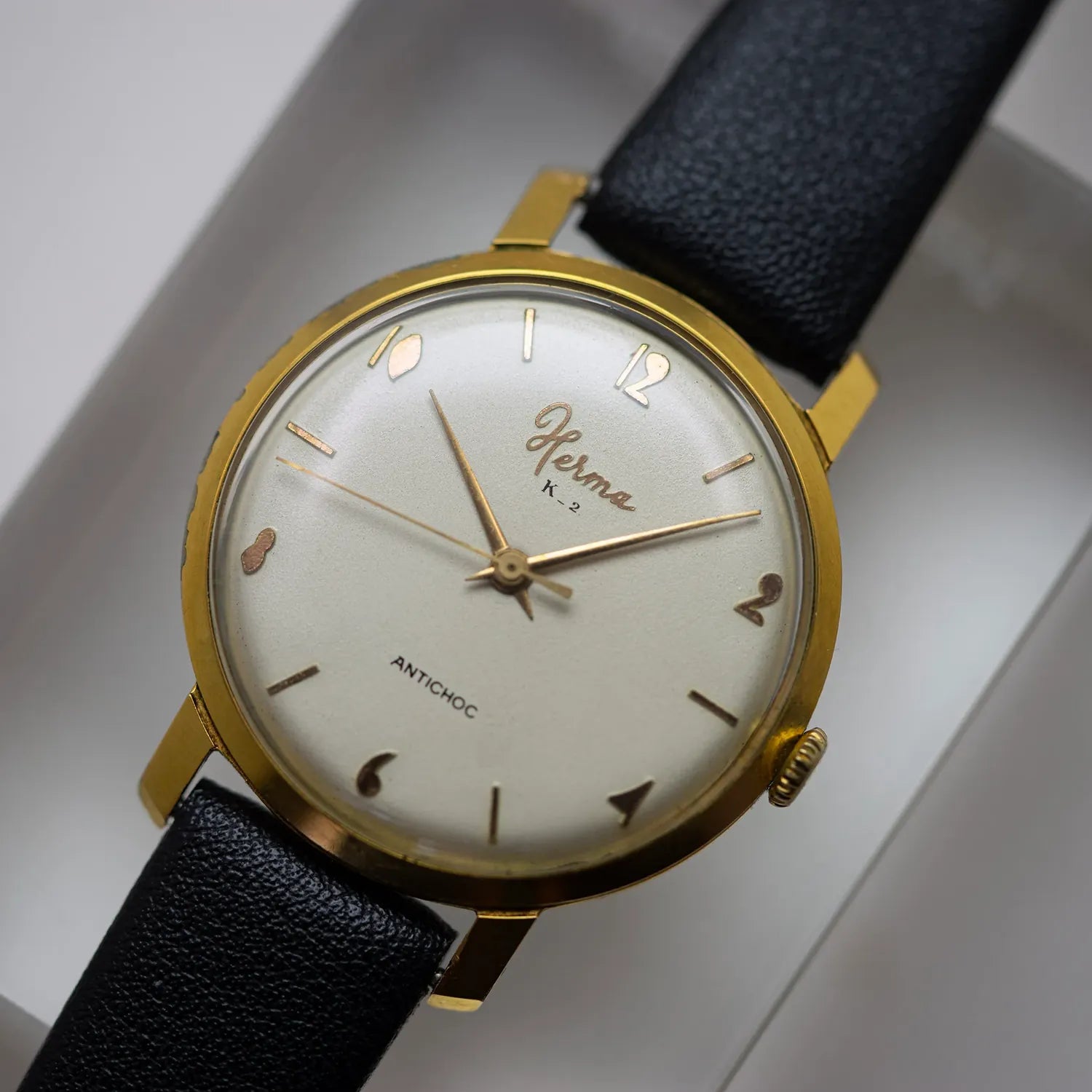
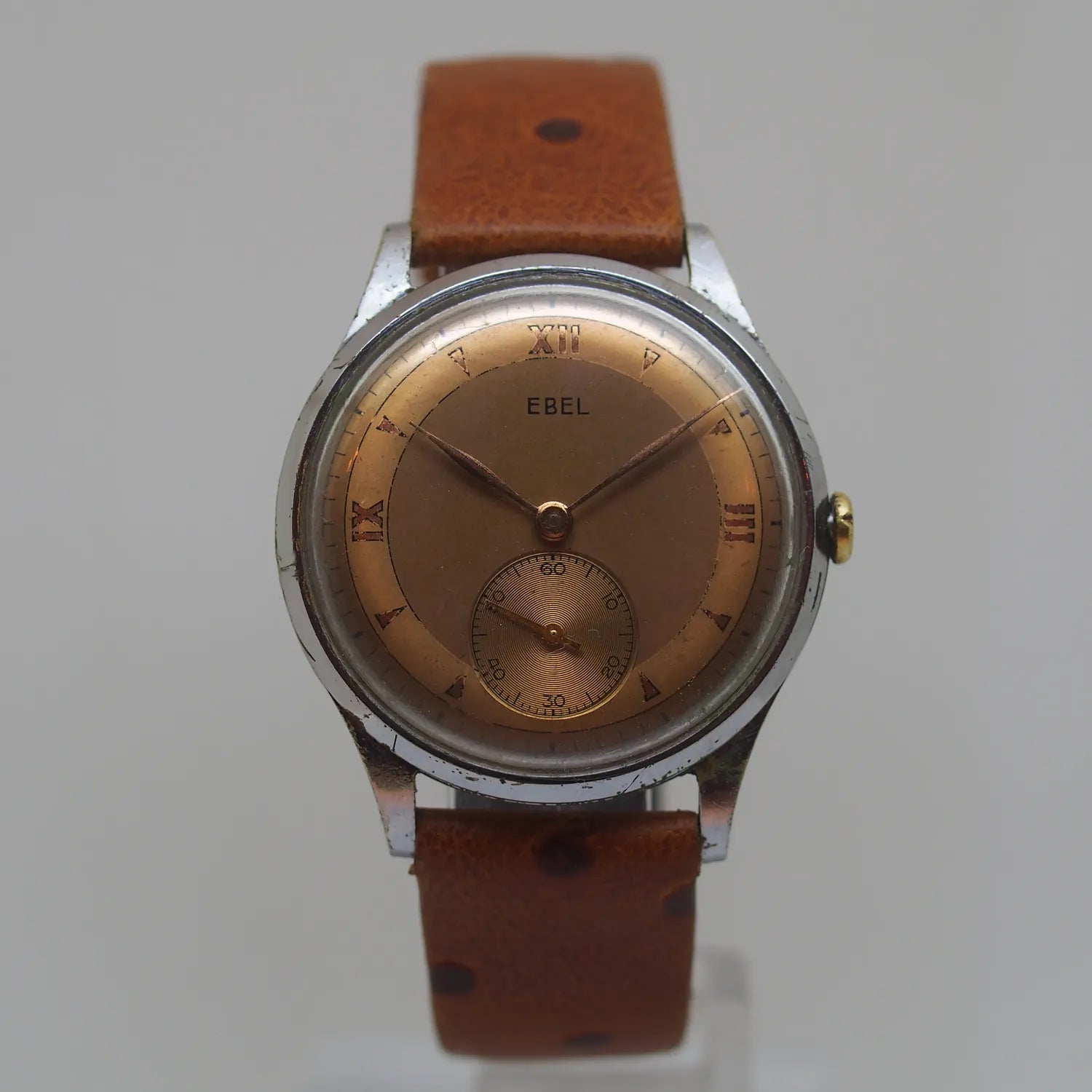
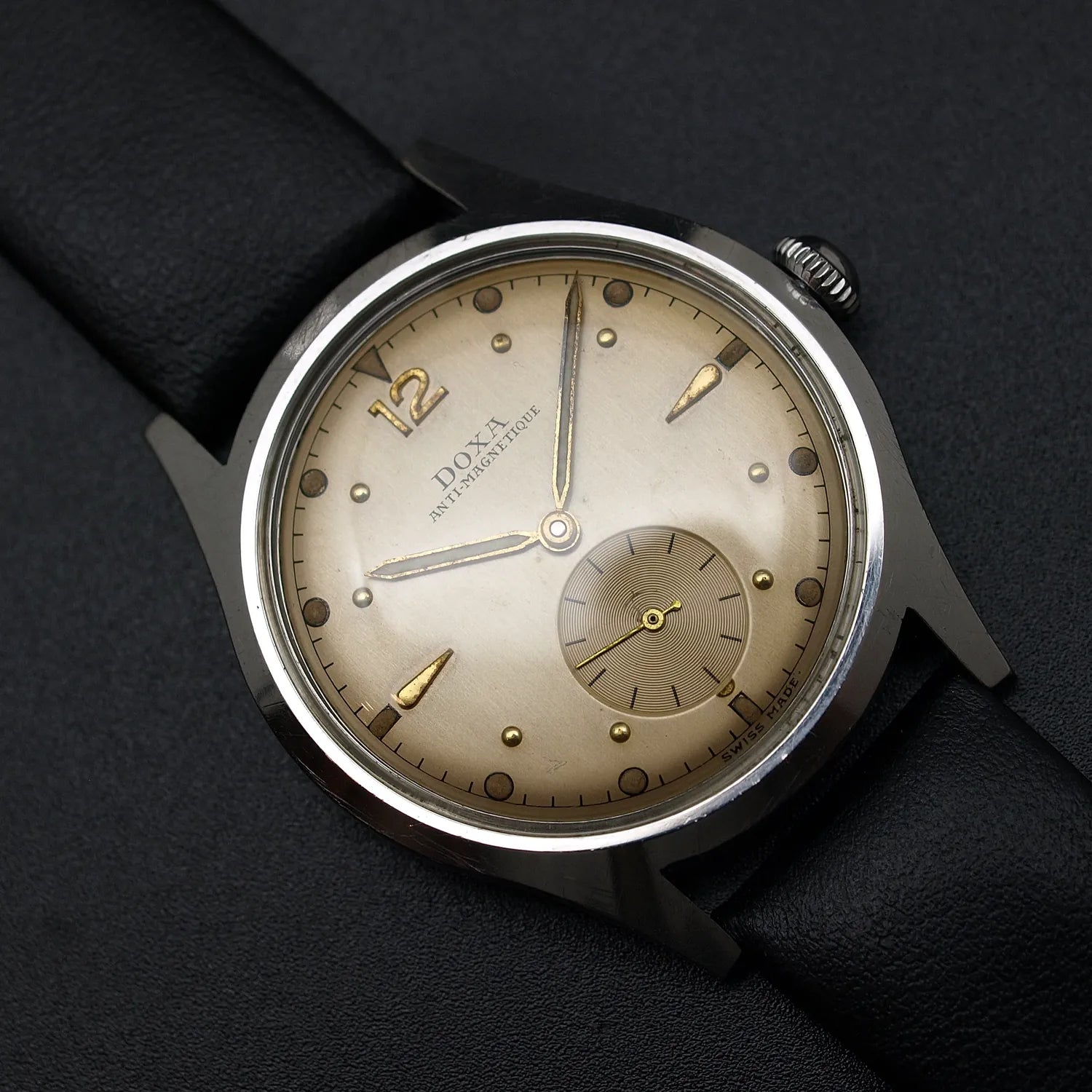
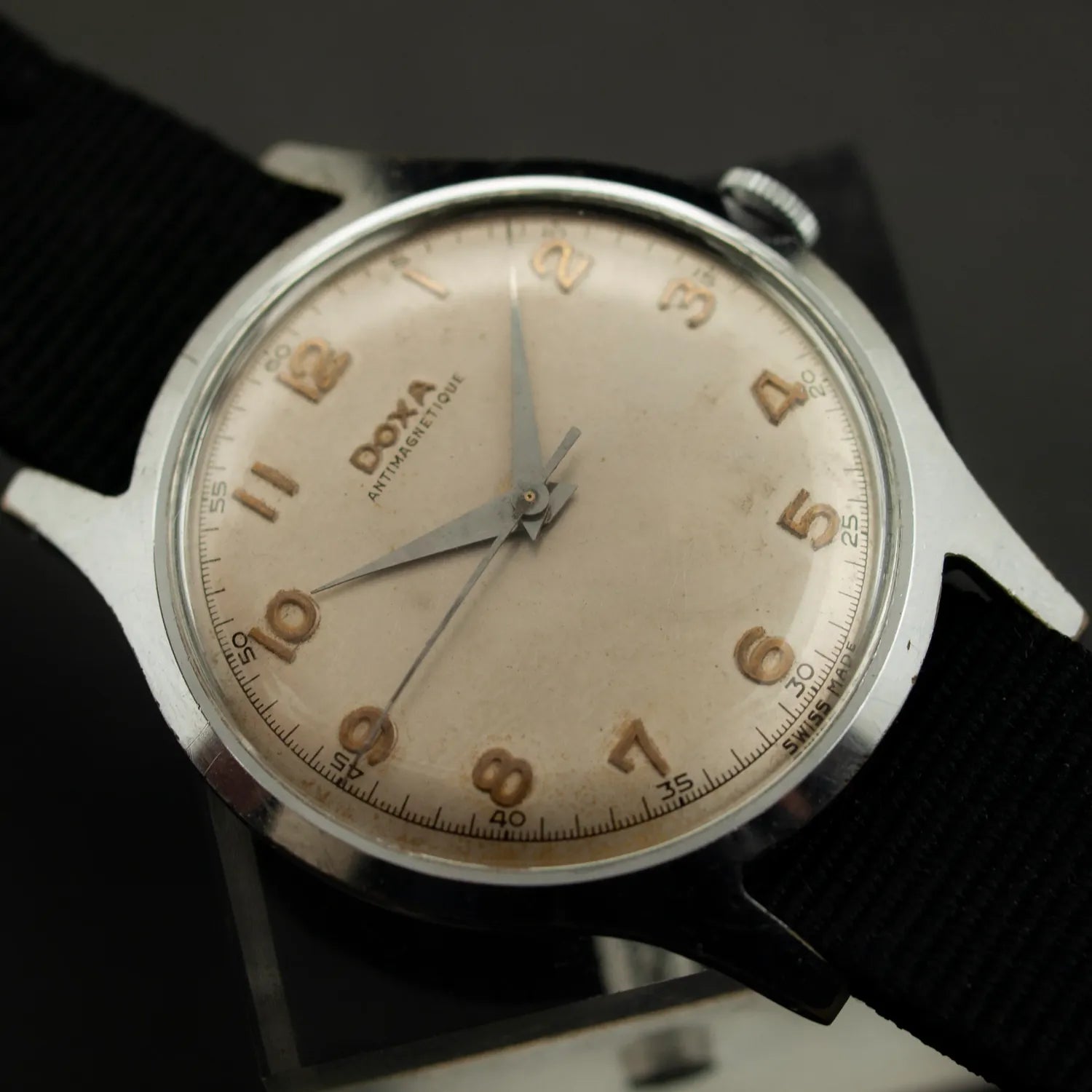
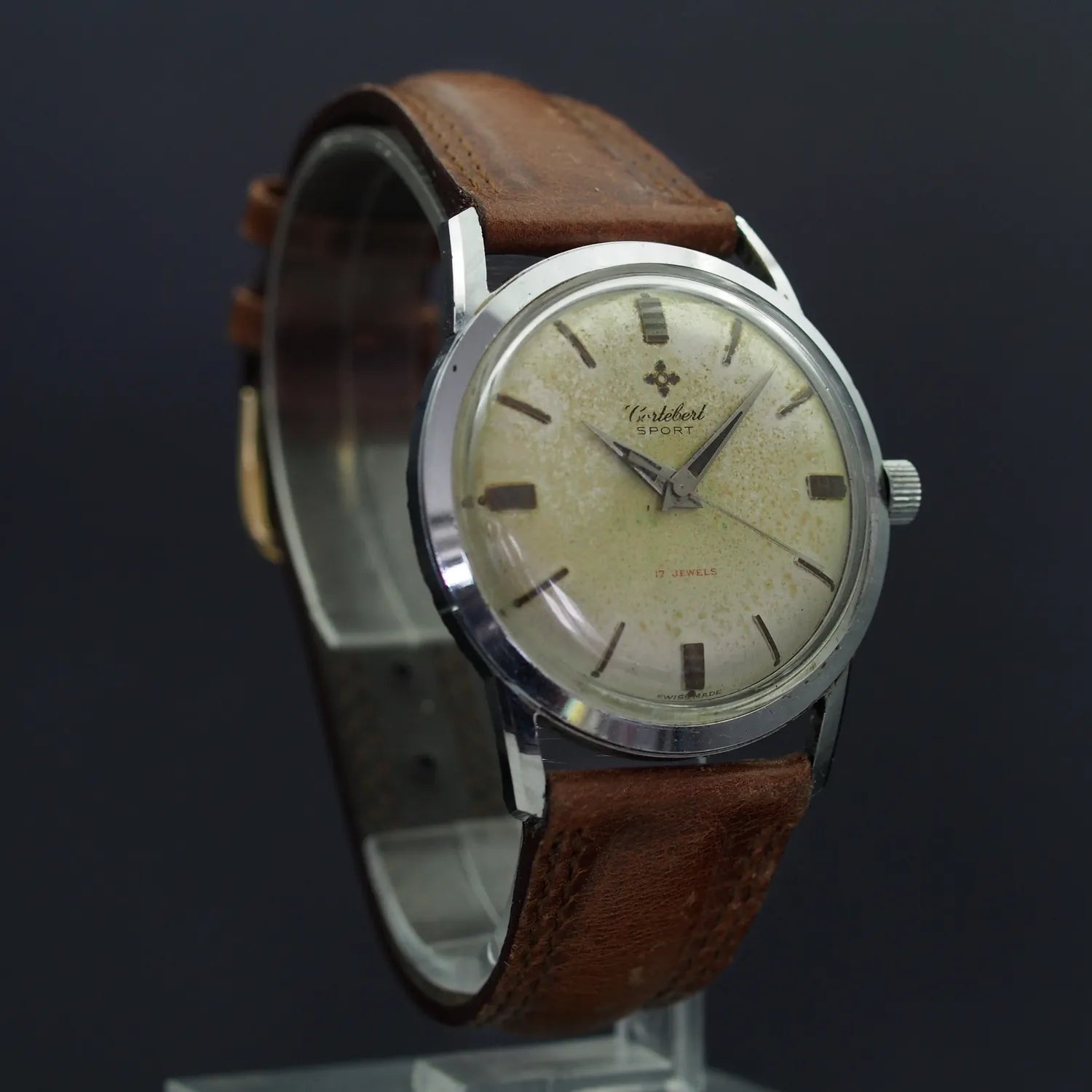
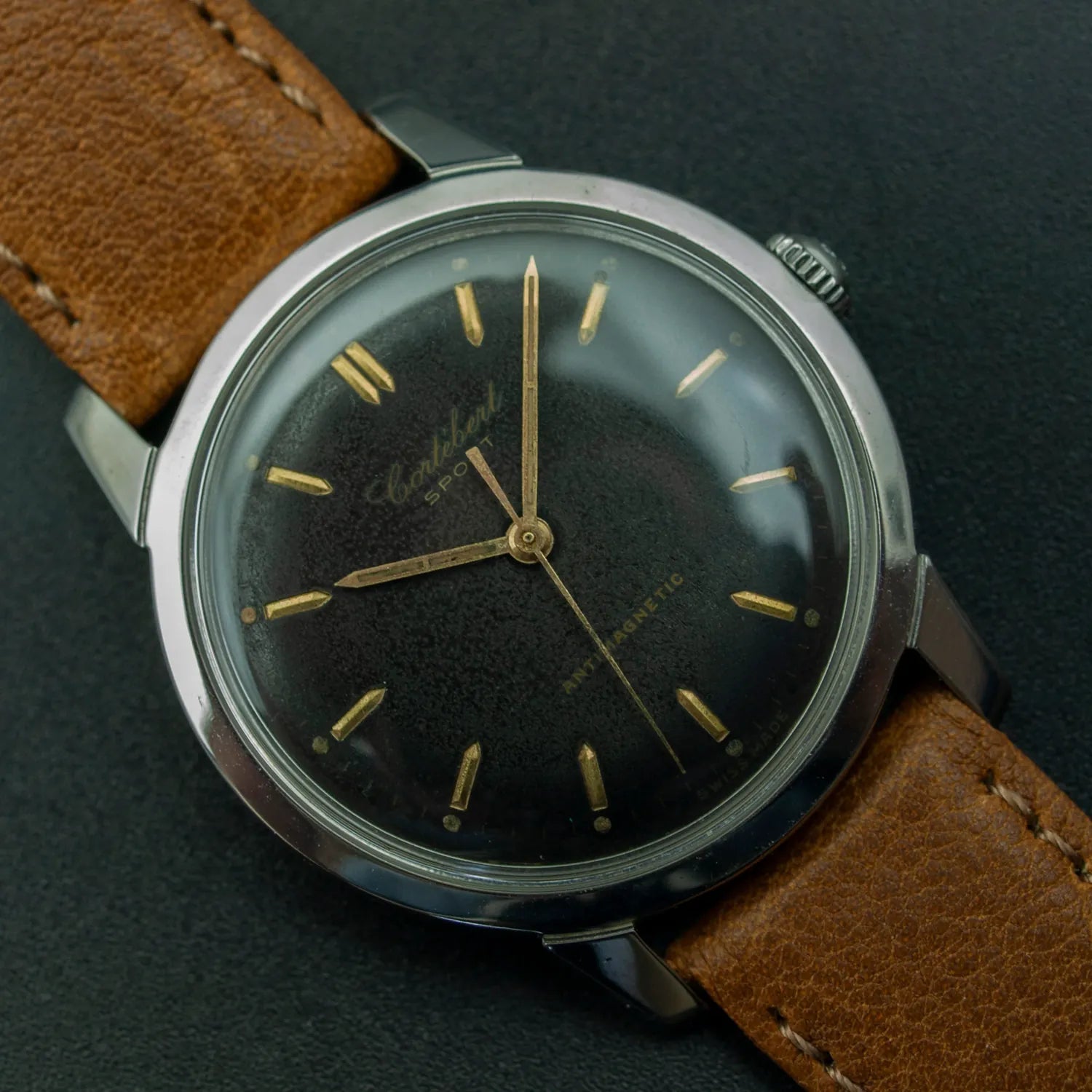
A 1950s wristwatch rarely needs a large case to make an impression. Many men's watches of the period measured approximately 32–36 mm across, but their visual character came from carefully considered proportions: narrow bezels, elongated or sculpted lugs, domed crystals and richly detailed dials. A compact case could appear surprisingly substantial on the wrist, particularly when its lugs extended beyond the main body.
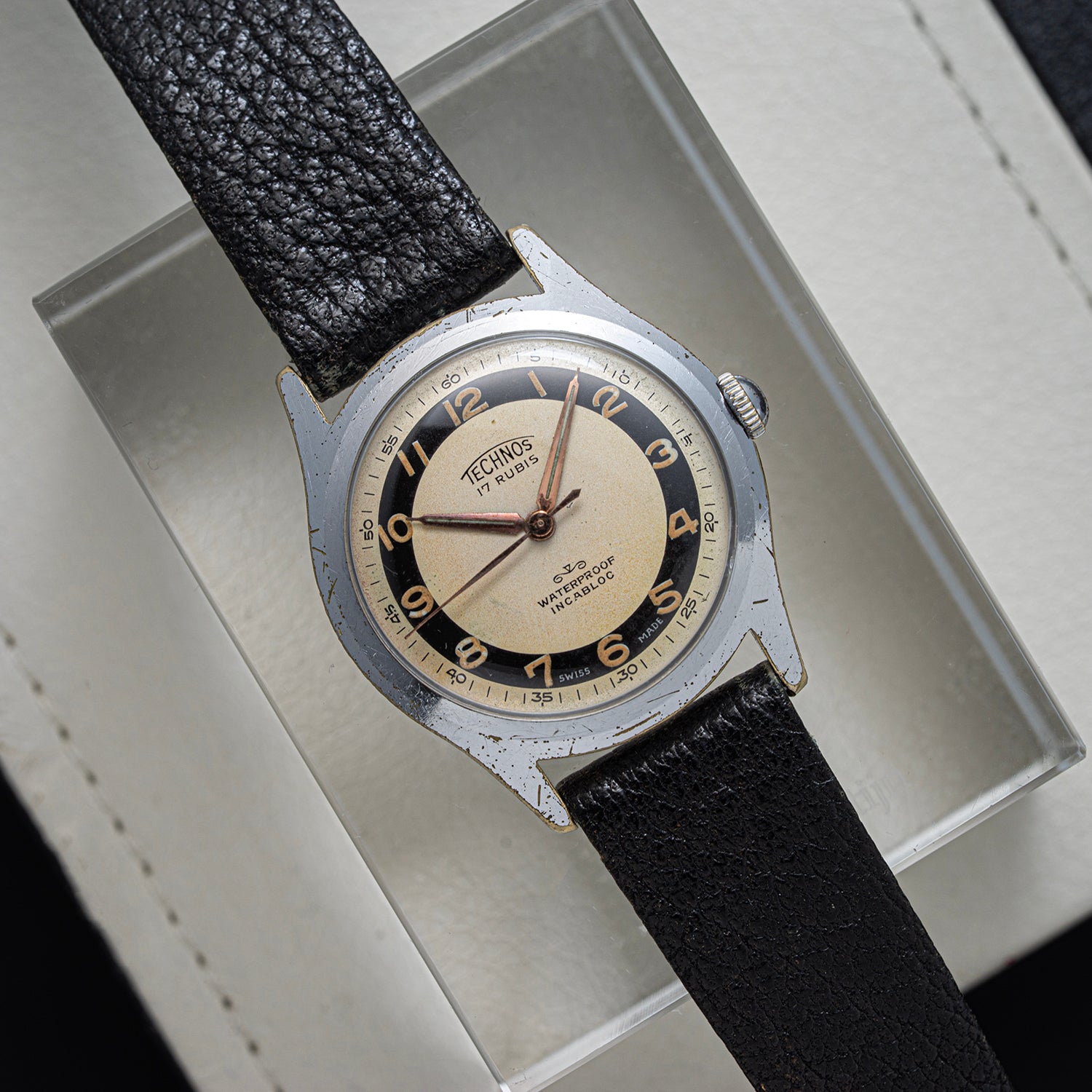
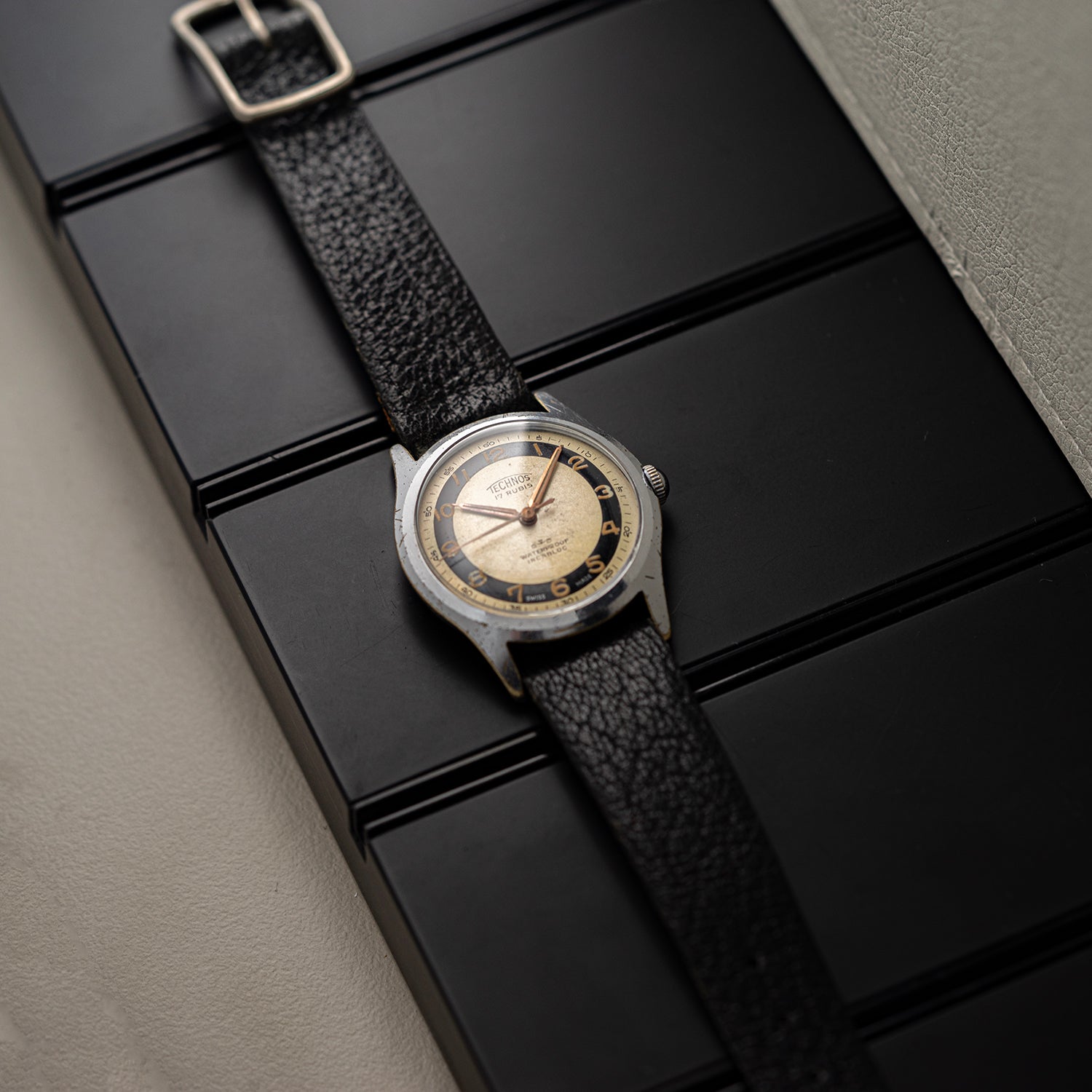
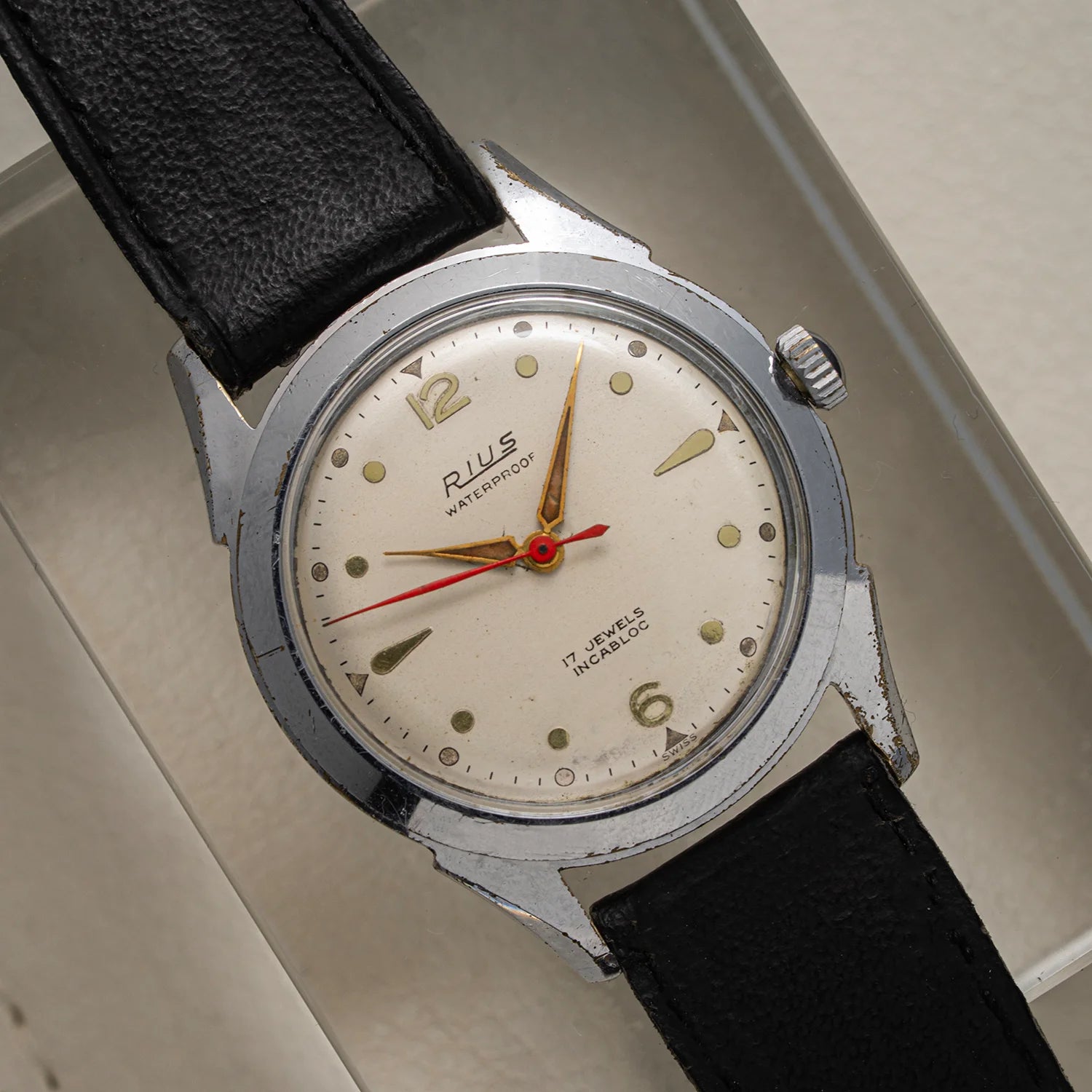
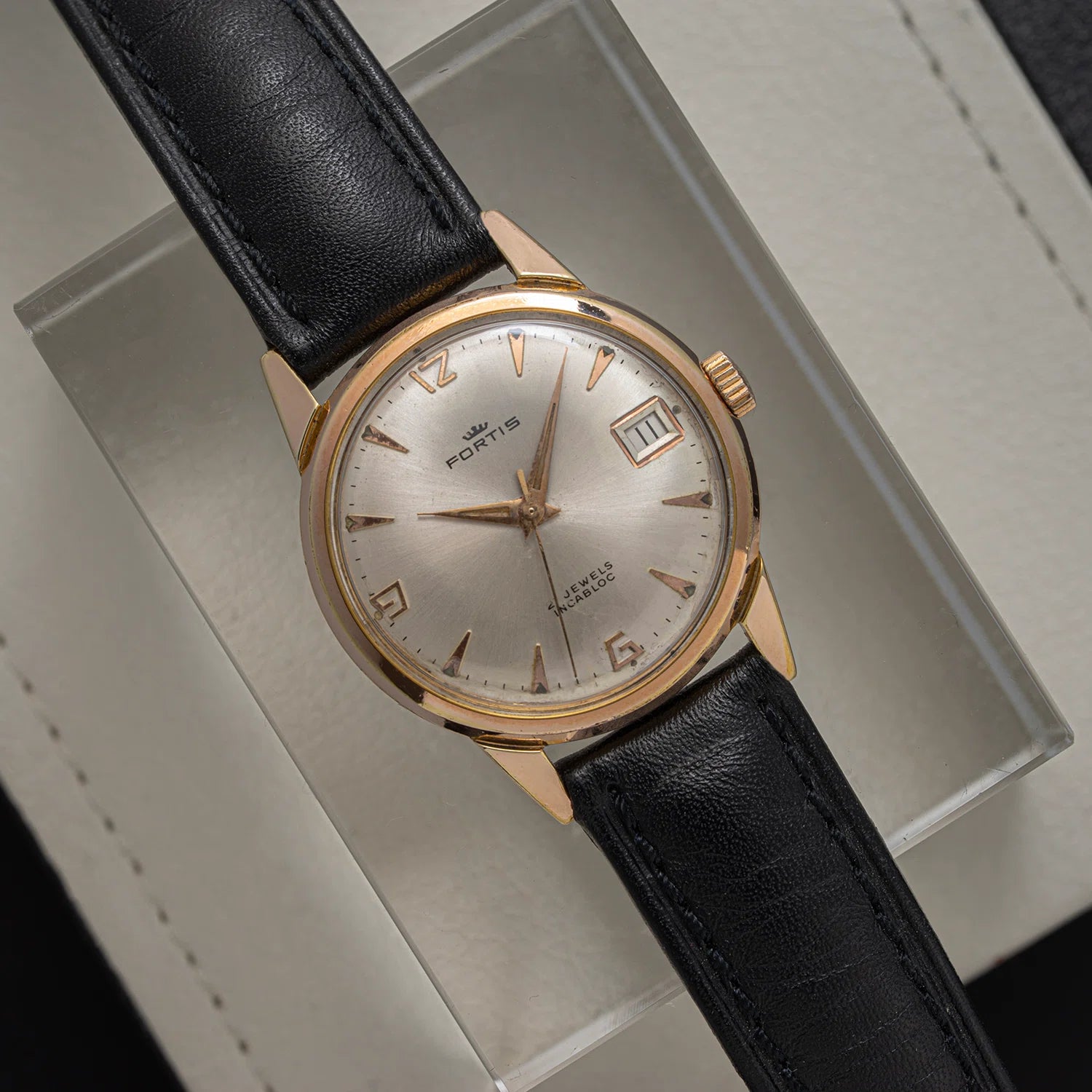
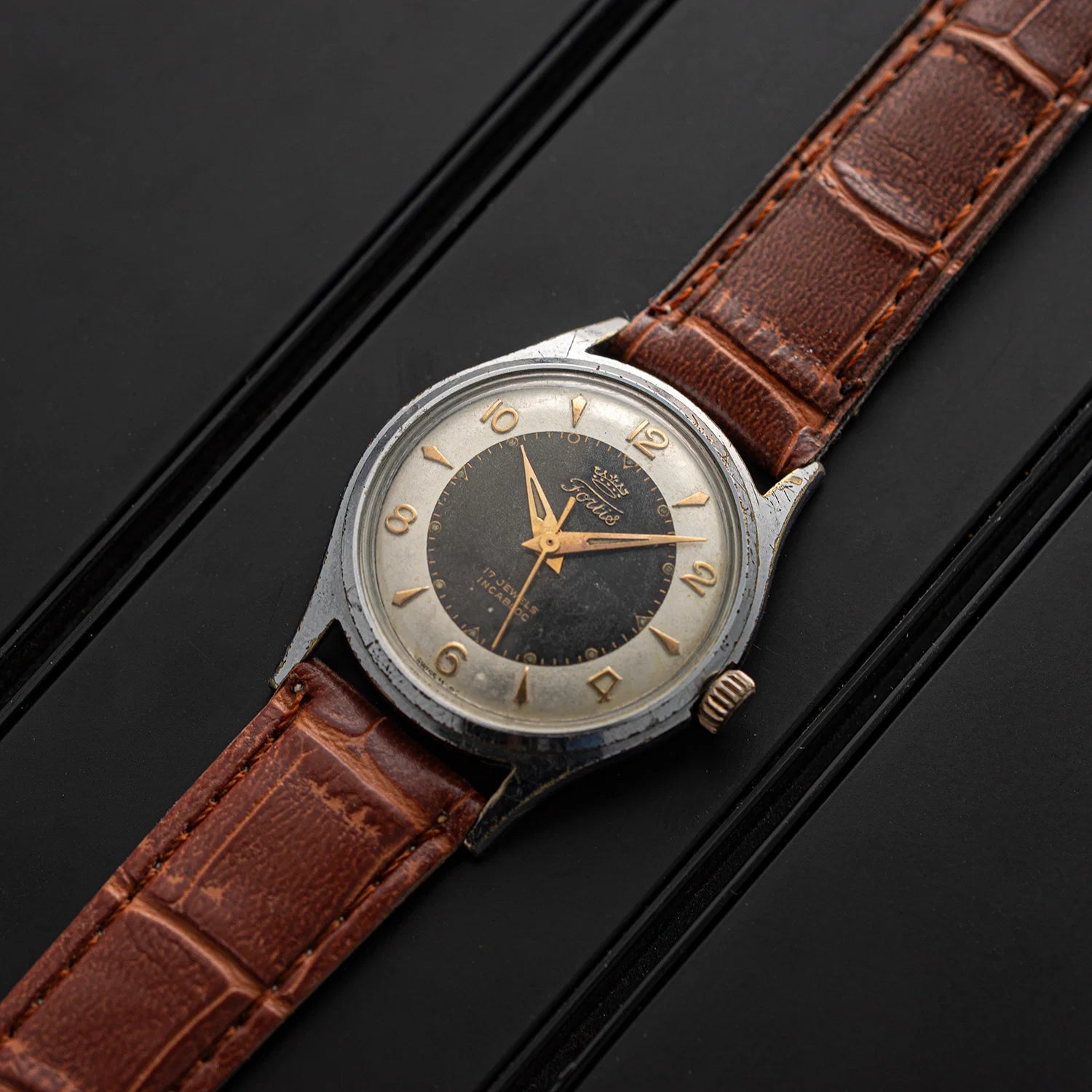
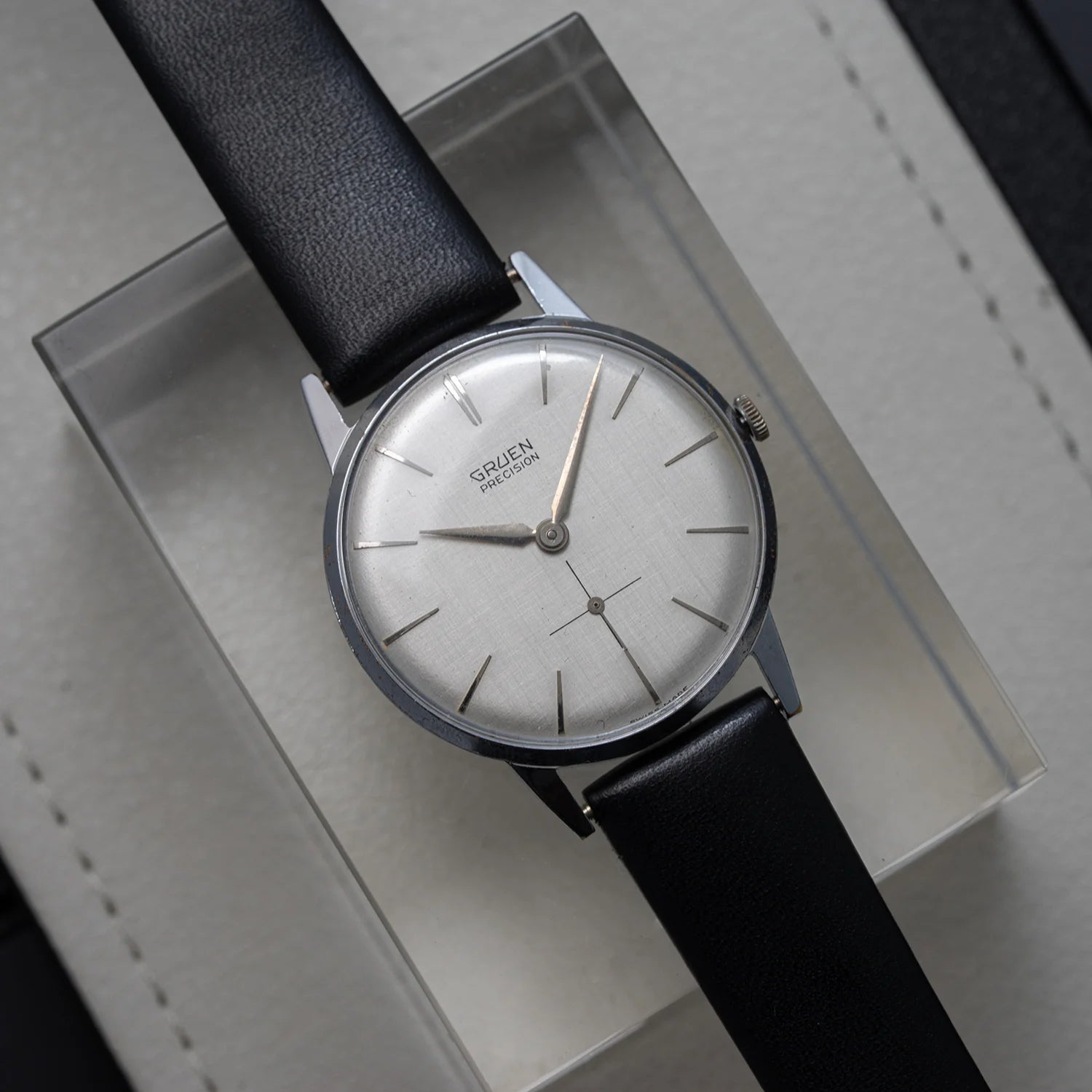
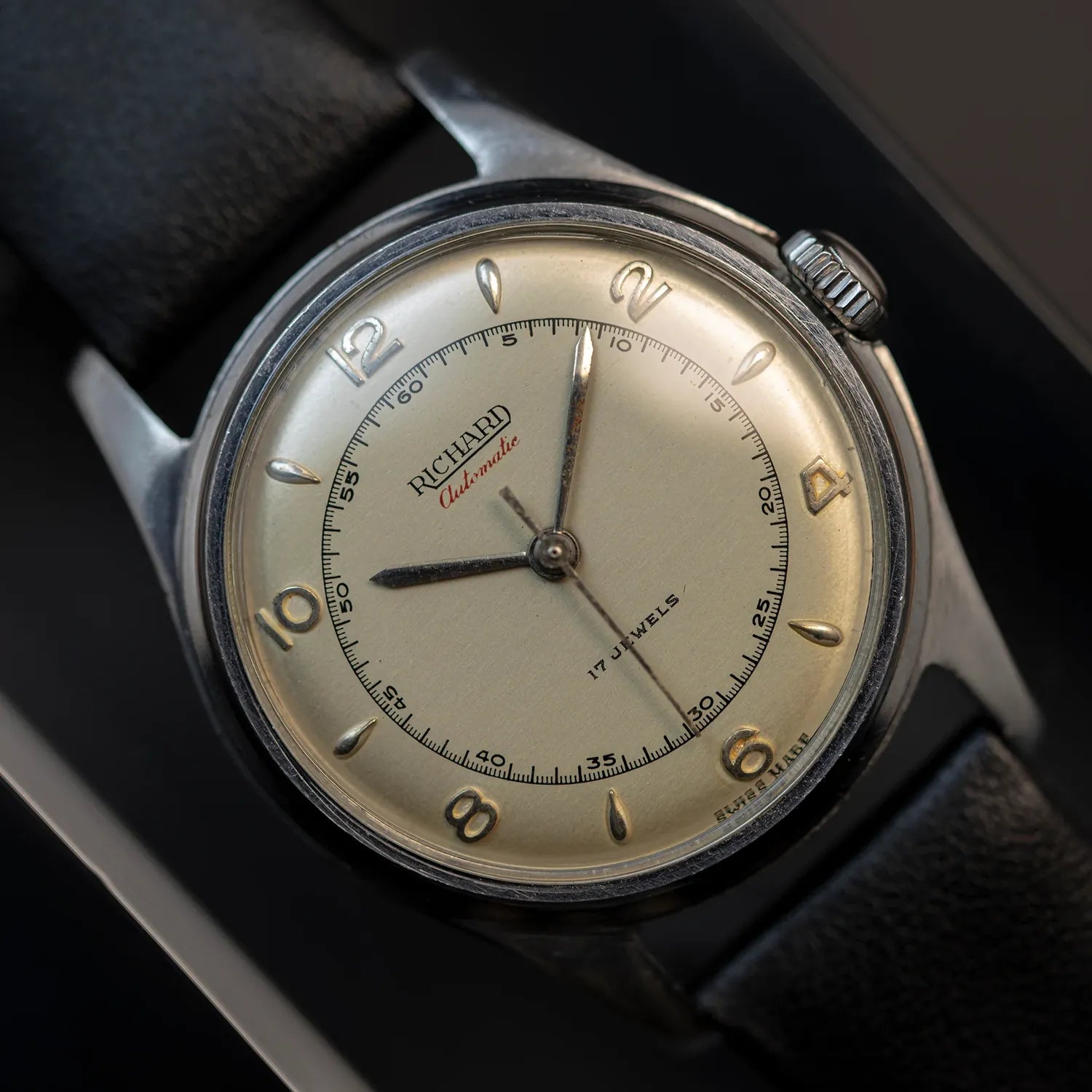
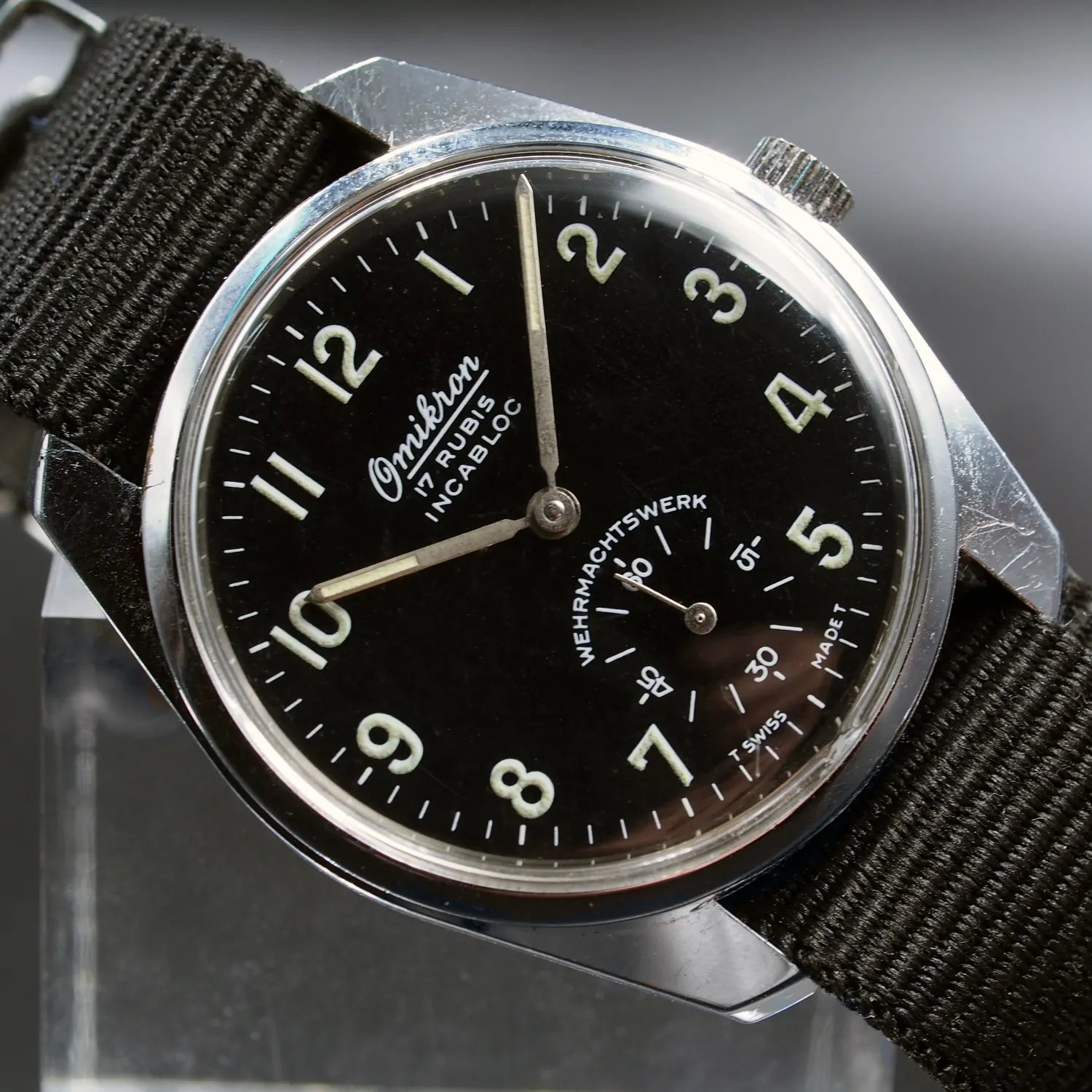
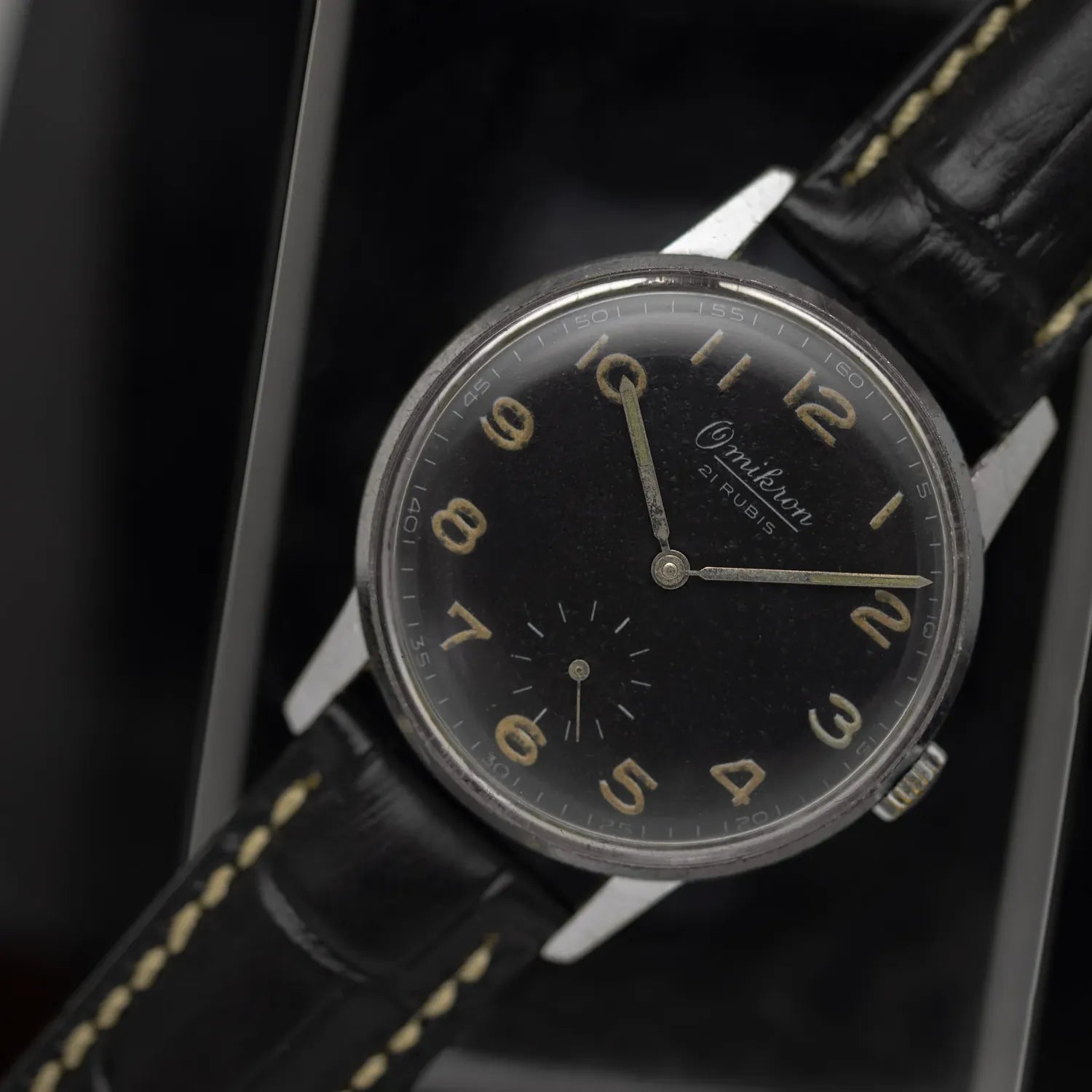
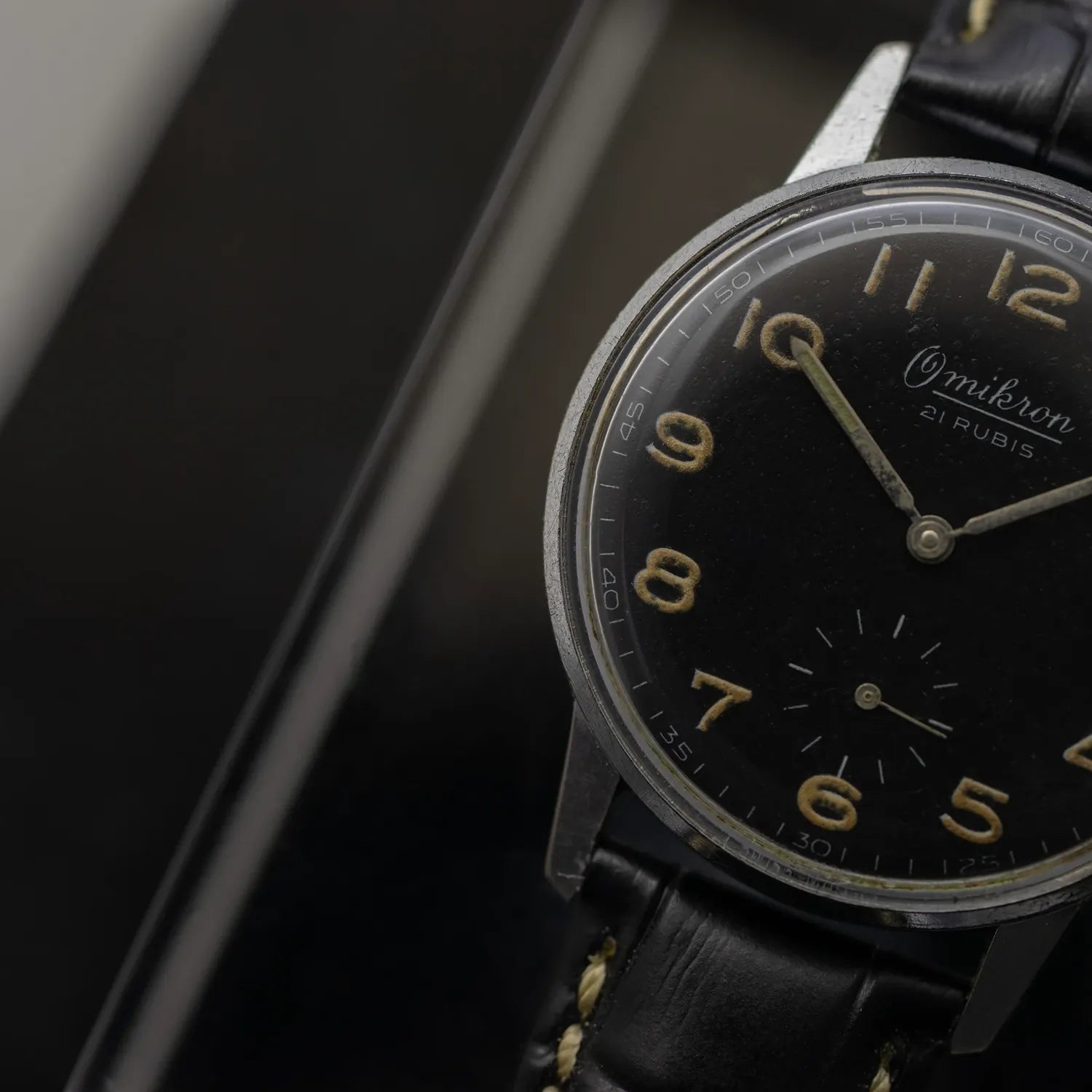
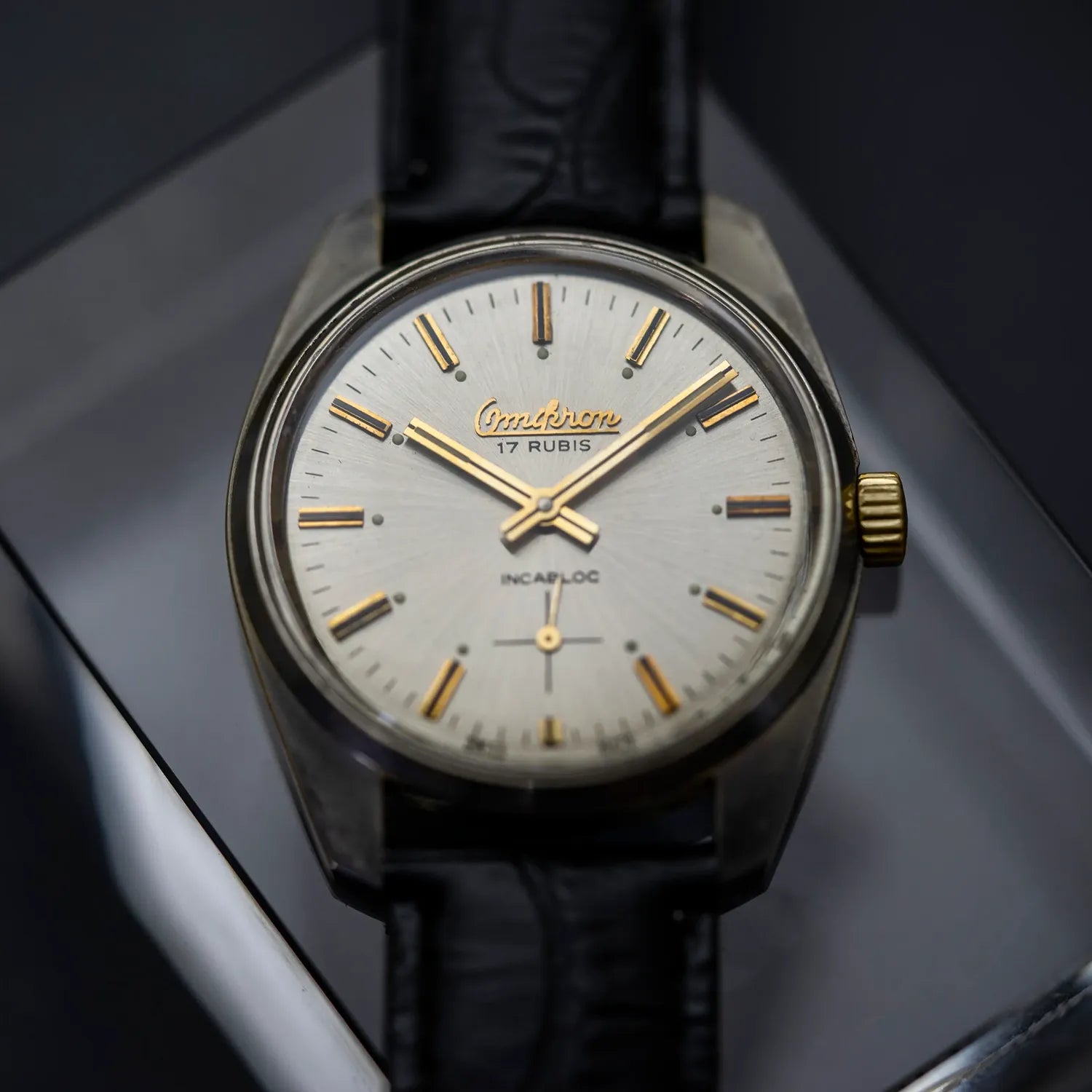
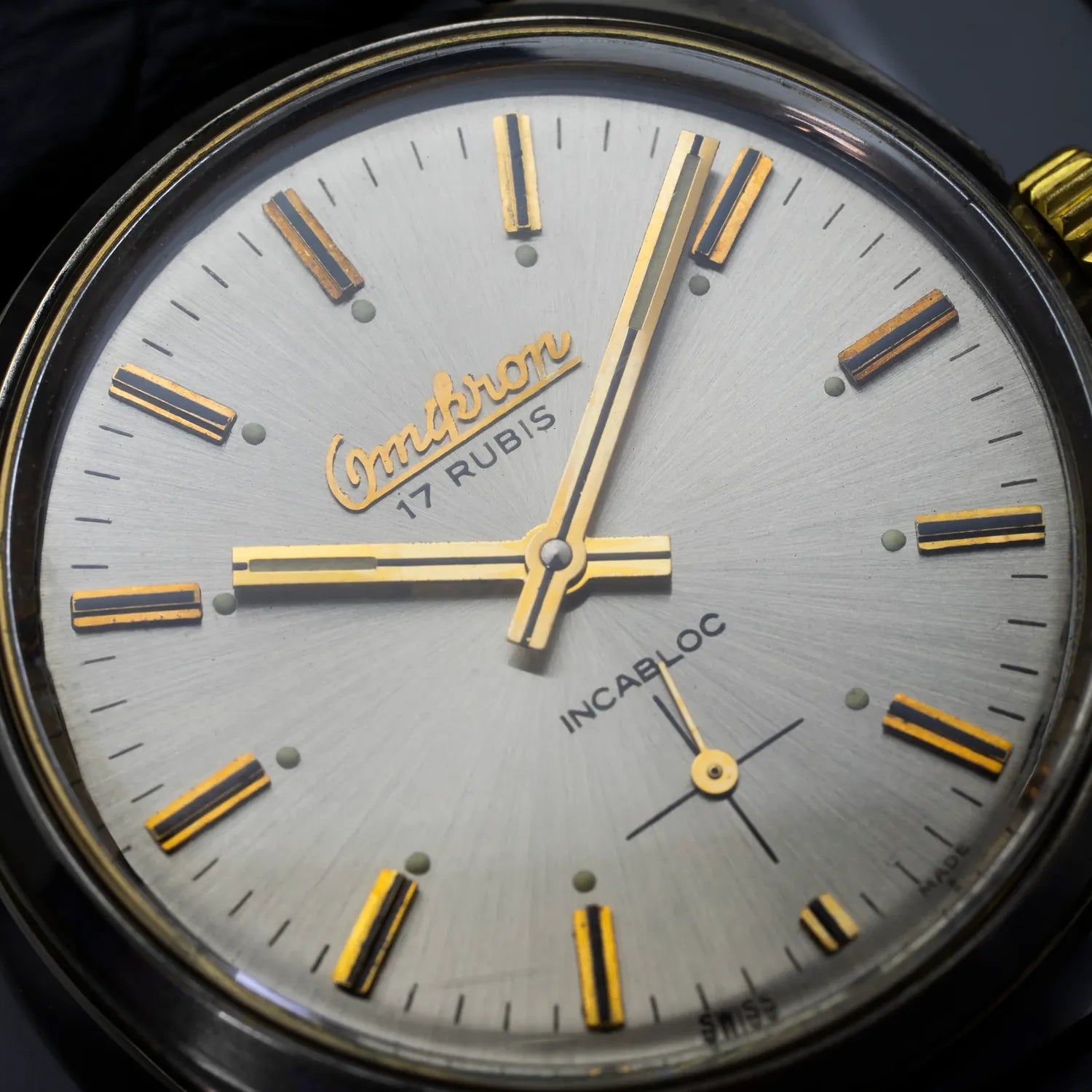
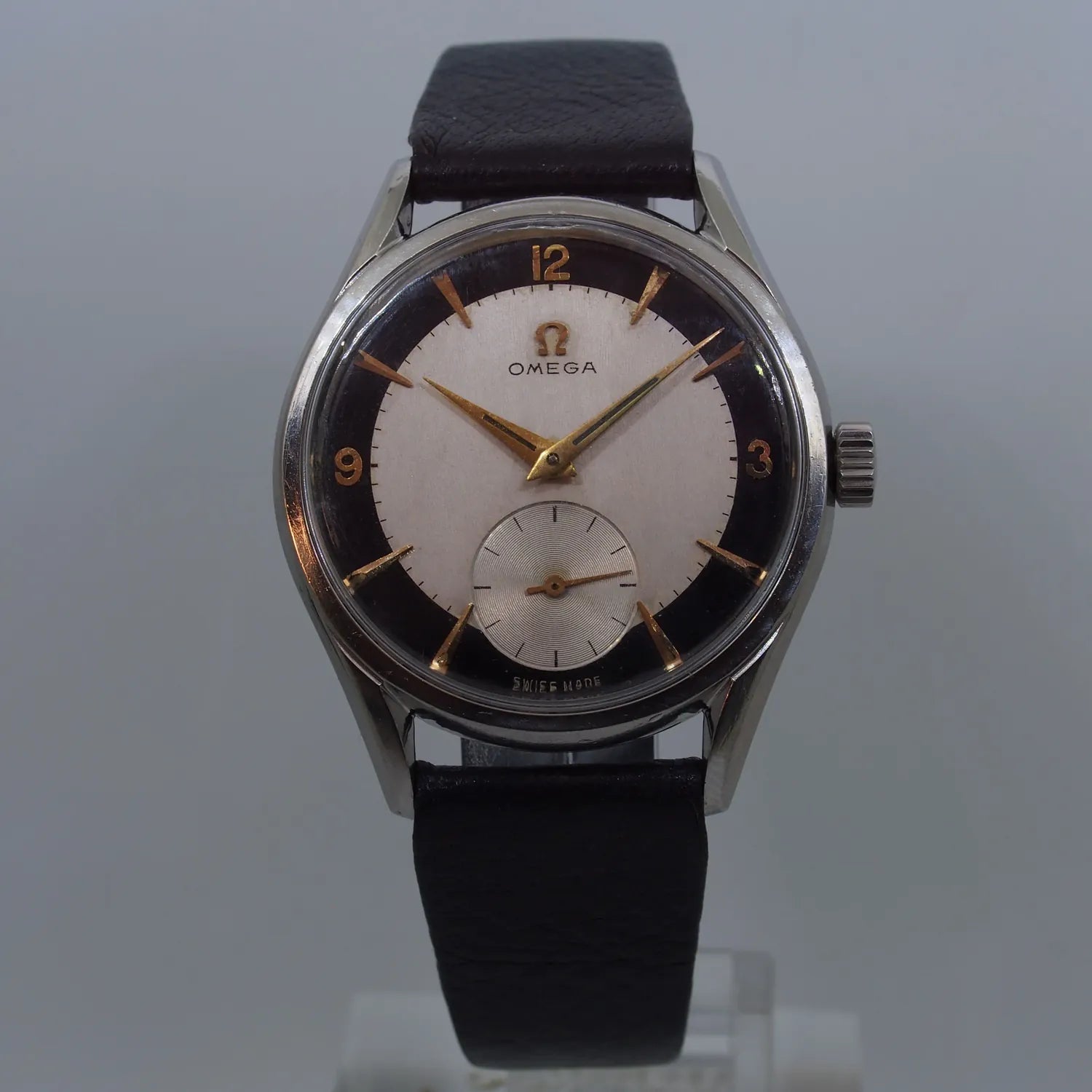
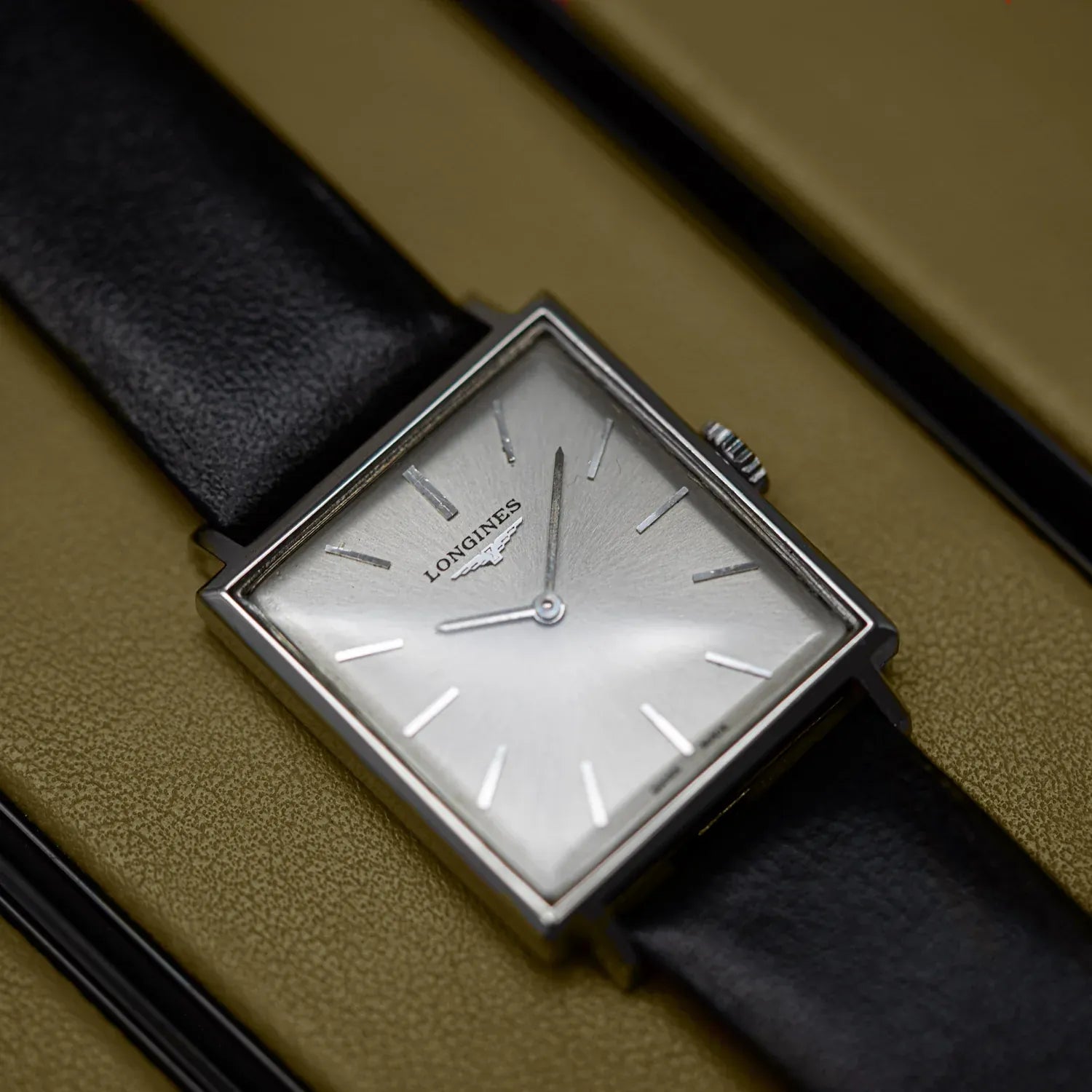
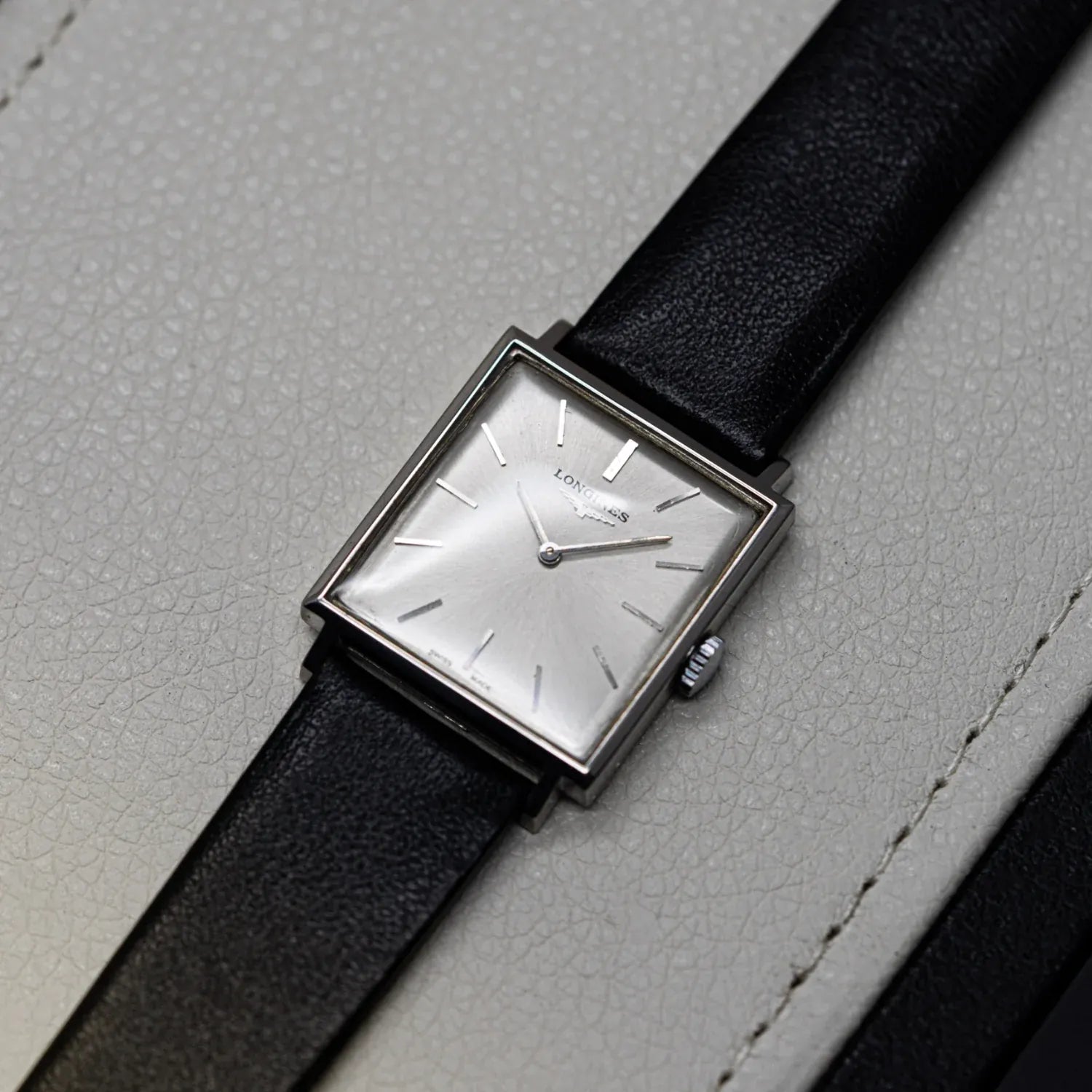
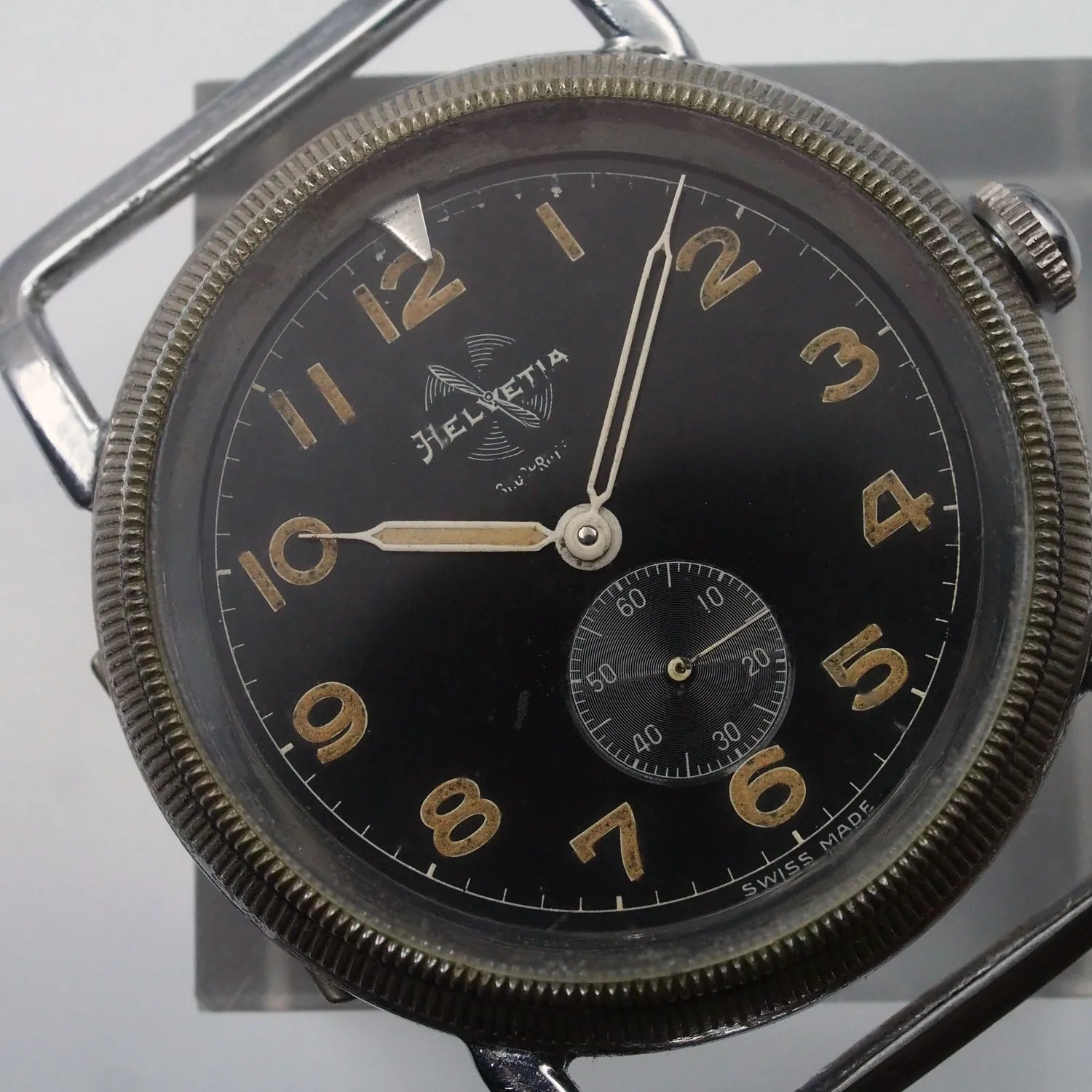
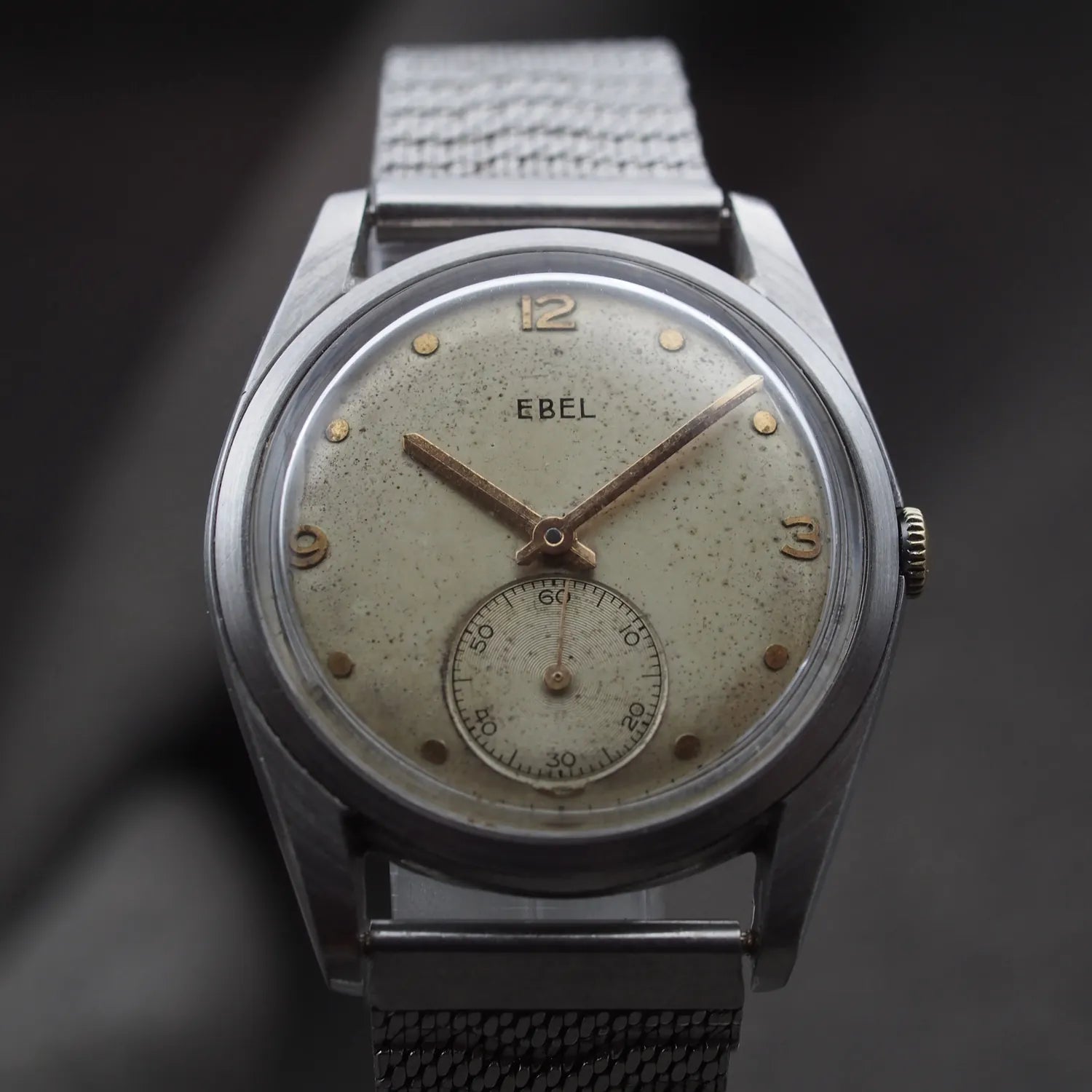
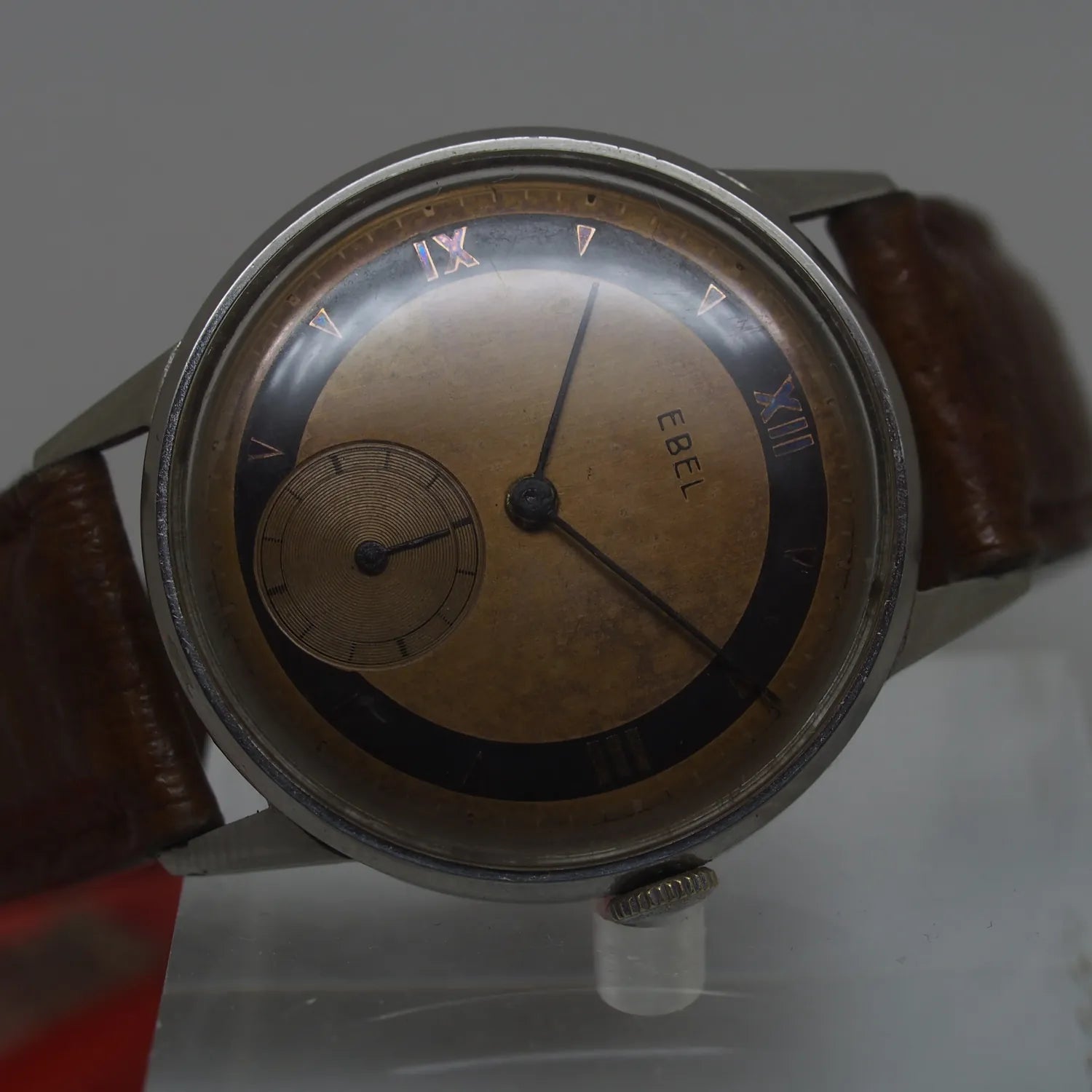
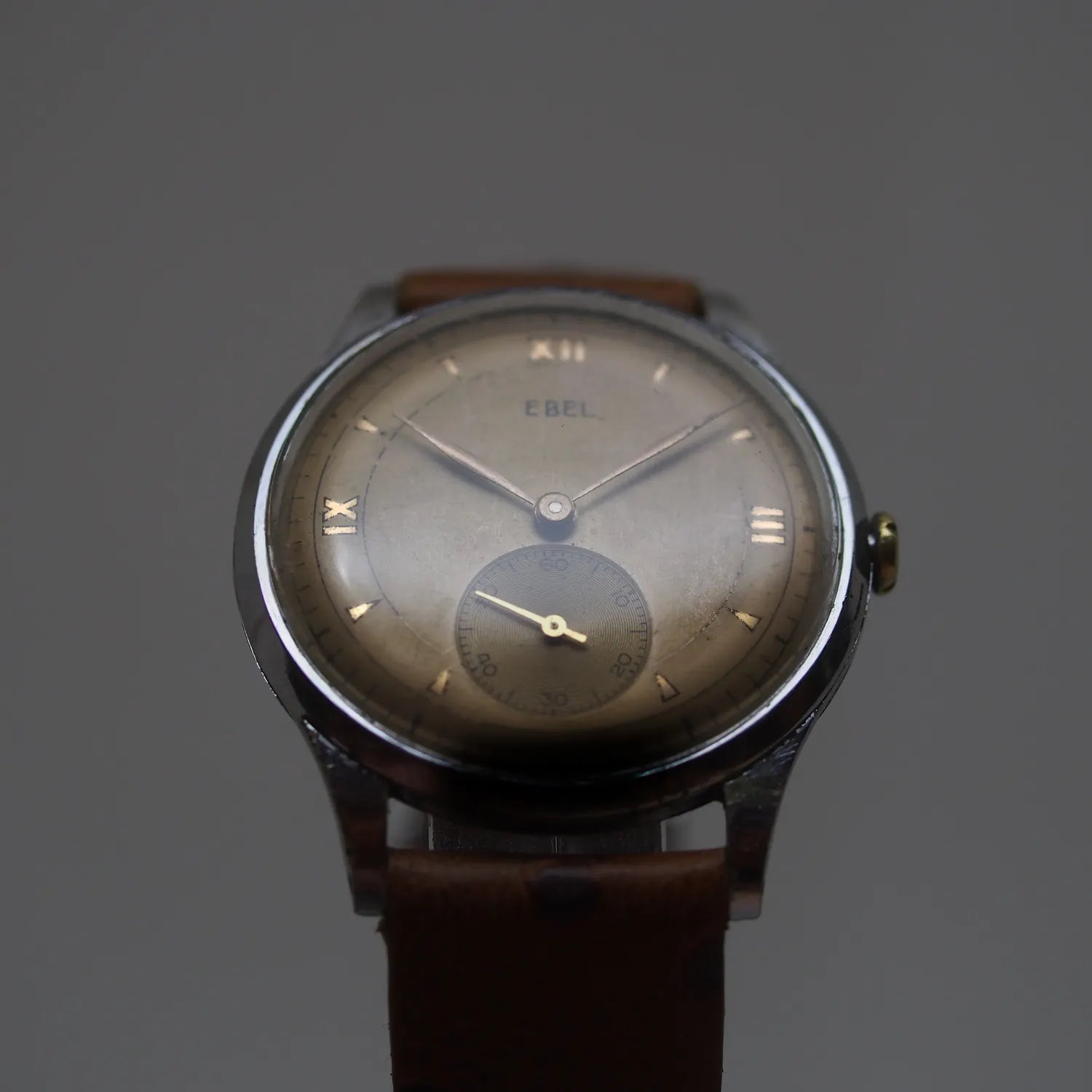
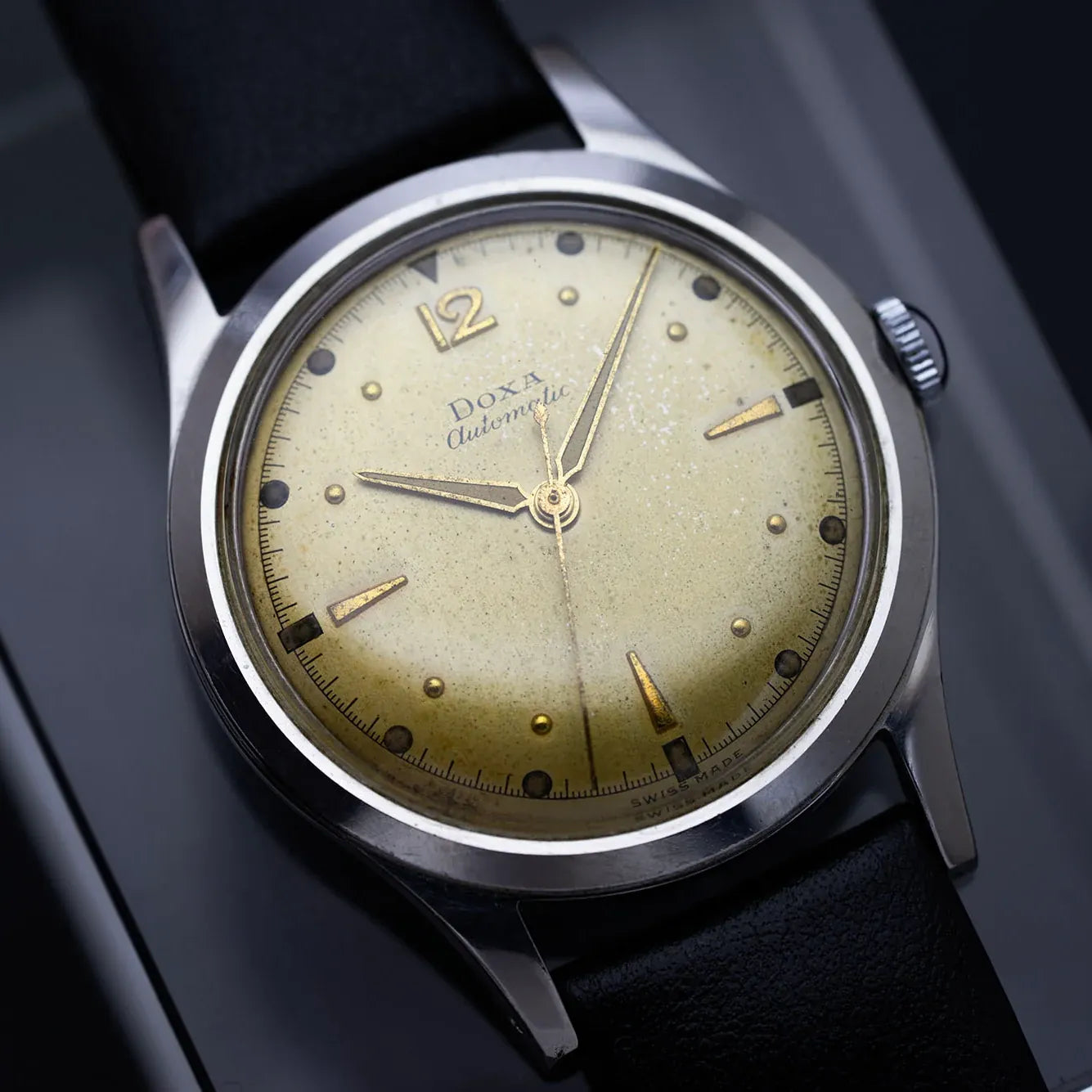
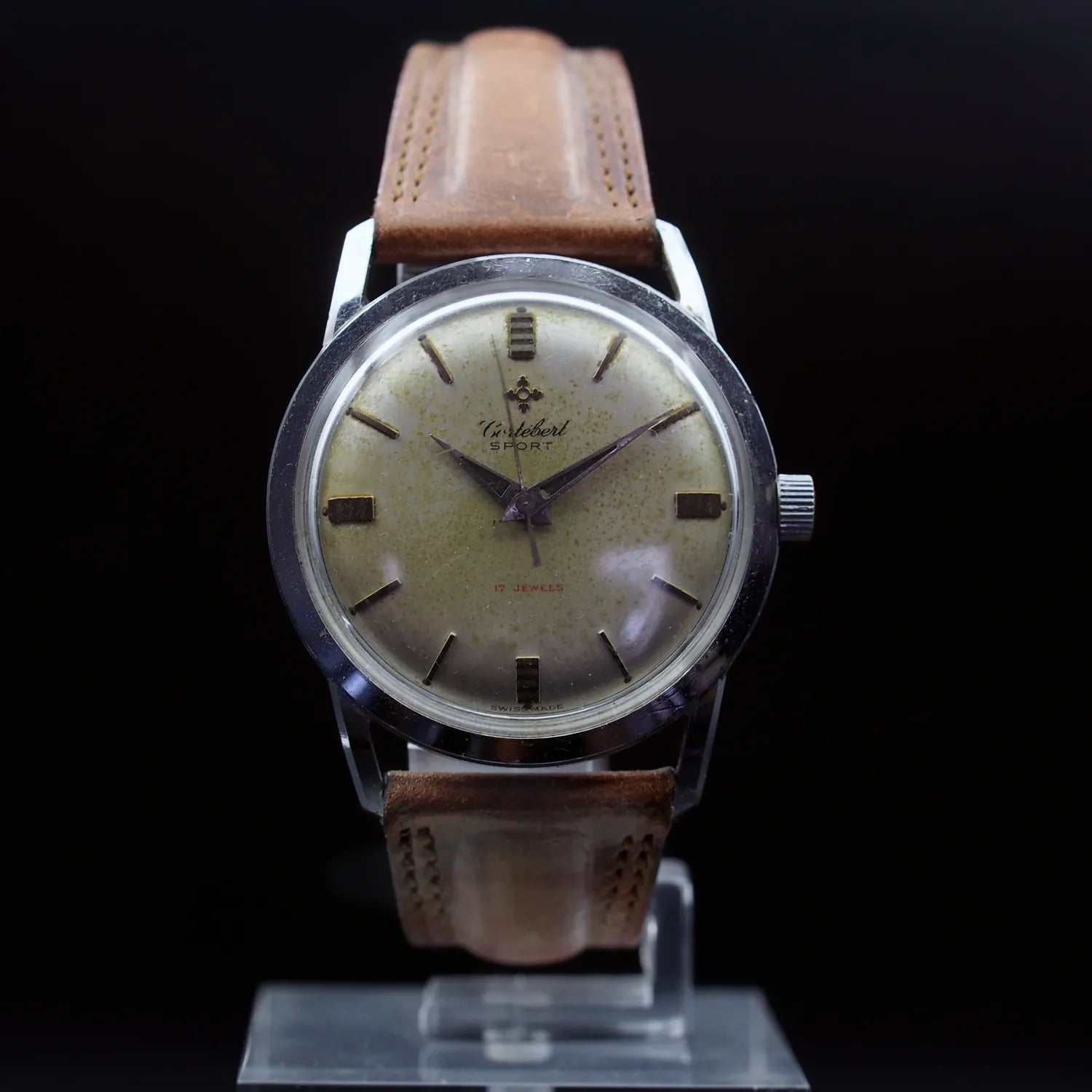
Dial design was equally expressive. Applied Arabic numerals, faceted hour markers, dauphine hands and subsidiary seconds registers gave otherwise simple watches considerable personality. Silver and champagne finishes were popular, while darker dials offered a more striking alternative. These details were not universal, but they help explain why two apparently similar mid-century watches can look remarkably different.
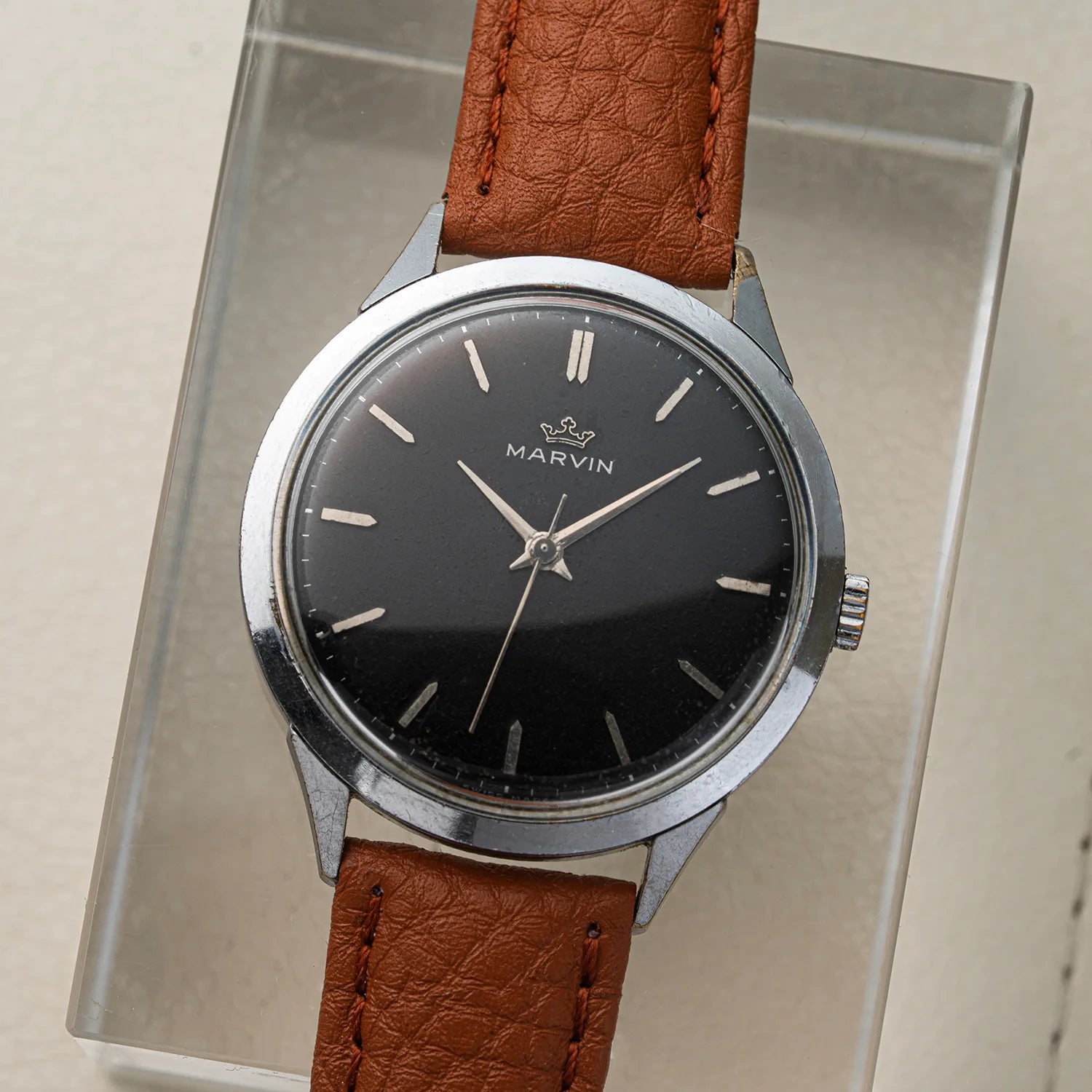
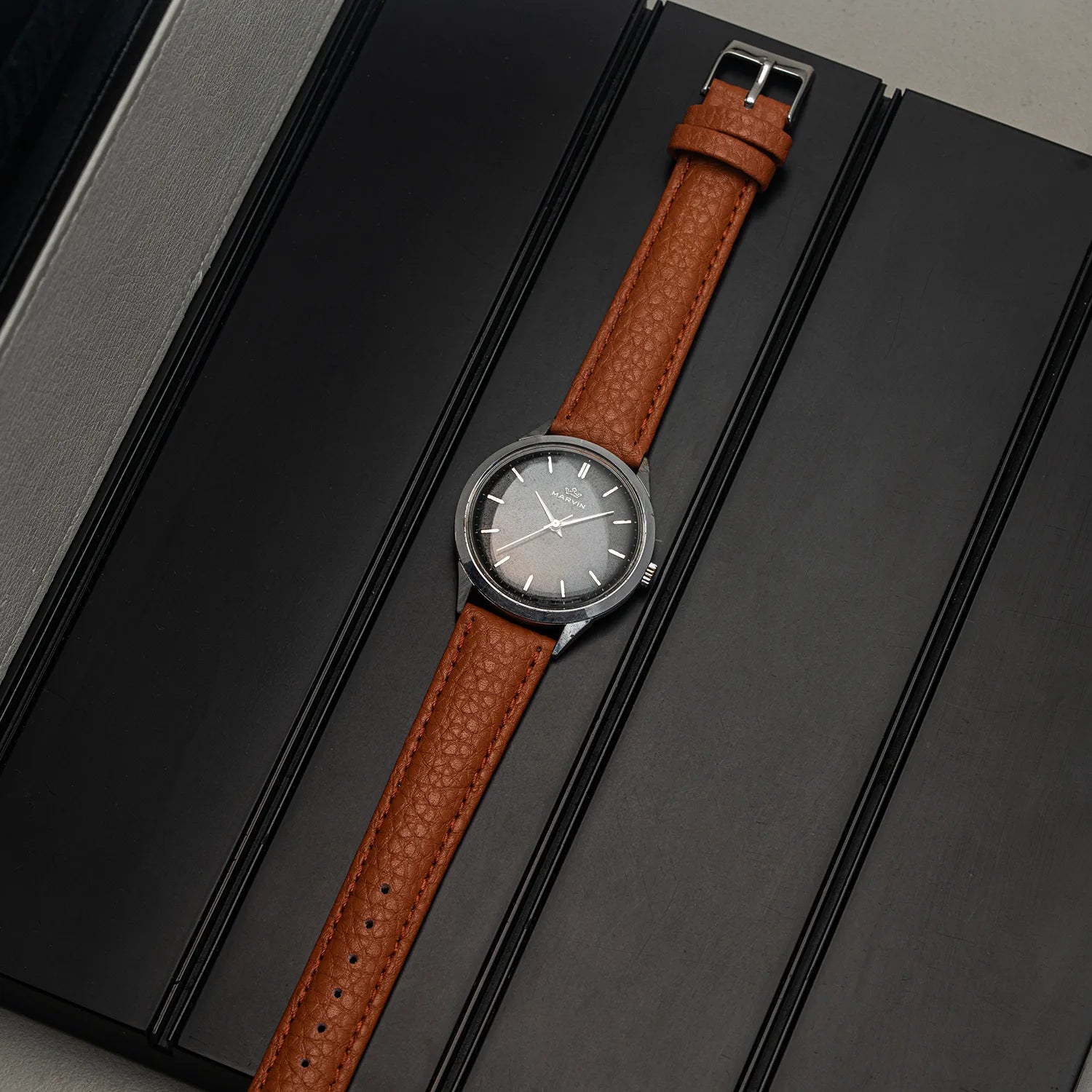
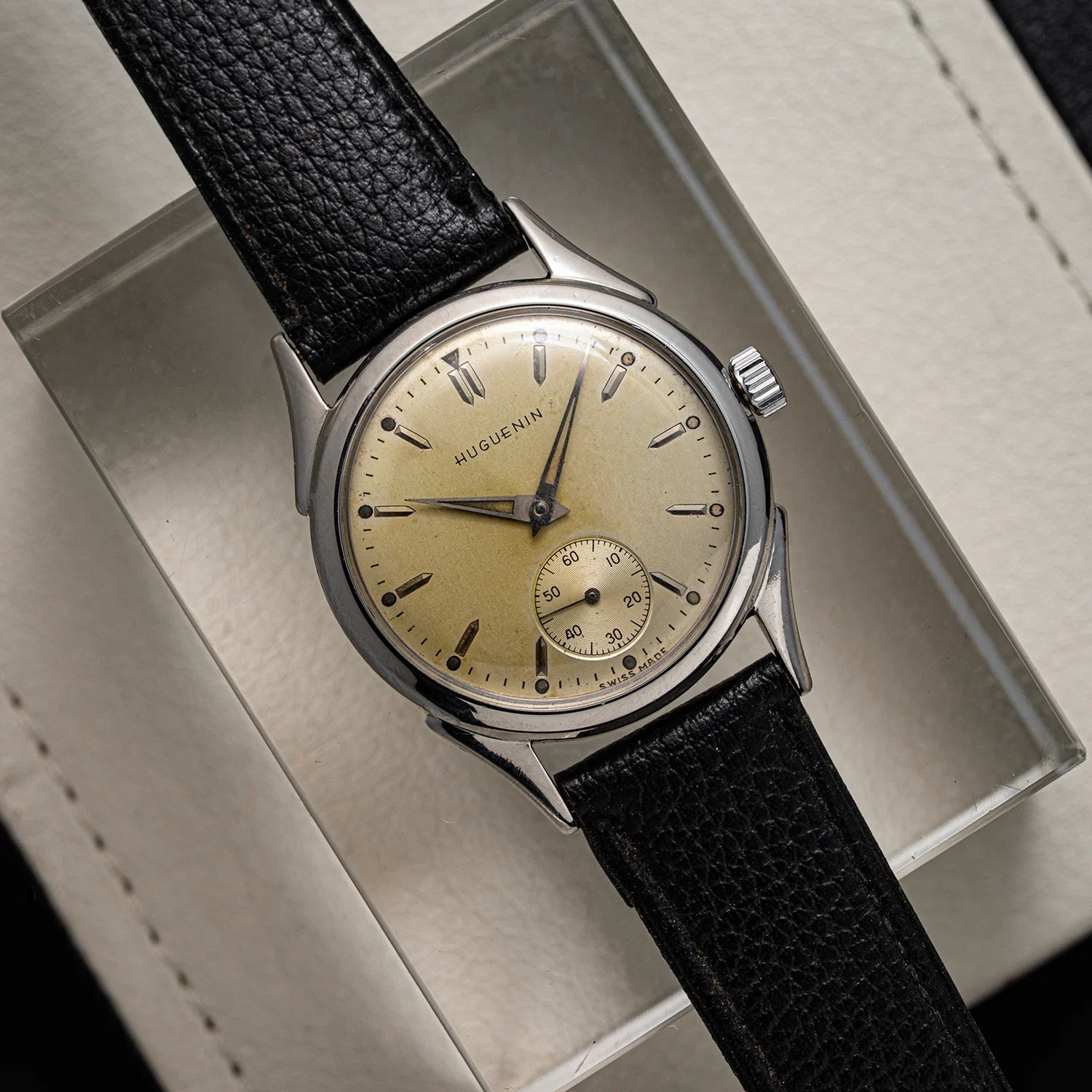
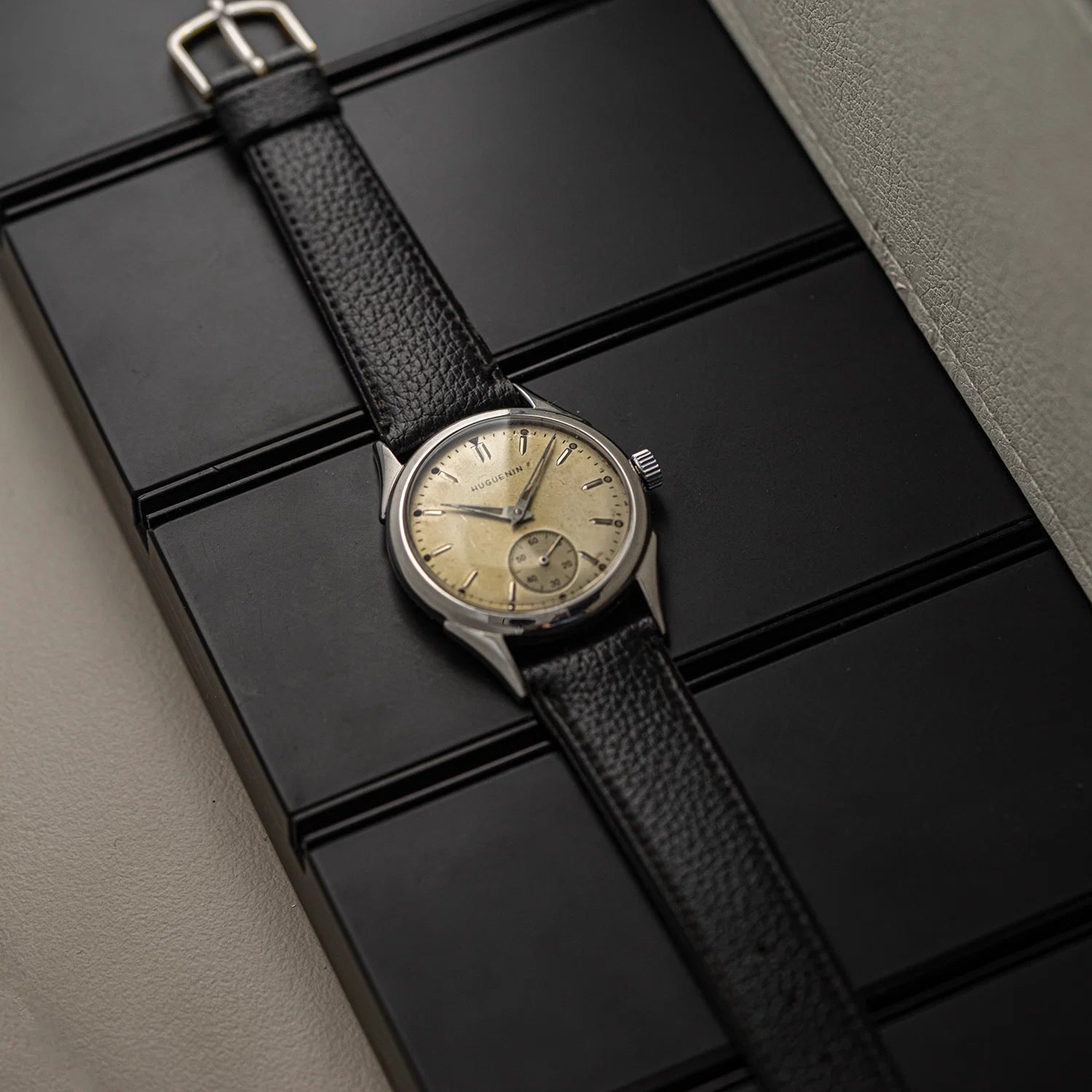
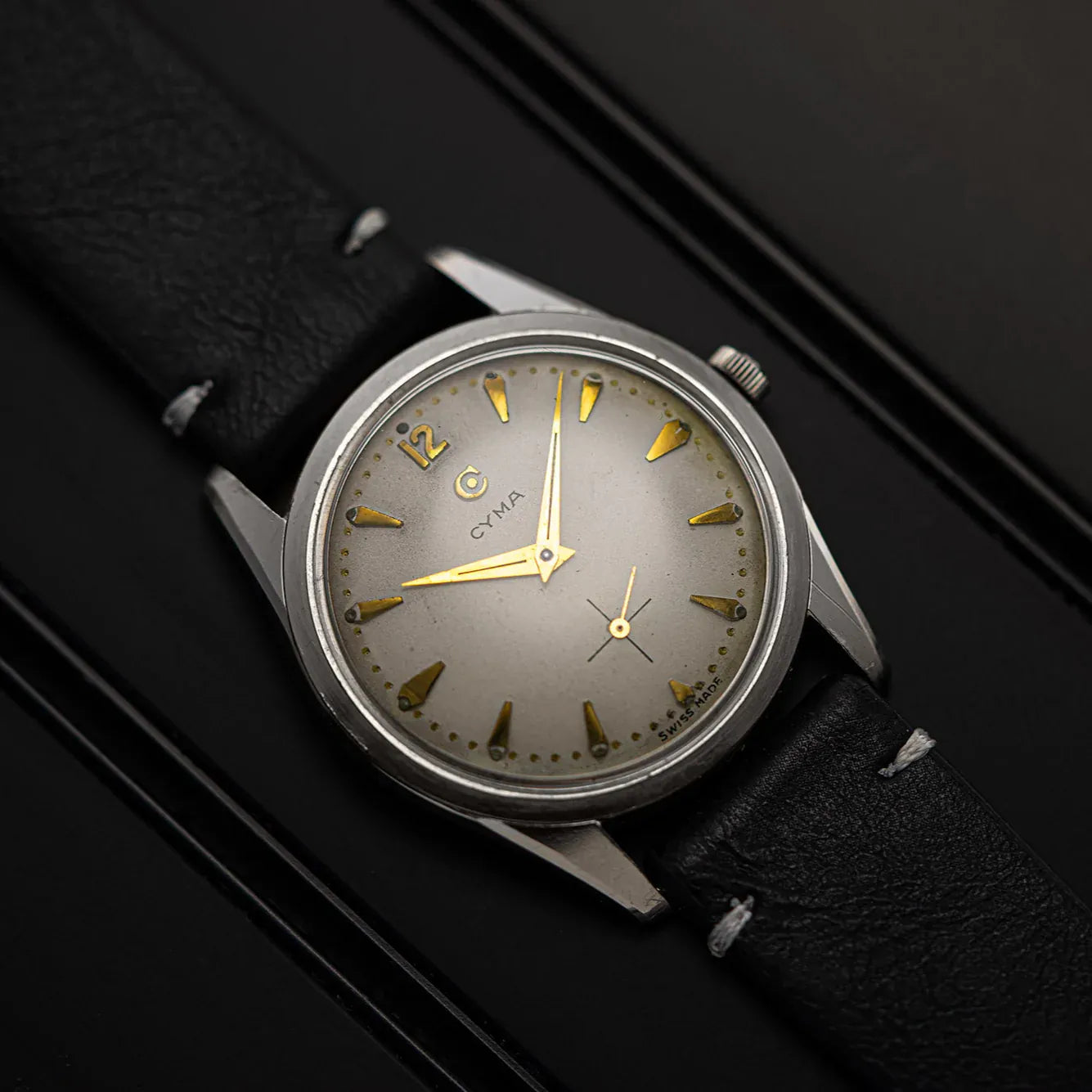
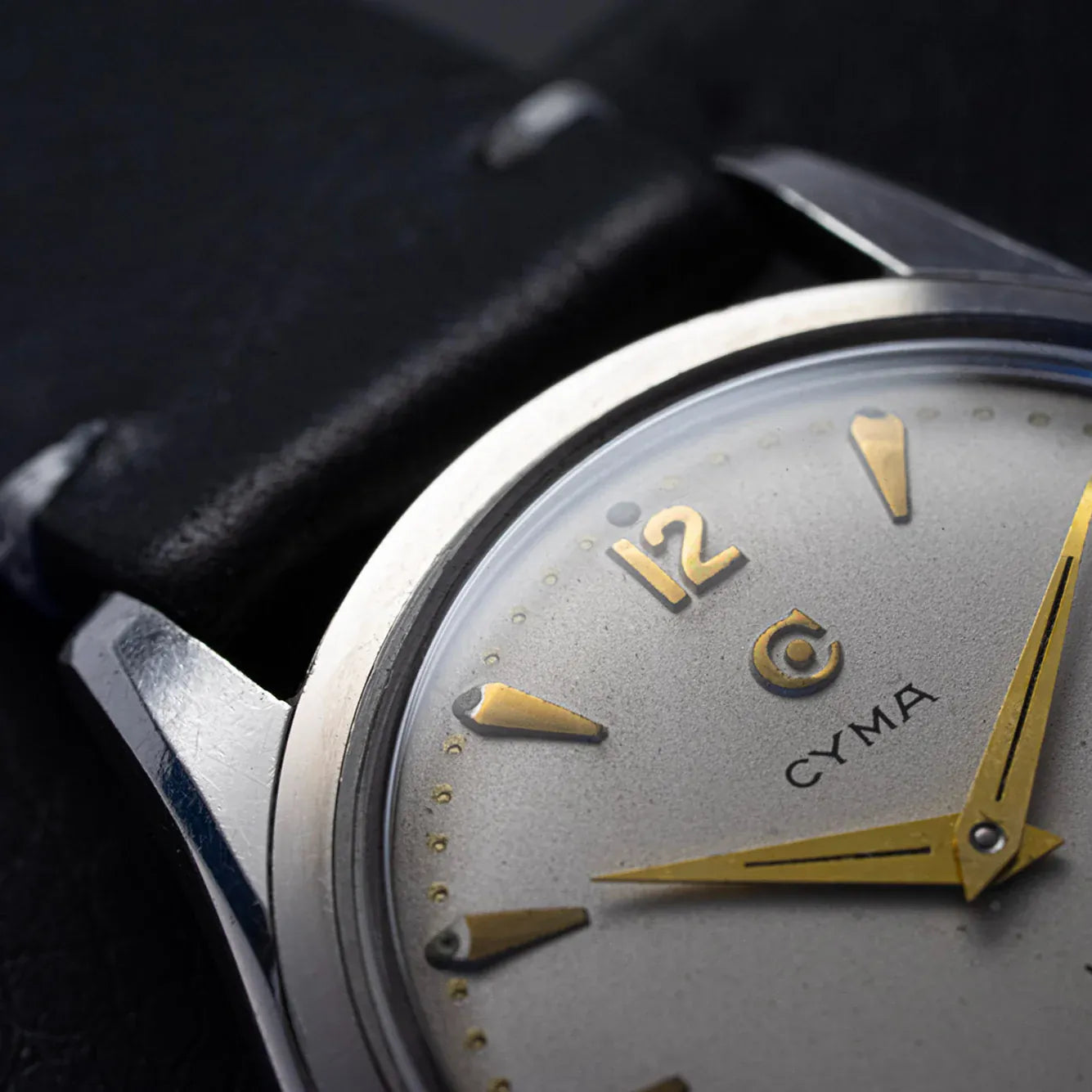
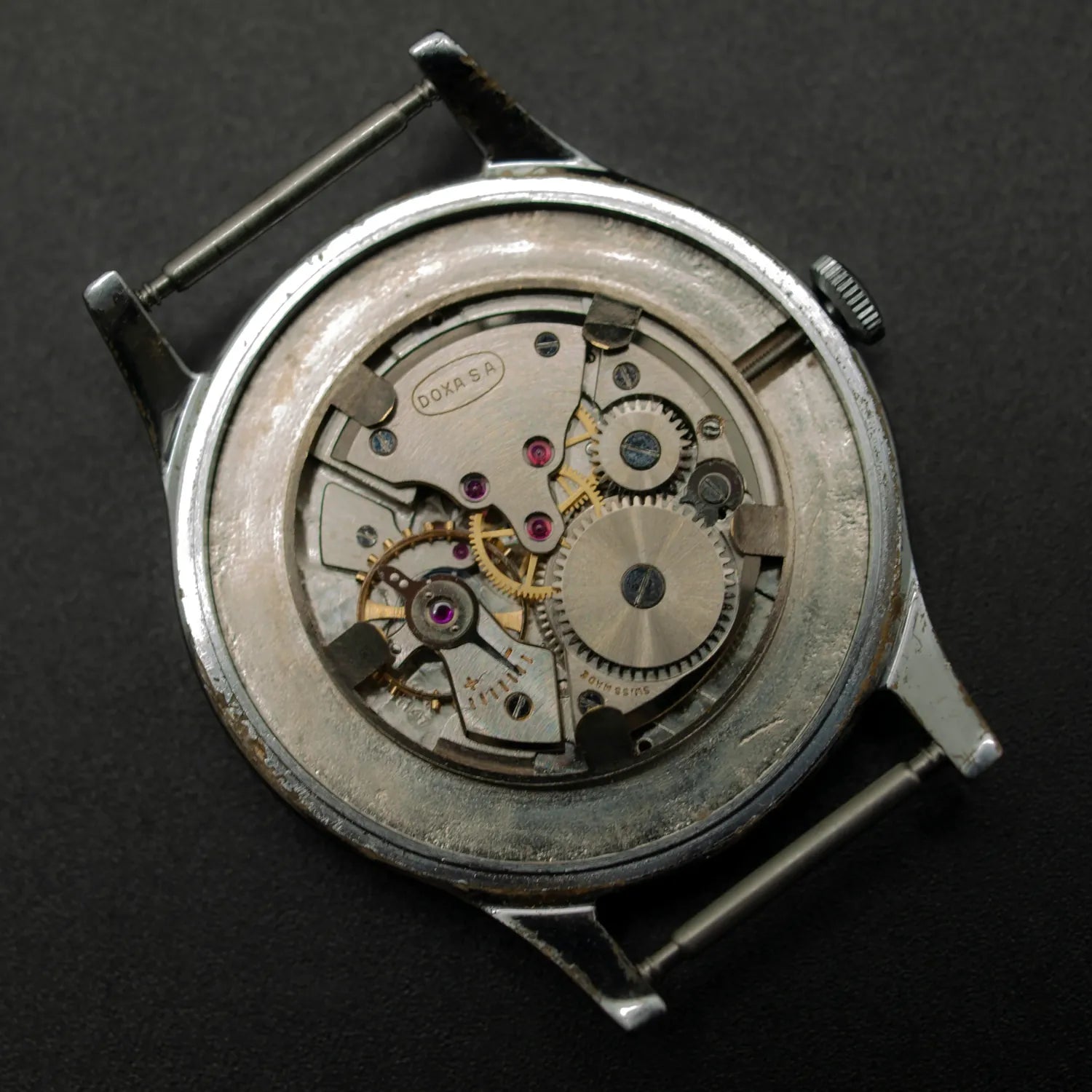
Examples from our collection illustrate this variety. The 1954 Cyma combines a small-seconds display with a restrained silver dial, while the 1956 Huguenin uses sculpted lugs and applied markers to give its compact case a more architectural appearance. The 1956 Marvin, with its black dial and central seconds, offers yet another interpretation of the same decade.
For collectors, the appeal lies in the relationship between case, dial and movement rather than diameter alone. Explore our dress vintage watches to compare these proportions across different periods of watchmaking.
To explore the earlier origins of these mid-century designs, discover our 1940s vintage watches, where compact cases, traditional mechanical movements and wartime influences shaped a different approach to wristwatch design.
1950s Mechanical Watches: Movements, Servicing and Originality
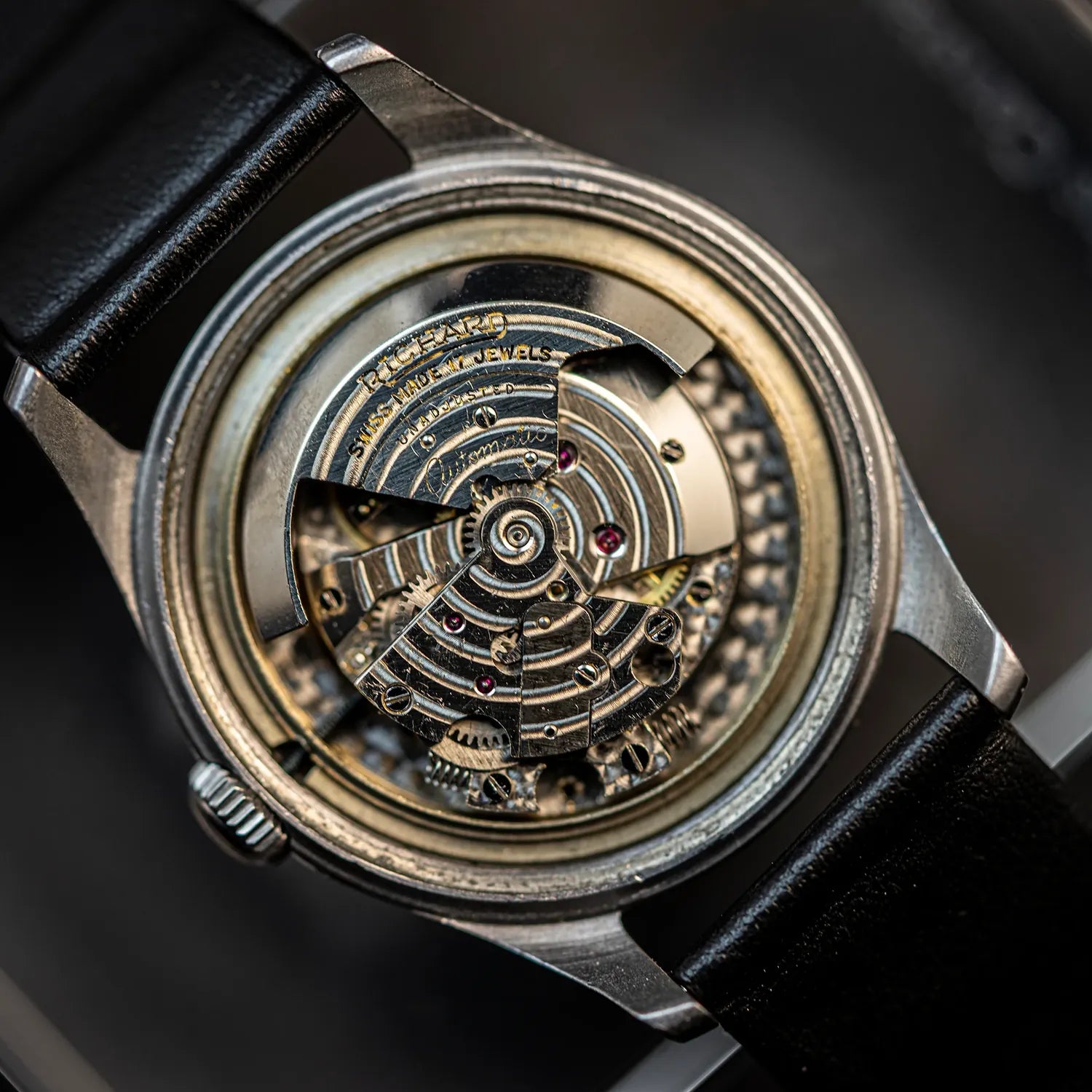
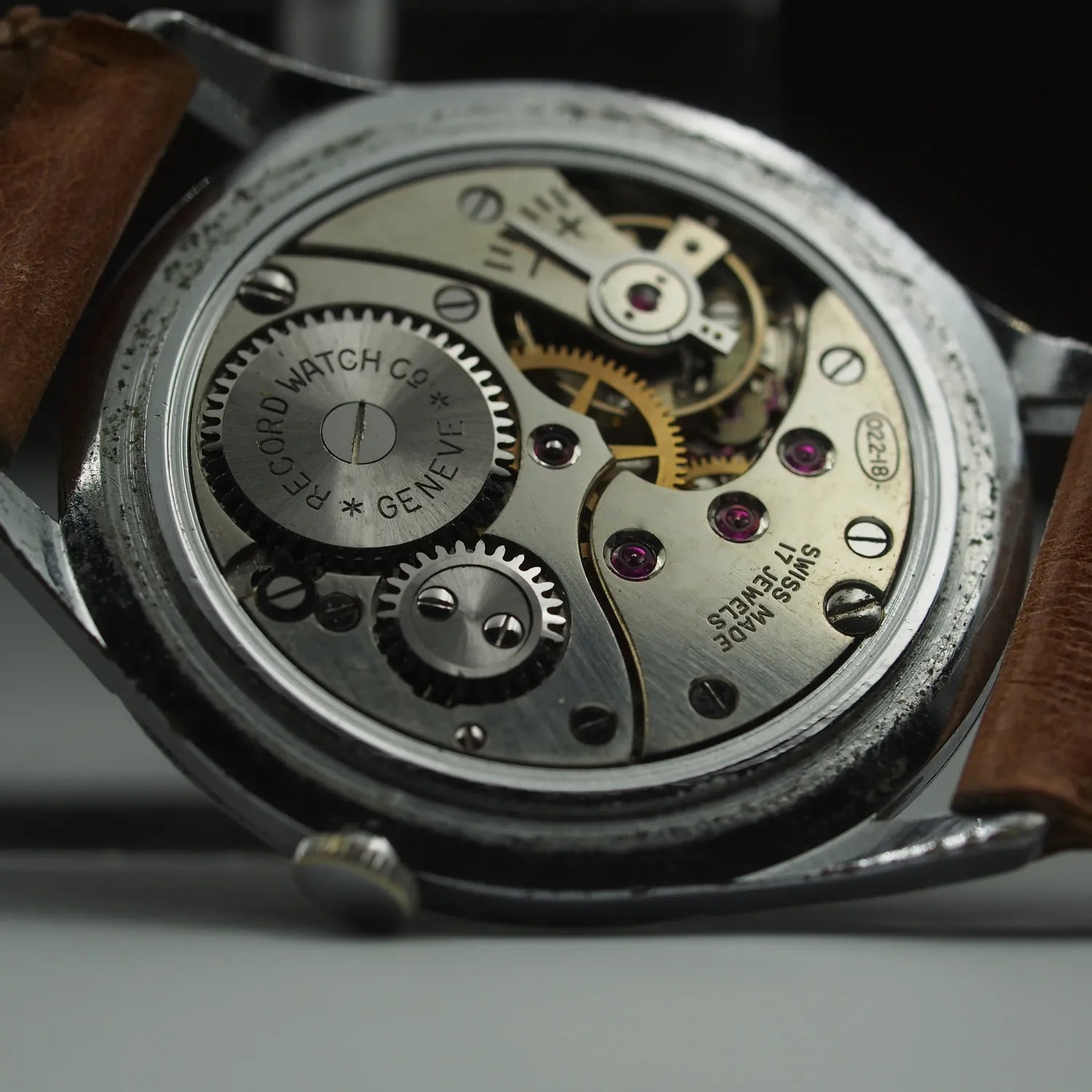
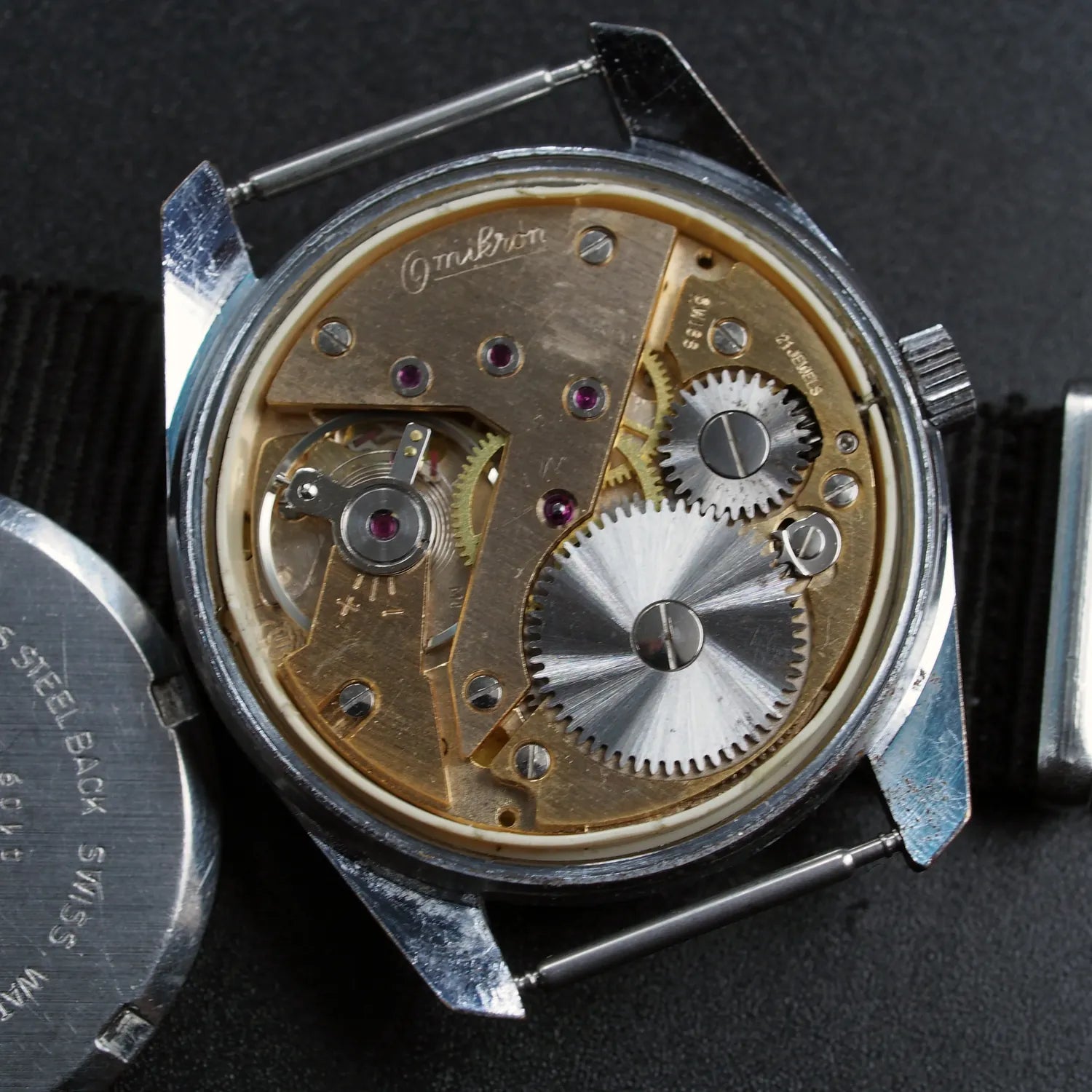
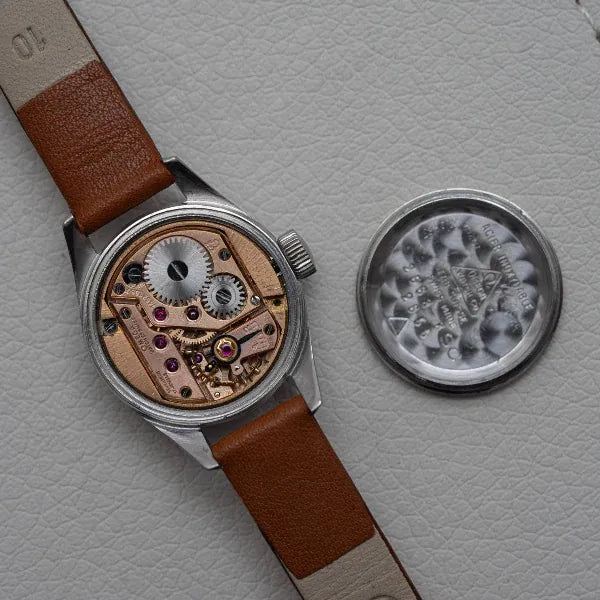
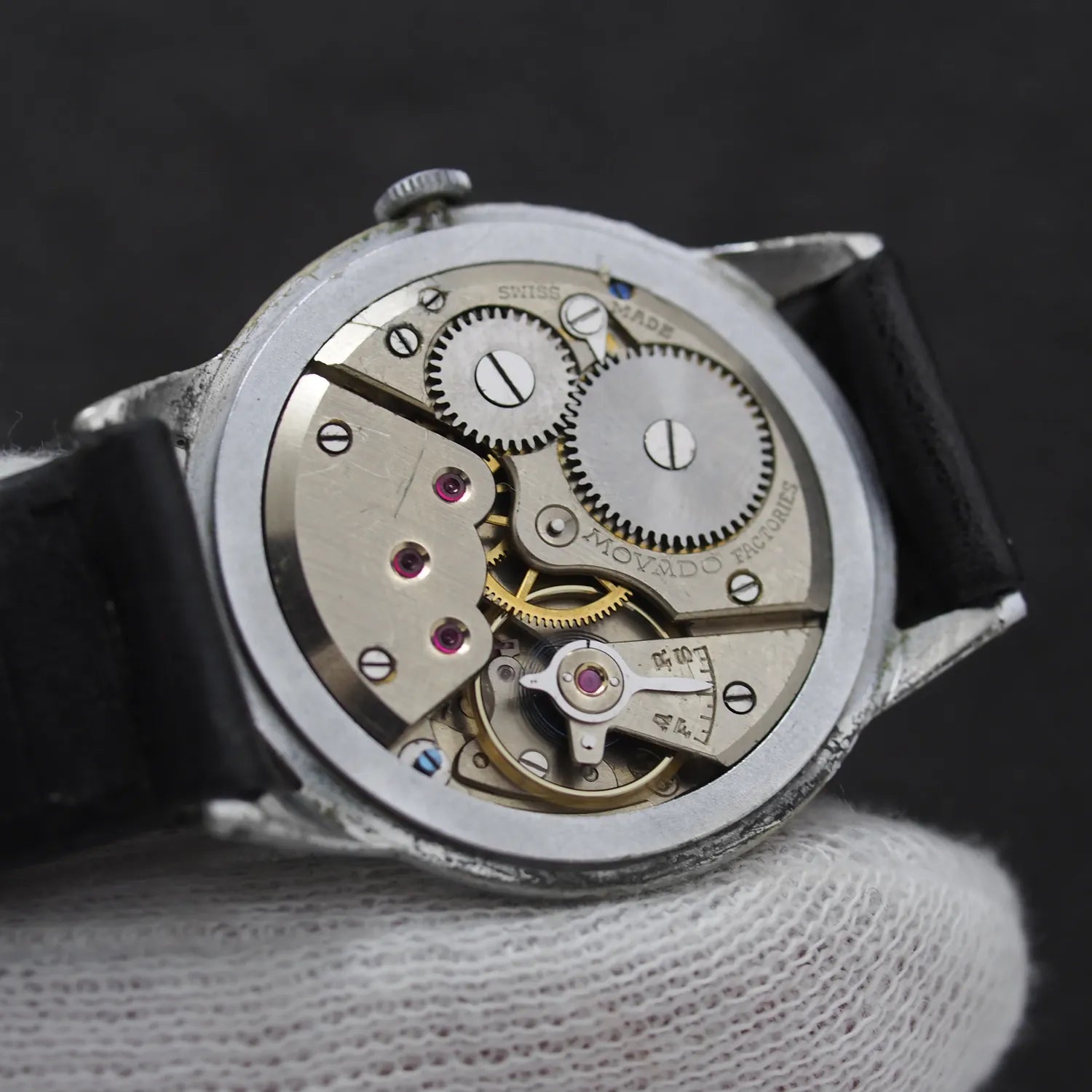
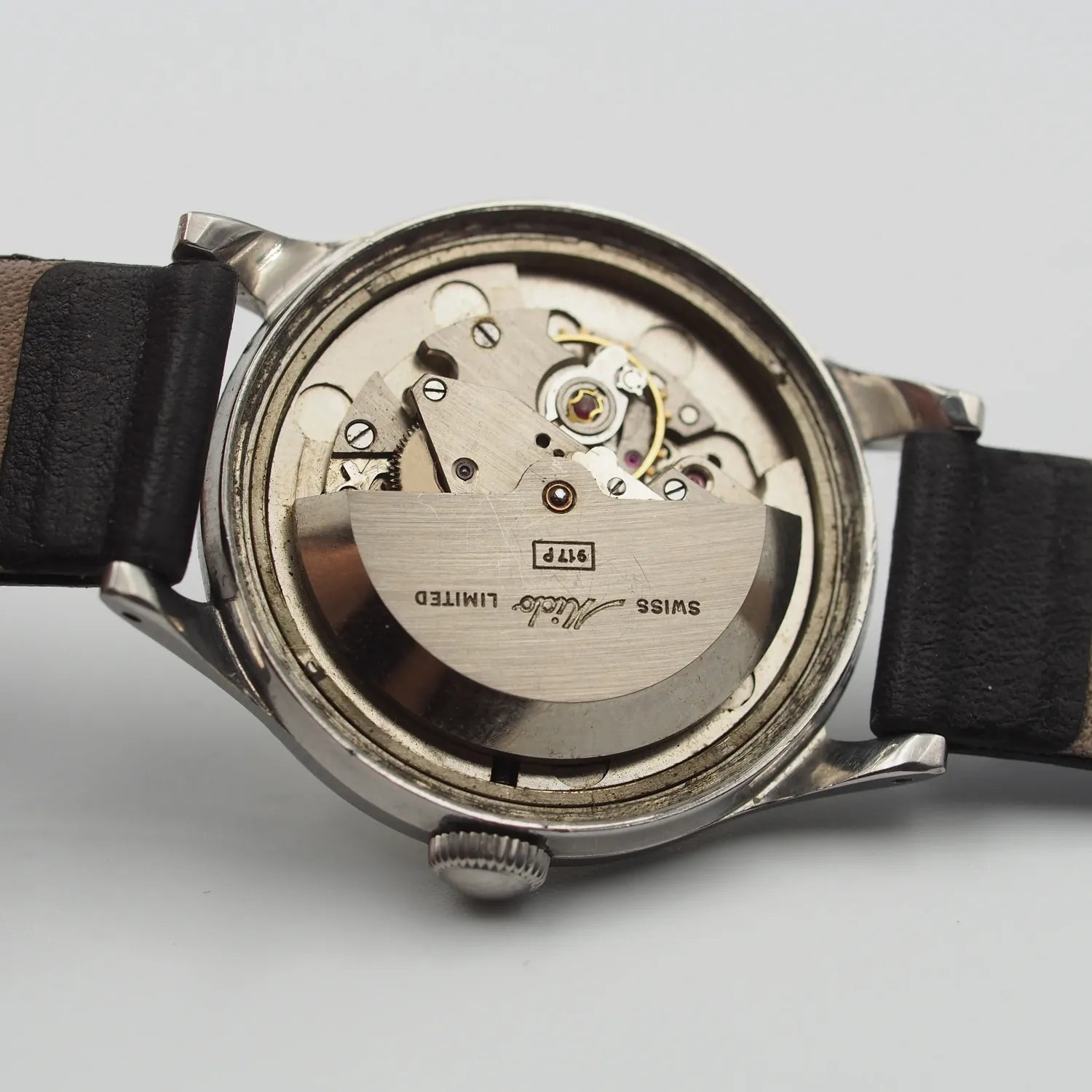
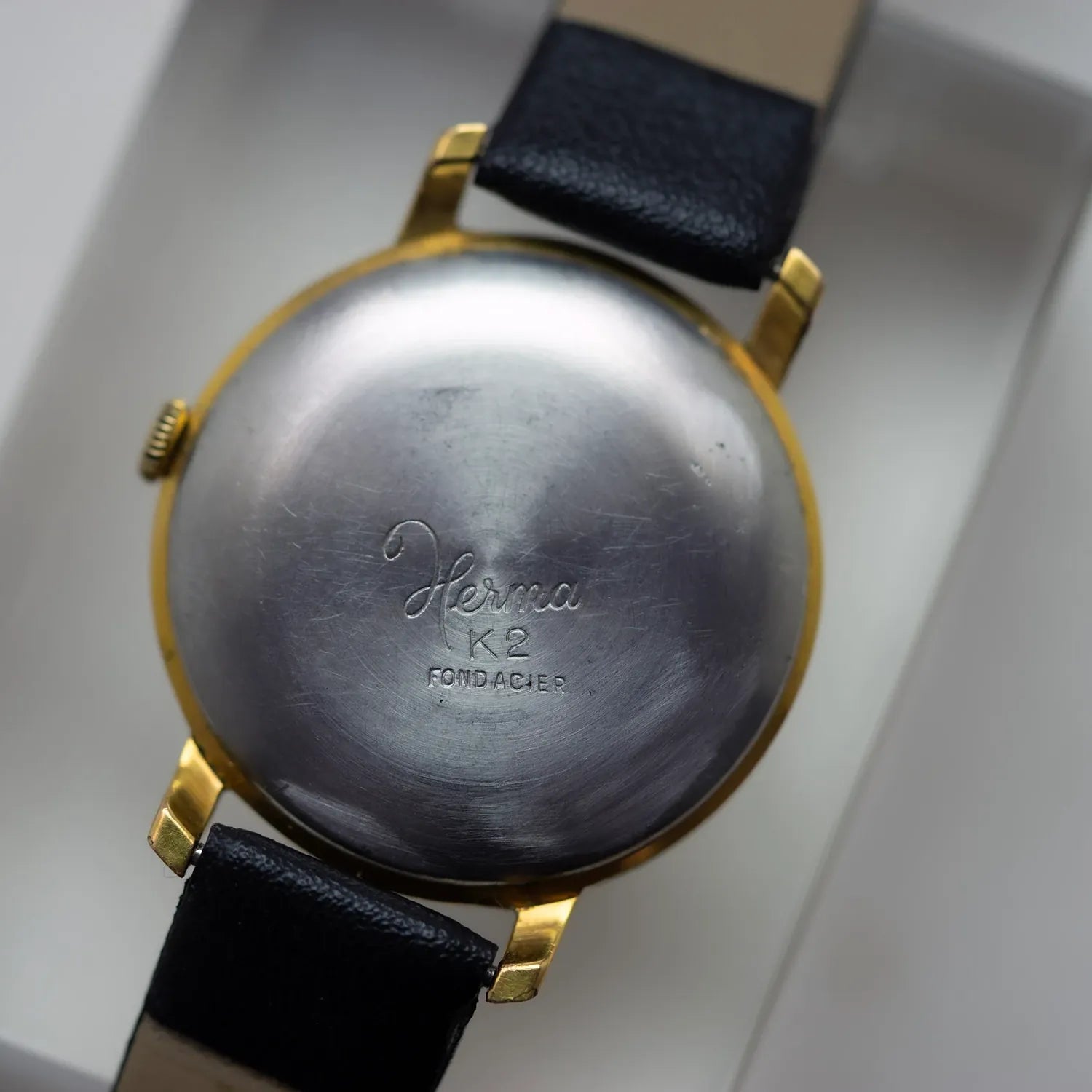
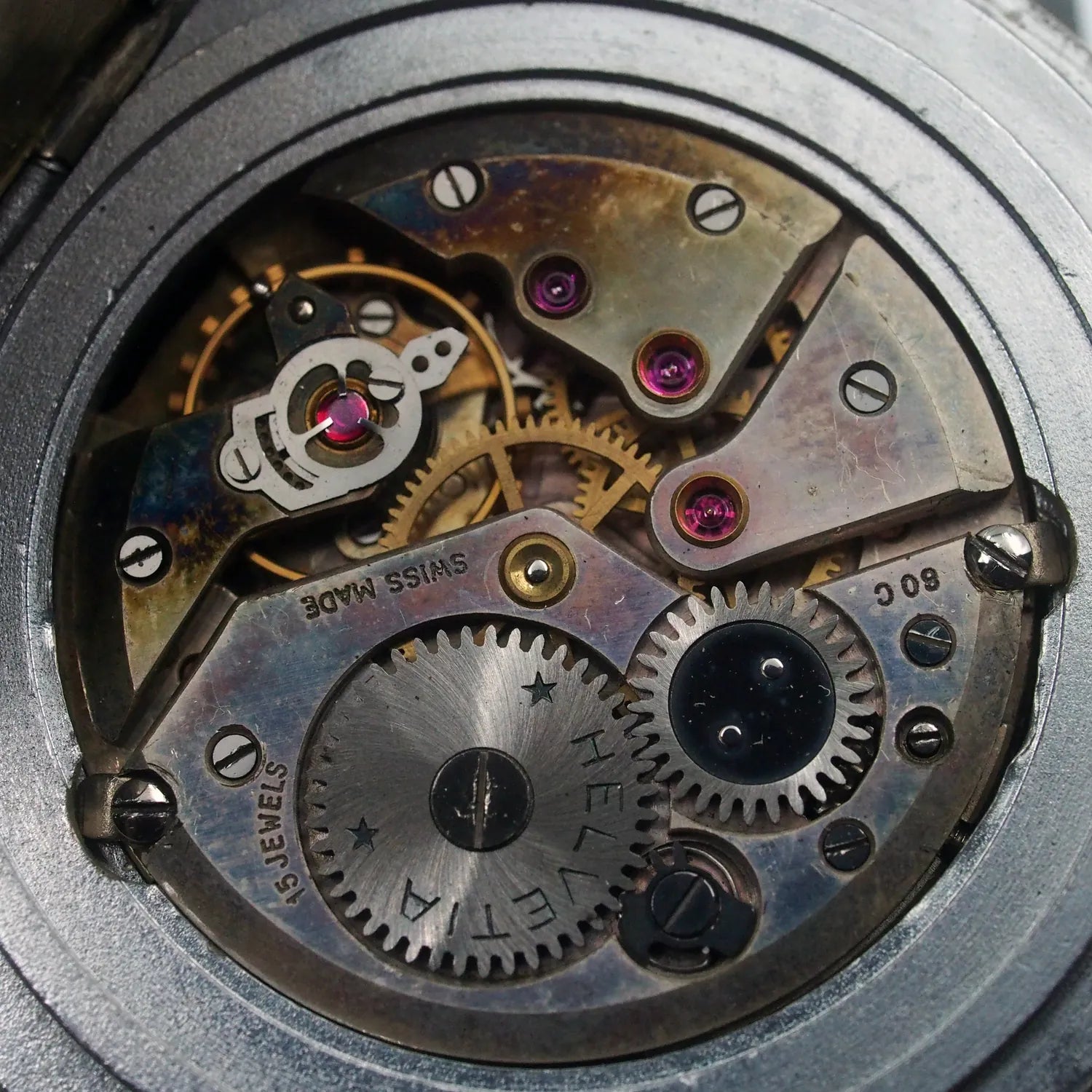
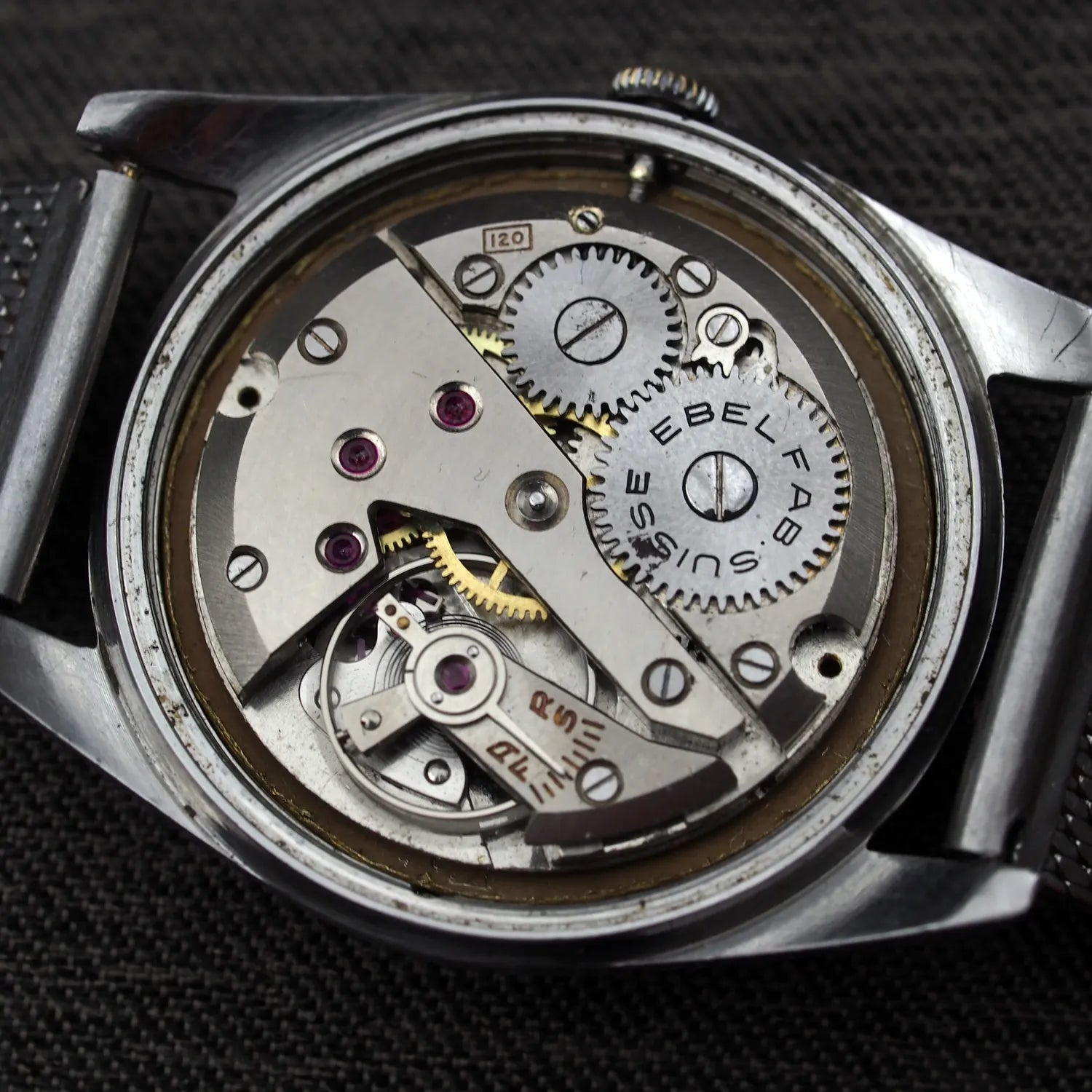
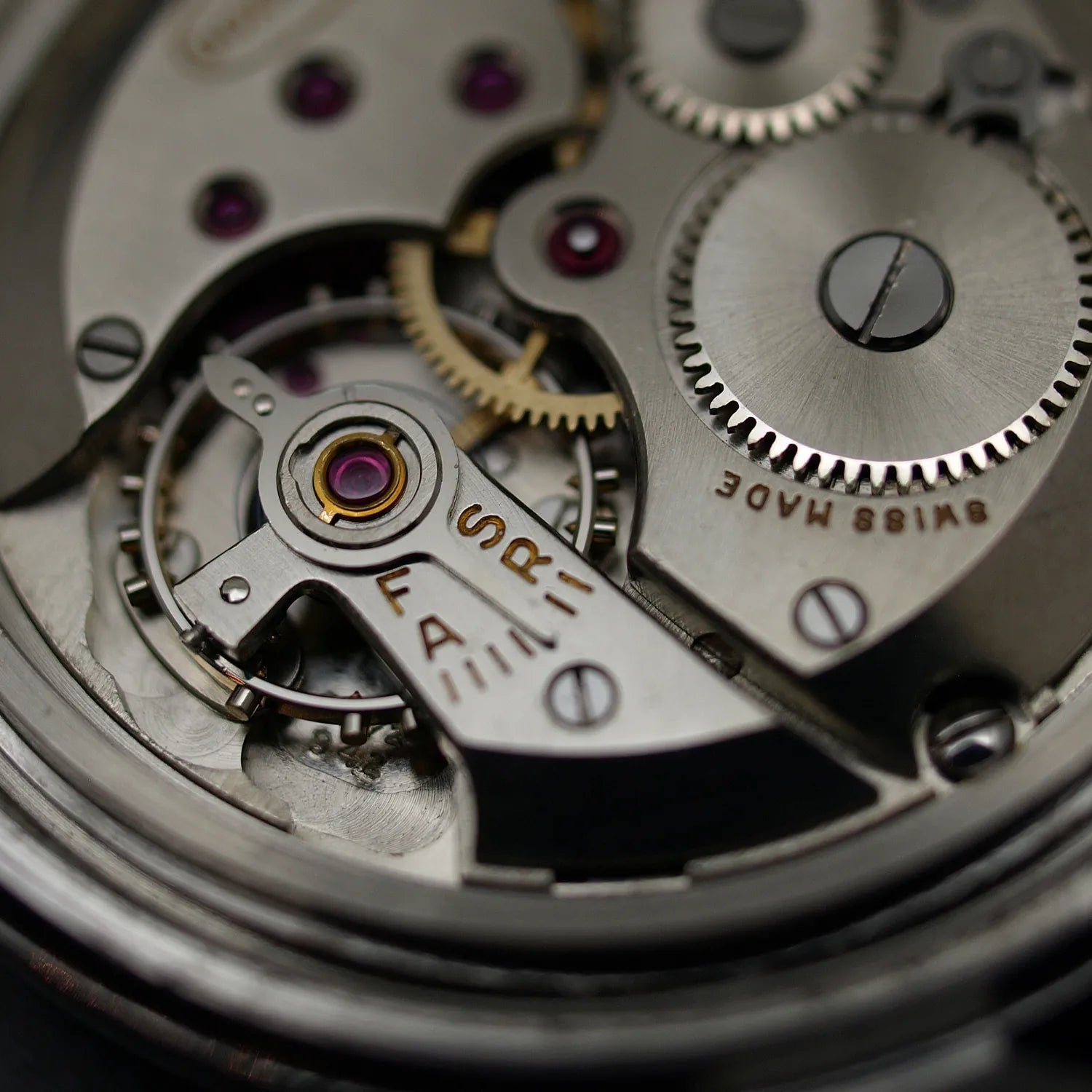
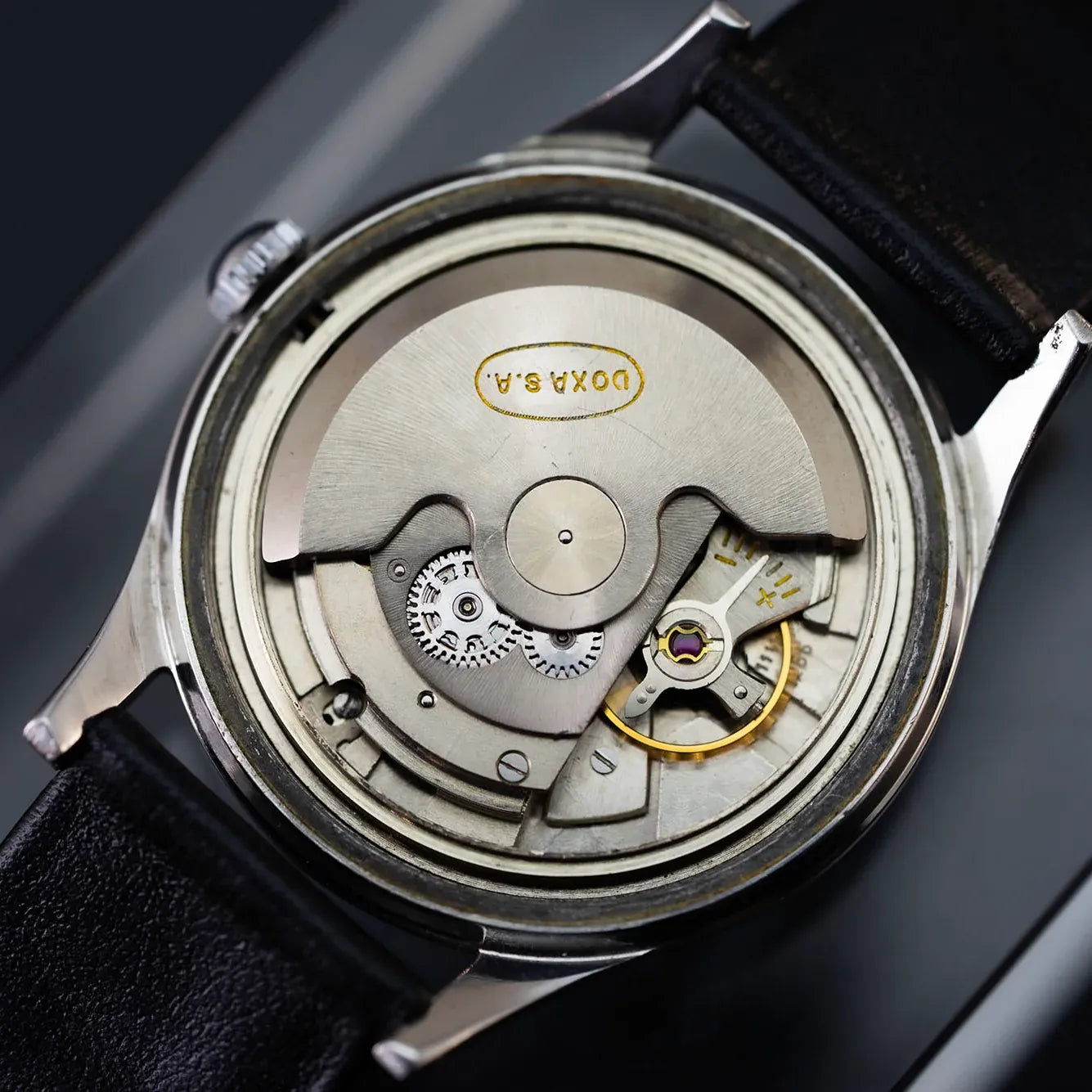
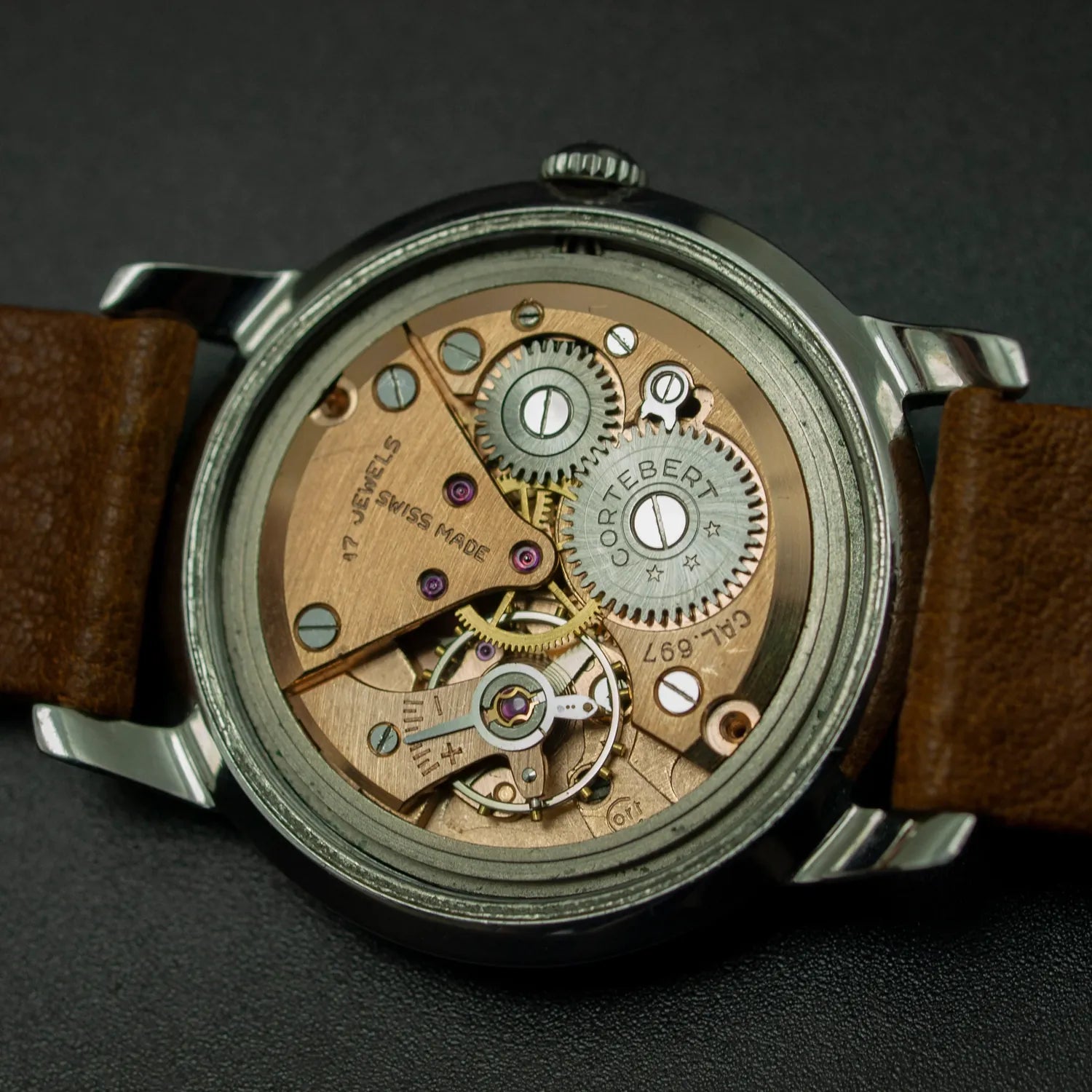
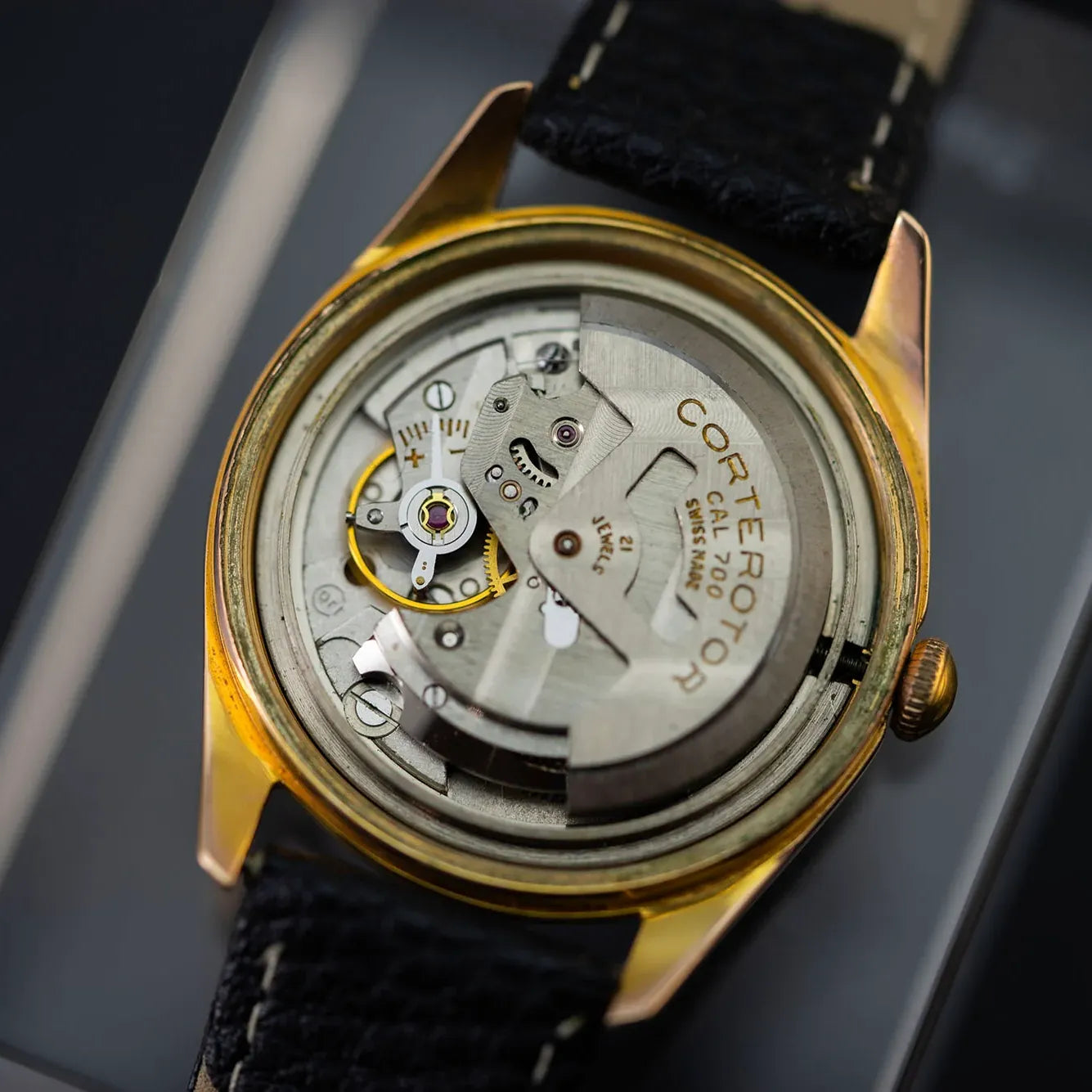
Hand-wound movements remained an important part of Swiss watchmaking throughout the 1950s, even as automatic winding became increasingly established. Traditional mechanical calibers offered compact construction, straightforward timekeeping functions and, in many cases, the durability needed for decades of use. Our 1954 Cyma with its R.458 movement, 1956 Huguenin with an AS 1203 and 1956 Marvin powered by the M.560 illustrate different approaches to manually wound wristwatches of the period.
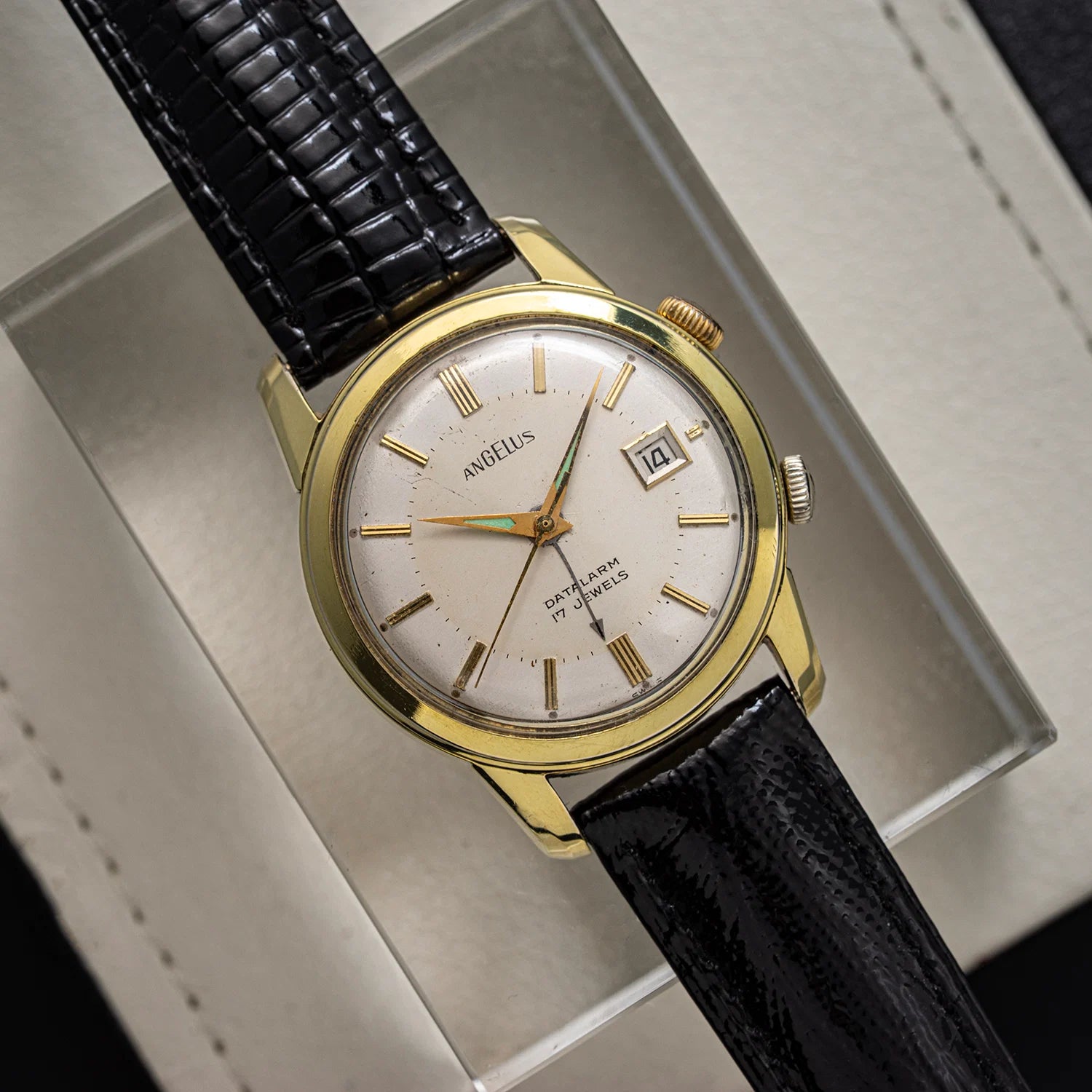
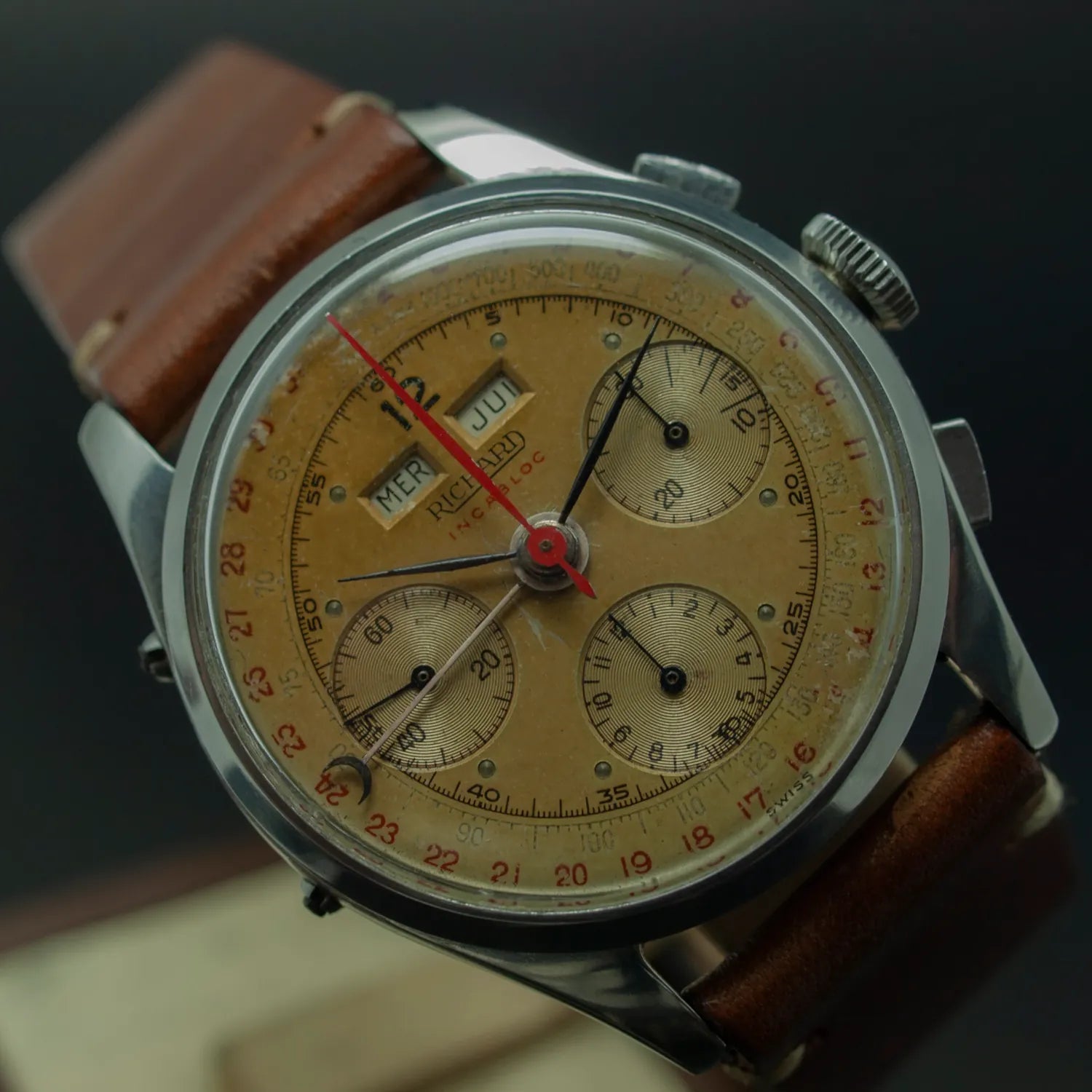
The decade also produced more specialised mechanisms. The Angelus Datalarm from 1958, powered by the AS 1568N, combines manual winding with a date display and mechanical alarm. Such complications demonstrate that mid-century watchmaking extended well beyond conventional time-only dress watches.
When assessing a 1950s watch, movement condition is only part of the picture. Collectors should examine the dial printing, hand style, case finishing and evidence of replacement components. An attractively aged dial can retain considerable character, but patina alone does not establish originality. Excessive case polishing may soften the original lug geometry, while an undocumented dial restoration can materially affect collector interest.
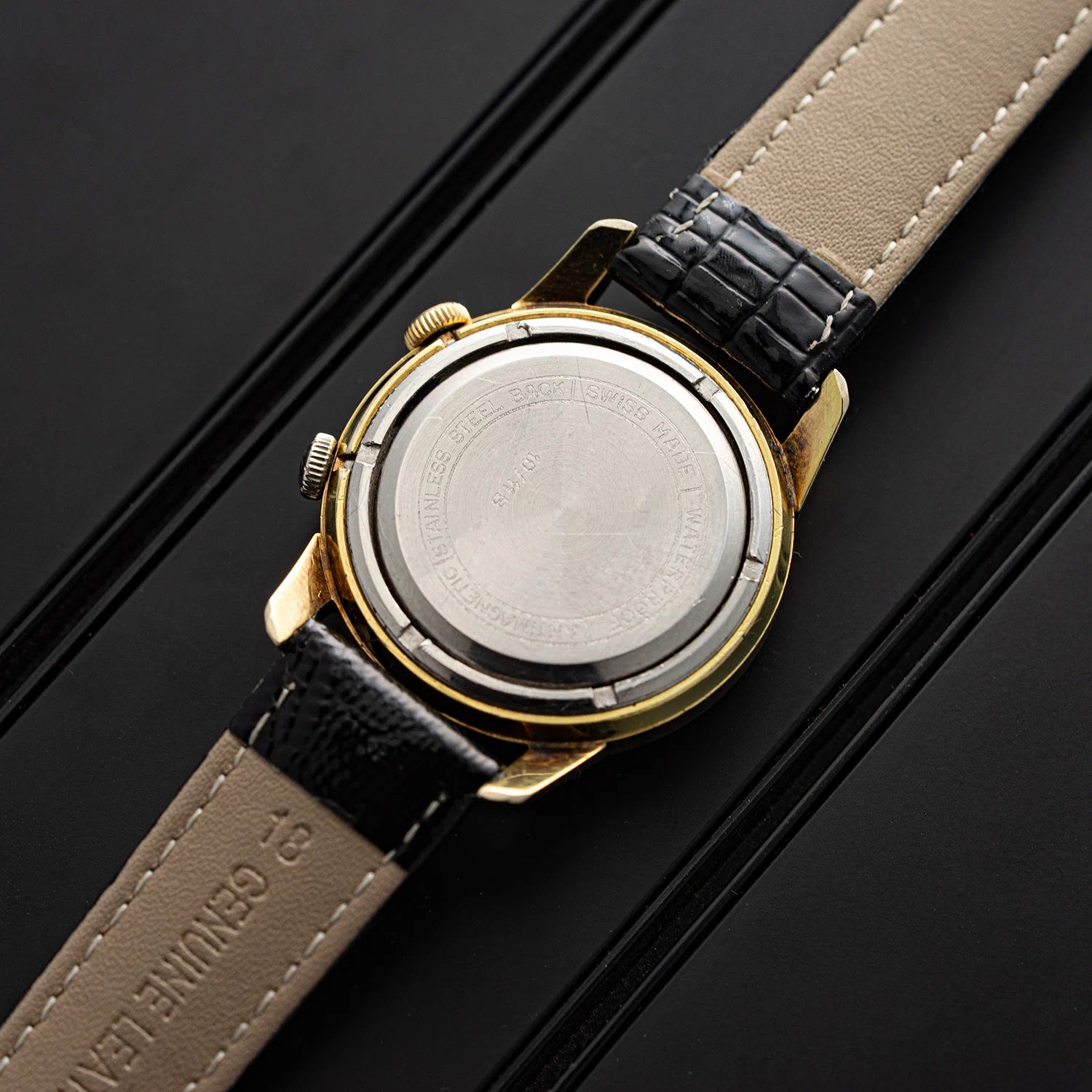
Servicing matters because aged lubricants, worn components and neglected winding mechanisms can compromise performance. A professionally serviced mechanical watch can be suitable for regular, careful wear, but it should not automatically be expected to match modern accuracy or water-resistance standards. At Vintage Watch Studio, our mechanical watches are serviced before sale, with individual photographs and condition information provided for each example. Discover more traditional mechanisms in our manual winding watch collection.


1950s Vintage Watches FAQ
What makes a 1950s vintage watch different from later decades?
Many 1950s wristwatches feature compact cases, sculpted lugs, applied hour markers, domed crystals and traditional mechanical movements. Manual winding remained common, while automatic watches and specialised sports models continued to develop. Compared with many later watches, the emphasis was often on restrained case proportions and detailed dial finishing.
Are 1950s mechanical watches reliable enough to wear today?
A properly serviced 1950s mechanical watch can be suitable for regular, careful wear. Reliability depends on the condition of the movement, availability of replacement parts and quality of servicing. Modern water resistance and precision should not be assumed. At Vintage Watch Studio, our mechanical watches are professionally serviced and every purchased watch includes a 12-month warranty.
How can I tell whether a 1950s watch has its original dial?
Check the consistency of the dial printing, logo, hour markers, hands and visible ageing against documented examples of the same reference. Uneven printing, incorrect fonts or inconsistent luminous material may warrant closer investigation, although none proves restoration on its own. Originality should be assessed across the complete watch rather than judged from patina alone.
How do I choose the right size for a 1950s men's watch?
Many men's watches from the 1950s have case diameters around 32–36 mm, although larger examples also exist. Lug-to-lug length, case shape and dial opening can make a substantial difference to how a watch wears. Compare the full dimensions rather than diameter alone, and remember that a smaller vintage case can still look well balanced on a modern wrist.
Recognized & Reliable Worldwide
Trusted Partners in Security, Shipping, and Service



Store
Vintage Watch Studio
- Drinke Pavlovic 3, 11130 Belgrade
- Visiting Hours: Monday – Friday: 10:00 – 17:00 CET
- +381 61 653 4298
- vintagewatchstudio@gmail.com
- Online Chat 24/7