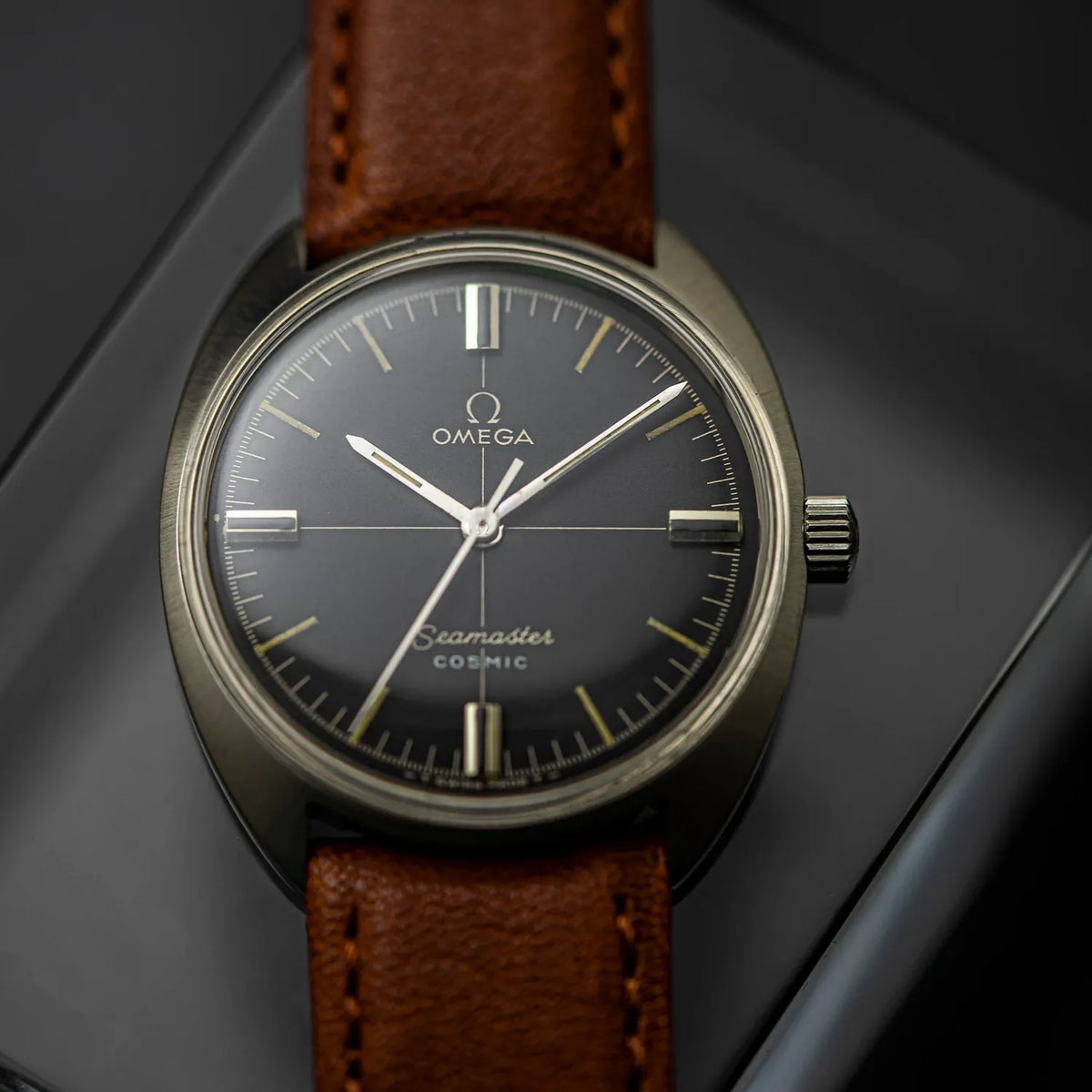
Vintage Watch Condition Explained: Patina, Polishing, Redials and Replacement Parts
Two vintage watches of the same reference can be separated by decades of different treatment. One may retain its original dial and case geometry but show obvious marks. Another can look nearly new because its dial was refinished, its hands replaced and its case polished. Neither watch's condition can be summarized responsibly by a single adjective. Vintage watch condition is a component-by-component assessment: what survives, what works, what was changed and how confidently those conclusions can be supported.
Some aging is attractive; some is evidence of damage. Some restoration preserves a watch's usefulness; other intervention can erase details that collectors value. The purpose of this guide is to put patina, polishing, redials, replacement parts and mechanical function into one coherent evaluation. It is not a reference-specific authenticity certification, nor a visual test that can diagnose every dial repaint or overpolished lug. Those questions require much closer model-specific comparisons.
Begin with four different dimensions of condition
A useful evaluation separates cosmetic condition, originality, mechanical condition and documentary confidence. These dimensions overlap but are not interchangeable. A scratched original case can be mechanically excellent; a spotless repainted dial can hide an unserviced movement. A complete service history does not establish that a dial was never refinished, and a correct historical engraving does not prove the movement now inside is the one fitted at the factory.
| Dimension | Look for | Do not assume |
|---|---|---|
| Cosmetic appearance | Dial surface, visible scratches, case edges, crystal and bracelet wear | Shine means originality or good mechanical health |
| Originality and historical integrity | Period-correct components, printing, finishes and disclosed changes | Every maintenance replacement is harmful or every clean part is original |
| Mechanical and functional health | Operation, service documentation, calendar/chronograph testing, signs of moisture | A ticking watch has sound oil, reserve or water resistance |
| Strength of evidence | Sharp multi-angle photographs, relevant reference records, honest disclosure, work records | Condition adjectives are universally defined grades |
Start by listing visible facts in plain language: “small scratch on the crystal,” “wear at the lower lugs,” “hands and dial have different luminous colors.” Put potential interpretations into a second column: “possible replacement hands,” “possibly polished case.” A third column contains the follow-up required, such as comparison with period photographs or independent inspection. This small discipline prevents a plausible suspicion from becoming an unsupported diagnosis.
Patina: character, alteration or warning?
Changes that may be mainly cosmetic
Dial varnish and surface finishes may darken or change color with age. Some collectors enjoy a uniform cream tone, an even shift in luminous material or gentle oxidation on a metal component. The appeal is personal and can depend heavily on the exact reference. The label “tropical” is often used loosely in sales descriptions; do not assume every darkened dial is a desirable collectible variant or that a premium is justified without comparison with credible examples.
The archived Doxa military-era wristwatch, catalogued as 1943, provides an older period-style example whose exterior can be studied for printing, handset shape and surface appearance. The photograph documents the dial as presented; it does not establish which surface changes are factory-original or supply a scientific test of the luminous compound. Never scrape, heat or dismantle an unfamiliar vintage dial to investigate the material. Older luminous paint may pose hazards, and any intrusive work should be left to qualified professionals.

Changes that deserve a closer moisture assessment
Concentrated spotting near a case edge, signs of fluid beneath the crystal, green corrosion around metal components, stains spreading across hands, or rust inside the movement are different concerns from an even aged tone. A stain may have several causes; one photograph rarely proves its source. But visible corrosion should lead to a more serious question about water ingress and the condition of the internal mechanism. Examine the rear, crown and movement where safely possible.
Seiko's water-resistance guidance explains why: seals deteriorate and accidental shocks can compromise protection. An engraved rating is not a current pressure-test result. Avoid swimming or washing an older watch merely because its dial looks clean and its caseback carries a water-resistance marking.
Original dial or redial: why the distinction matters
A redial is a dial that has been refinished or repainted. Work can range from a substantial recreation of lettering and markers to a more limited repair, and the term may be used imprecisely by sellers. It should be distinguished from a factory service dial or a legitimately replaced original part. A replacement dial may look convincing while belonging to a different production period; an old dial may show unusually crisp printing because it was well preserved. Surface condition by itself is not the verdict.
Look at logo placement, typography, minute-track alignment, subdial scales if present, lume plots and the relationship between the dial and the reference. Then compare the same movement/case/dial variant in reliable period records or independently documented examples. That comparison is necessary because manufacturers changed fonts, markets, dial suppliers and configurations. A slightly different letter shape can be entirely legitimate in one variant and questionable in another.
The detailed dial view in the Cartier Must Tank LM gallery makes printing and graphic design easier to examine than a distant whole-watch view. But this picture is an example of useful evidence, not an allegation that the pictured dial has been repainted. Identification of an actual redial requires model-specific records, controlled lighting and often informed physical inspection.

An authentic restored dial is not necessarily a counterfeit watch, and a genuine movement can sit beneath a refinished dial. The correct description should say which element is restored and how that affects value or collector desirability. For a brand-specific illustration of dial and component cross-checks, the published Seiko originality guide explains why single visual clues cannot establish the full watch's history. A separate deep dive into redial detection requires much more detailed reference comparisons than an overall condition grade.
Polished, overpolished and unpolished: three different claims
Normal wear and light refinishing
Cases acquire small scratches during ordinary use. On some watches, a carefully executed polish can make the case presentable without substantially changing its silhouette. That is different from repeated or aggressive material removal, which can round edges, weaken sharply defined transitions and change the visual weight of lugs. Case material, plating and original finishing technique strongly influence what a polish can safely accomplish.
Christie's watch-care guide warns that polishing removes metal and can alter original bevels and lug symmetry. That observation is about irreversible geometry, not simply whether the watch shines. A watch with many honest light scratches may preserve more of its original case form than a mirror-finished example that has been polished repeatedly.
What photographs can and cannot establish
Ask for a straight front view, both sides, and oblique photographs that show the lug shoulders, case transitions and crown guards where applicable. Uneven edges, softened corners and suspiciously reduced detailing can justify comparison with reference examples. But avoid making a definitive overpolishing claim from one photograph taken with a wide-angle lens or distorted lighting. A hand-finished historical case may have legitimate asymmetry; production-era variability must be understood before calling damage.
The Longines Octagon reference 4817-4 provides an especially useful case-shape example. Its angular design makes broad planes and their transitions central to its identity. A top or side photograph is appropriate for studying geometry, but without a trustworthy reference comparison it does not prove that the pictured case is untouched or overpolished.

Plated and gold-filled cases need a different standard
On a plated surface, polishing can expose base metal or worsen a thin coating. Gold-filled, rolled-gold, chrome-plated and solid-metal cases have different structures and repair implications; do not treat the same surface defect as equivalent across all of them. Inspect high-contact points near lug ends and crown for visible wear-through. Ask for the actual case material specification rather than inferring solid gold from warm color or engraved words without context.
Unpolished is also a claim that needs evidence. It should not be accepted merely because a seller says the case “looks original.” Conversely, a light disclosed refinish may not matter to a buyer whose priority is attractive, reliable wearing rather than strict preservation. The crucial point is to know what was removed or altered and to avoid paying an untouched-original premium without justification.
Replacement parts: decide which changes matter
Watches are serviceable objects. Crowns, gaskets, crystals, straps, batteries and mechanical parts can need replacement. On one reference, an appropriately fitted crystal might preserve function without meaningfully altering its appearance. On another, an incorrect bezel, wrong dial or mismatched hand shape may change the watch's identity. The relationship between the replacement and the original design matters more than a blanket rule that every changed part is unacceptable.
| Component | Typical condition question | Originality question |
|---|---|---|
| Crystal | Scratches, chips, visibility, fit and seals | Correct shape, material and profile for the reference? |
| Crown and stem | Winding/setting action, seal and corrosion | Signed or specified style; compatible fitting? |
| Hands | Corrosion, luminous material, clearance | Correct length, shape, finish and historical variant? |
| Dial | Spots, lacquer damage, loose markers | Original finish, documented service replacement or refinish? |
| Bezel | Operation, play, scratches and fading | Correct insert, scale, typography and attachment? |
| Bracelet / strap | Stretch, clasp security, leather wear, pin condition | Original-period fitment or disclosed later replacement? |
| Movement parts | Winding, accuracy, friction, functions | Appropriate genuine, compatible or donor components? |
Seiko itself warns in some of its after-sales documentation that when original parts are unavailable, functionally suitable substitutions may differ in appearance. Manufacturer guidance for a particular contemporary caliber should not be stretched into an assertion about how every vintage reference must be repaired, but it highlights a real tension between practical servicing and visual originality.
For example, the Omega Seamaster 600 archive includes separate case and movement photographs. That enables the buyer to examine different component families independently. It does not demonstrate whether the visible crown, gasket or every wheel was supplied at the factory. Only accurate sourcing and appropriate specialist comparison can settle those questions.

Assess the case, dial, movement and bracelet separately
Case and crystal
Record scratches, dents, missing material, damaged plating, distorted lugs, corrosion, bezel wear, incorrect crown fit and crystal chips. Distinguish superficial marks from structural changes. A small scratch on replaceable acrylic and a heavily weakened lug are not equivalent issues. Observe the caseback fit, but do not open the watch yourself merely to look for marks if you lack the tools or experience.
Dial, hands and luminous elements
Look for legible printing, secure markers, consistent hands, visible moisture marks and whether any restoration is disclosed. Lume shade alone is not a reliable authenticity test; different materials and exposure histories age differently. Antique luminous paint can pose health risks if disturbed. Do not attempt home scraping, sanding or chemical treatment on a vintage dial, especially where radium or other historical materials may be present.
Movement and calendar functions
Ask for a precise description of function and service. A mechanical watch that ticks is not necessarily well lubricated, and a quartz watch that receives a battery is not necessarily electronically healthy. If a calendar or chronograph is present, request evidence that the relevant functions operate as expected. Watchmaking tests require movement-specific knowledge; avoid assuming a single rate reading proves movement health.
Bracelet, strap and attachment security
Original bracelets can be desirable, but stretch, damaged end links or an unreliable clasp can make one unsuitable for daily use. Modern replacement straps can be practical, but mismatched width or damaged spring bars can create a loss risk. Distinguish a seller-disclosed later strap from a supposedly original signed bracelet and price the watch accordingly. On older plated bracelets, heavy polishing can damage the surface just as it does on cases.
How to describe condition without misleading grades
Labels such as “mint,” “excellent,” “near mint” and “NOS” are used inconsistently across dealers and private sellers. “New old stock” in particular is a claim about an object's unused old inventory status and should require convincing provenance; a clean vintage watch does not automatically qualify. A single overall grade can also conceal the fact that a dial looks excellent while a bracelet is badly stretched or a movement needs service.
Ask for descriptive evidence rather than settling for a letter grade: “original dial, visible age spots at four o'clock; acrylic crystal has superficial marks; case has previously been polished; replacement strap; mechanical service completed on a documented date.” That narrative tells you far more than “95% condition.” Photographs should agree with the description, and unexplained discrepancies should be clarified before purchase.
For an actionable comparison, make a four-column worksheet: component, visible observations, known replacements/repairs and unresolved questions. This permits two watches with different strengths to be compared without pretending there is a universal mathematical condition score. A collector may rank an untouched case above cosmetic freshness; a daily wearer may rank a reliably serviced movement higher. Record both preferences honestly.
Three buying decisions where condition changes the answer
1. An older watch with dial patina and documented mechanical service
If the discoloration is accepted as part of the appearance and there is no credible evidence of moisture-related internal damage, this may be a good everyday candidate. Check that the printing and handset remain appropriate for the reference. Do not automatically pay a “rare patina” premium, and do not infer that every darkened dial is harmless.
2. A shiny watch with little service documentation
Exterior brilliance may result from careful storage, restoration or heavy polishing. Its meaning is unclear until you see side views, case-edge geometry and movement information. Request written service scope and ask specifically about redial work, replacement hands and case refinishing. A flawless-looking exterior does not reduce the need to investigate function.
3. An original-looking chronograph with uncertain functions
A correct dial and attractive case are valuable, but a complex mechanism can need specialized parts and diagnosis. Ask for start/stop/reset behavior, alignment of chronograph hands, and what the seller actually tested. The physical condition of the mechanism is a separate purchasing risk from dial originality, and both belong in the final budget.
A practical condition-review sequence
- Identify the exact model: establish brand, reference, movement and plausible period before judging deviations.
- Review the whole gallery: straight dial, macro, lugs, both sides, crown, back, clasp and safe interior views if available.
- Document what you can see: scratches, spotting, case profile and specific inscription positions.
- Flag uncertainties: redial, substituted hands, polished geometry or water damage remain questions until corroborated.
- Request work records: note the scope of servicing, any cosmetic restoration and whether gaskets or electronic parts were replaced.
- Check use requirements: movement function, water exposure, bracelet security and future parts/service availability.
- Value the individual example: account for condition, originality, service needs, buyer protections and total ownership costs.
Detailed redial and polishing checks avoid collapsing condition into a single label. For a more focused next step, read reviewing evidence of redialing and recognising excessive case polishing.
Frequently asked questions
Is patina always desirable on a vintage watch?
No. Even aging can be visually appealing, but corrosion, moisture damage or unstable luminous materials are different issues. Desirability depends on the exact watch, degree of change and buyer preference.
Is a polished watch worth less than an unpolished watch?
It depends on the reference, extent of work and collector demand. Aggressive polishing can permanently change geometry; a light disclosed polish may have less impact. Neither condition should be diagnosed or priced using one photograph alone.
Does a replacement crystal make a vintage watch unoriginal?
It means that component is replaced. A correctly specified service crystal can be compatible with responsible maintenance, while an incorrect profile can change appearance or fit. State the replacement and assess it in context.
Can an attractive dial still be refinished?
Yes. Beauty and factory-original finish are different questions. Verify dial details against correct reference and period evidence rather than assuming either age spots or crisp printing proves authenticity.
What is more important: original appearance or serviced movement?
Neither universally wins. A historically focused collector and a buyer needing a dependable everyday watch may legitimately prioritize different things. You need information about both to make an informed trade-off.
The most trustworthy vintage condition report does not promise that a watch is “perfect for its age.” It makes visible marks, known work, functioning components and unresolved questions clear enough for a buyer to choose. Use original galleries and independent reference material together, request targeted clarification, and compare individual vintage watches as historical objects that also must serve the practical role you expect of them.