Vintage vs Modern Watches: Which Should You Buy?
A vintage watch and a modern watch can perform the same basic task while asking very different things of their owners. The difference is not simply that one has an older movement and the other has newer technology. It includes the way a case wears, how easily parts can be sourced, what protection the seller offers, the proportions on your wrist and how much uncertainty you are comfortable accepting. A well-maintained vintage watch can be a rewarding daily companion. A modern watch can be the more sensible purchase when the job requires predictable water resistance, straightforward replacement parts or a conventional manufacturer support network.
The useful question is therefore not “Which is better?” but “Which set of compromises fits how I will actually wear this watch?” Start with intended use, then compare two specific examples. A fifty-year-old dress watch and a current sports watch are not equivalent products merely because both tell the time. Likewise, an old quartz watch and a modern mechanical watch do not fit a simple old-equals-delicate/new-equals-precise formula.
Vintage versus modern at a glance
These are tendencies to investigate, not automatic properties of every model. Condition, service history, design and exact specification matter more than the label on its own.
| Buying question | Vintage watch: what to evaluate | Modern watch: what to evaluate |
|---|---|---|
| Design and individuality | Period-original proportions, finishes, patina and reference-specific character | Contemporary design, modern interpretations and greater consistency between new examples |
| Everyday reliability | Actual operating condition, service evidence, availability of an experienced repairer | Warranty, new components and the maker's current maintenance recommendations |
| Water and impact exposure | Age of case seals, current pressure-test evidence and fragile or obsolete components | Model's specific water-resistance rating, tested condition and usage limitations |
| Fit | True case and lug-to-lug dimensions; older styles often wear differently | Specific case, lug, bracelet and thickness measurements—not assumptions based on age |
| Originality | Matching dial, hands, case and movement; disclosed repairs and restoration | Correct current specification and authenticity, usually with simpler replacement history if new |
| Ownership budget | Purchase plus potential servicing, hard-to-find parts, transport and customs | Purchase plus planned maintenance, warranty limitations and eventual repairs |
A concrete modern benchmark: the Seiko 5 Sports SRPD55
For a meaningful comparison, use a current published specification rather than an imaginary “typical modern watch.” Seiko lists its 5 Sports SRPD55 with a 42.5 mm case diameter, 46.0 mm lug-to-lug length and 13.4 mm thickness. Its automatic caliber 4R36 supports manual winding, a stop-seconds function and day-date display, with a stated approximately 41-hour power reserve. The manufacturer lists 10 bar water resistance and a Hardlex crystal. These are model-specific factory specifications, not a promise that every modern watch has these features or that this example is currently available in every market.
Now compare the intended use, not only the styling, with the photographed 1966 Omega Seamaster 600. The Omega's archival design provides a different visual experience, but its current sealing and service state cannot be deduced from a product year or a gallery. For the SRPD55, the maker supplies clear dimensions and usage specifications; its water resistance still requires proper care and is not permanent. For the Omega, obtaining recent maintenance information, examining its actual fit and accepting vintage-wear limitations are part of responsible ownership. We do not assign a precise size difference because verified measurements for this individual Omega were not established in this research.
The design difference is real—but the categories overlap
Why older proportions can feel different
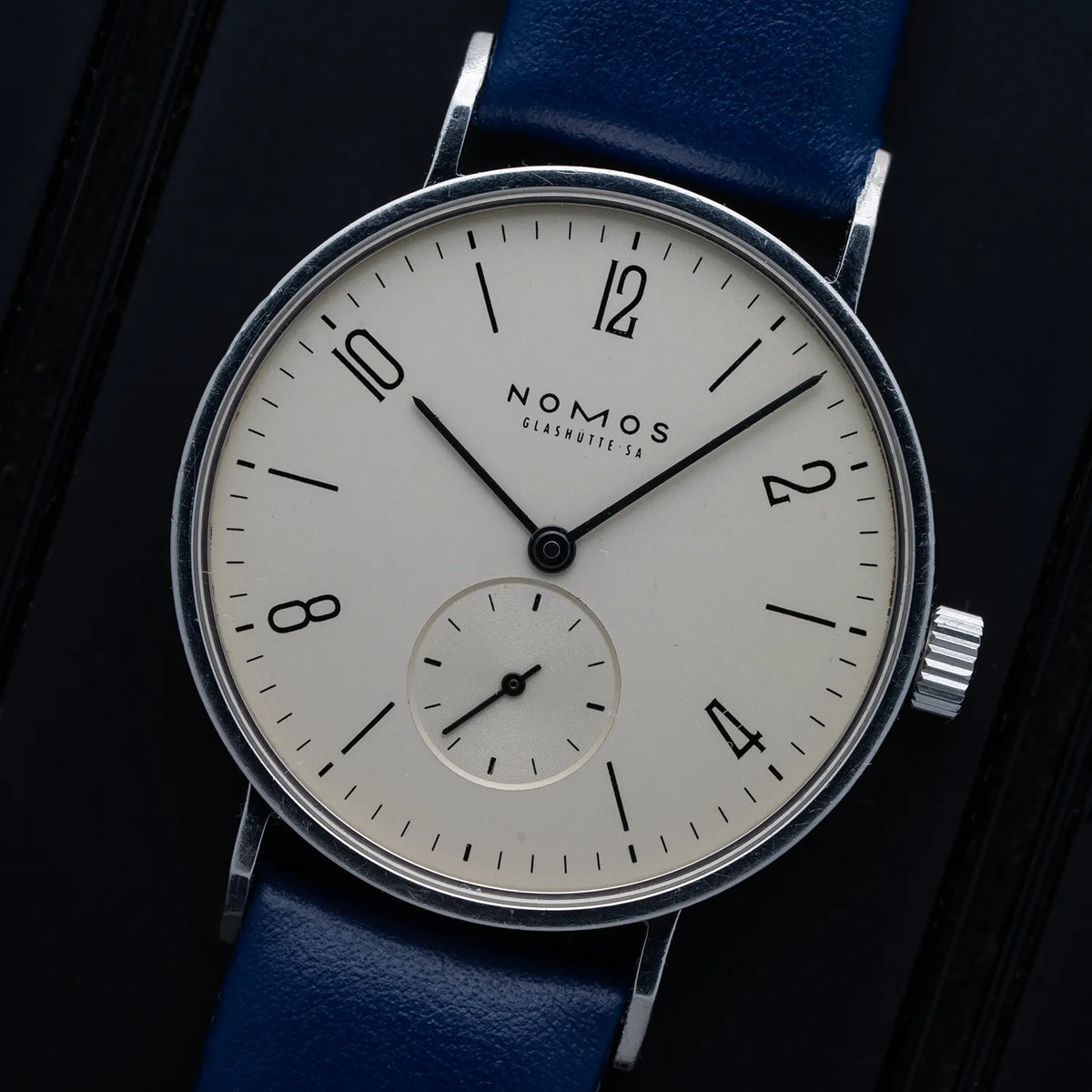
Vintage watches often appeal through a particular relationship between dial, bezel, lugs and wrist. Consider a documented 1966 Omega Seamaster 600: its simple dial, narrow hands and conventional round case express a design vocabulary different from many present-day oversized sports watches. That comparison is visual, not a statement that all 1960s watches are small or all modern watches large. There were substantial vintage tool watches and there are restrained modern dress watches.

A second example is the 1986 Cartier Must Tank LM. Its rectangular case and strongly graphic dial make it distinctive without relying on exaggerated dimensions. It is also a useful reminder that quartz is not a synonym for modern: quartz movements were already part of many late-twentieth-century designs. Decide whether you enjoy the period silhouette, not whether the movement matches a romanticized idea of vintage.

Aging is a feature only when you actually like it
Warm dial tone, gentle surface wear and a softly aged case can make two examples of the same reference look unlike each other. Some buyers treasure that variation; others would rather own a clean, repeatable new product. Neither preference is wrong. The important distinction is between benign aging and damage. An attractive dial tone does not excuse moisture corrosion or a deteriorating movement. A spotless dial does not automatically establish authenticity. Ask what changed, whether changes are disclosed and whether the watch still has its intended functionality.
How much convenience do you need from your daily watch?
Accuracy, winding and day-to-day operation
If exact timekeeping with little attention is your primary requirement, compare the specifications and measured operation of the actual candidates. Many modern quartz watches offer convenient low-maintenance time display, but older quartz watches exist too. A new automatic watch still requires power from wear or winding; an old manual-wind watch requires winding as designed. Movement type and condition, not production year alone, explain these differences.
Some historic mechanisms lack quickset calendars, hacking seconds or convenient hand-winding arrangements that a buyer expects today. Others provide those features. Check the exact caliber and the owner's instructions before deciding that a watch will be annoying. Do not use force to correct a day-date display when the movement's safe-setting procedure is unknown. A watch that you enjoy operating can make these routines part of the appeal; a watch that you need to grab and leave may be better chosen for convenience.
Water resistance: the clearest practical dividing line
Do not treat a decades-old engraving of a water-resistance rating as a current permission to swim. Seals age and cases can be damaged. Seiko's maintenance guidance expressly explains that water resistance is not permanent and that gasket deterioration or accidental shocks can compromise it. A vintage diving watch may have been designed for serious water use when new; without a documented recent test and appropriate professional advice, keep it dry.
The Seiko Scuba 200M, reference 7N35-6020, catalogued as 1992, makes the distinction concrete. The archival case illustrates a historic diving design and its marked identity; the photograph does not establish its present pressure resistance. A new dive watch with a documented suitable rating and appropriate maintenance is generally the more straightforward choice for a buyer who genuinely swims or dives. Modern ratings still have limits: read the maker's instructions and do not assume every 50 m or 100 m marking supports the same activity.

Shock, travel and unexpected knocks
Modern construction may offer useful resilience, but neither age group is invulnerable. Watch movements contain delicate components, and a hard impact may affect accuracy or cause damage. Seiko's care guidance advises protection from shocks and chemicals. For travel, sport or work near hard surfaces, evaluate the specific case, crystal, bracelet attachment, replaceability and protection against moisture. A rare vintage crystal or crown can turn an otherwise minor accident into a sourcing problem.
Servicing, parts and the cost you do not see in the price
Two apparently identical vintage watches can be very different purchases when one has credible recent service documentation and the other merely “runs.” A mechanical movement can tick despite degraded lubricants or wear. Seiko explains that aging oils and worn parts can affect operation and that periodic servicing involves inspecting and treating the movement. It is sensible to request an invoice or clear description of work performed, dates, parts replaced and any timekeeping test results, recognizing that a seller may have incomplete records.
For a modern watch, verify warranty coverage, recommended service intervals and the servicing options available in your country. Some modern watches have expensive or proprietary components, and manufacturer service is not free simply because the design is new. Conversely, some older common movements are well understood and repairable by independent professionals. Parts availability is model-specific, not an age-group guarantee. Discontinued electronics and specialized vintage chronographs can be especially dependent on donor components or specialist experience.
The archived Mido Multifort Limited is a useful visual example: its separate movement photograph enables identification of an actual mechanism, but a photographed movement is not a service invoice or an accuracy test. Ask for operating evidence and appropriate service records independently of gallery quality.

Compare the full ownership budget, not just the sticker
Before buying, write down the purchase price, likely immediate maintenance, planned strap or bracelet work, shipping, import taxes and the cost of your preferred return or service process. For a vintage watch with uncertain maintenance history, leave a realistic contingency rather than assuming every reported fault will be a simple adjustment. Ask a competent watchmaker about the particular caliber and available parts before paying a substantial originality premium. Do not use generalized internet repair price lists as a firm quote for an individual watch.
A modern watch may have a higher initial price but a clearer warranty route. A properly serviced vintage watch with an honest condition report may be the more transparent package than a recent pre-owned model sold with little documentation. Evaluate the offer in front of you; avoid the false equation “vintage is cheap” or “new is automatically safer.”
Originality, restoration and long-term satisfaction
A vintage watch is a physical historical object. Collectors often care that the case form, dial printing, hands, finish and movement belong to the documented reference. This is a separate question from whether the watch functions well. Replacement gaskets and crystals may be reasonable maintenance decisions, whereas an undisclosed redial, incorrect handset or aggressively reshaped case can change the object a collector thought they were buying. For a detailed authenticity process, examine the individual components rather than relying on the seller's adjective “original.”
That does not mean every replacement part ruins a watch. A sympathetic service can improve wearability while respecting the watch's identity. Be precise about priorities. If you want a historically faithful collector example, research reference variants and keep a written record of known replacements. If you want a visually pleasing daily watch, disclosed cosmetic work may matter less to you—provided the price reflects it. Modern purchases also require authenticity checks, especially pre-owned ones, but the evidence trail may be simpler for a new watch bought through a recognized distribution channel.
Uncertainty also affects resale. No watch is guaranteed to increase in value. Originality, condition, demand, purchase price and selling costs matter, and the market can change. Choose a watch you would want to own even if its resale price did not rise. This guide is a purchase-use comparison, not an investment forecast.
Four realistic buyer scenarios
1. The first watch for work and rain
You need a reliable watch most days, occasionally travel, and do not want to consider water exposure or a delicate vintage crystal. Start by examining current watches with appropriate documented water resistance, legible dials, available parts and workable warranty service. A well-prepared vintage watch may still fit, but do not let its design override your practical requirements. Treat an untested vintage case as unsuitable for deliberate water use.
2. A distinctive dress watch worn several times a month
You value a thinner profile, an unusual case and period design; you can remove the watch before swimming or demanding physical activity. A carefully documented vintage dress watch deserves serious consideration. The Omega and Cartier examples above illustrate two different aesthetics. Focus on lug-to-lug fit, dial originality, predictable winding or battery requirements, clear service status and whether you enjoy its existing aging.
3. A collector interested in a particular era
Start with the reference and its historical variants. Decide whether your goal is a representative wearable example or a highly original specimen. Request detail photographs and compare period documentation. Accept that a rarer or more complex reference can require more patient servicing. A model's reputation for collectibility is not a substitute for inspecting that particular watch.
4. A buyer who loves history but dislikes maintenance uncertainty
You do not have to choose between a completely unknown attic find and a brand-new object. Look for vintage examples with documented preparation, explicit movement condition, identified replacements and written after-sales terms. Ask what “serviced” means in the seller's process. Vintage Watch Studio states on its store policy that its mechanical watches are serviced before sale while vintage quartz models are inspected and tested; verify the specific listing and warranty terms rather than generalizing that policy to other sellers.
Seven checks before making your choice
- Define the job: daily commuting, swimming, occasional dress wear, collection or historical interest.
- Try the proportions: case diameter alone is not enough; inspect lug-to-lug length, thickness, bracelet articulation and how the watch sits.
- Check the exact movement: winding, calendar behavior, quartz battery requirements and available service support.
- Verify current condition: photographs, functional disclosure, damaged components and evidence of previous restoration.
- Resolve water exposure: maker's suitable usage instructions for a modern watch, or recent professional test evidence for any older one you intend to expose to water.
- Read the actual terms: warranty scope, return conditions and service obligations; do not assume all new watches or all dealers offer the same protection.
- Calculate total cost: shipping, taxes, known or likely repairs and time spent arranging service.
Starting with ownership requirements makes the comparison more useful. For a more focused next step, read choosing a first vintage watch and the practical implications of service history.
Frequently asked questions
Is a vintage watch less reliable than a modern watch?
Not inevitably. A neglected watch of either age can disappoint. Age introduces uncertainty about previous care, condition and part availability, while modern designs may offer updated materials and established support. Compare serviced condition and the exact use case instead of a universal reliability ranking.
Are modern watches always more accurate?
No. The movement technology and its actual operating state matter more than the date alone. Modern quartz, older quartz and mechanical movements have different performance characteristics; a specific specification or timekeeping measurement is more useful than saying all new watches keep better time.
Can I swim with a vintage diver?
Do not assume so from its historic rating or appearance. Seek qualified professional assessment and a relevant current pressure test. If swimming is essential, an appropriately specified modern watch maintained under its maker's recommendations may be the less complicated option.
Does vintage automatically mean more collectible?
No. Historical interest, correct reference, originality, rarity supported by evidence and collector demand all matter. Many vintage watches are simply attractive older watches, and some modern releases already have strong collector interest.
Should my first watch be vintage or modern?
For a no-fuss single daily watch, modern often offers clearer practical choices. For a watch bought primarily for design, history and occasional wear, vintage can be equally sensible—provided you understand maintenance, originality and condition. The best first choice is one you can realistically enjoy and support.
There is no need to declare one era the winner. A modern watch can earn its place through convenience and confidence; a vintage watch can earn its place through design and the pleasure of owning a surviving object from another time. Choose on the basis of use, evidence and ownership budget, then compare individual watches. If the historical route appeals, the Vintage Watch Studio watch archive and available catalog gives you real photographed examples to study, while each listing's current status and condition should be checked separately.