
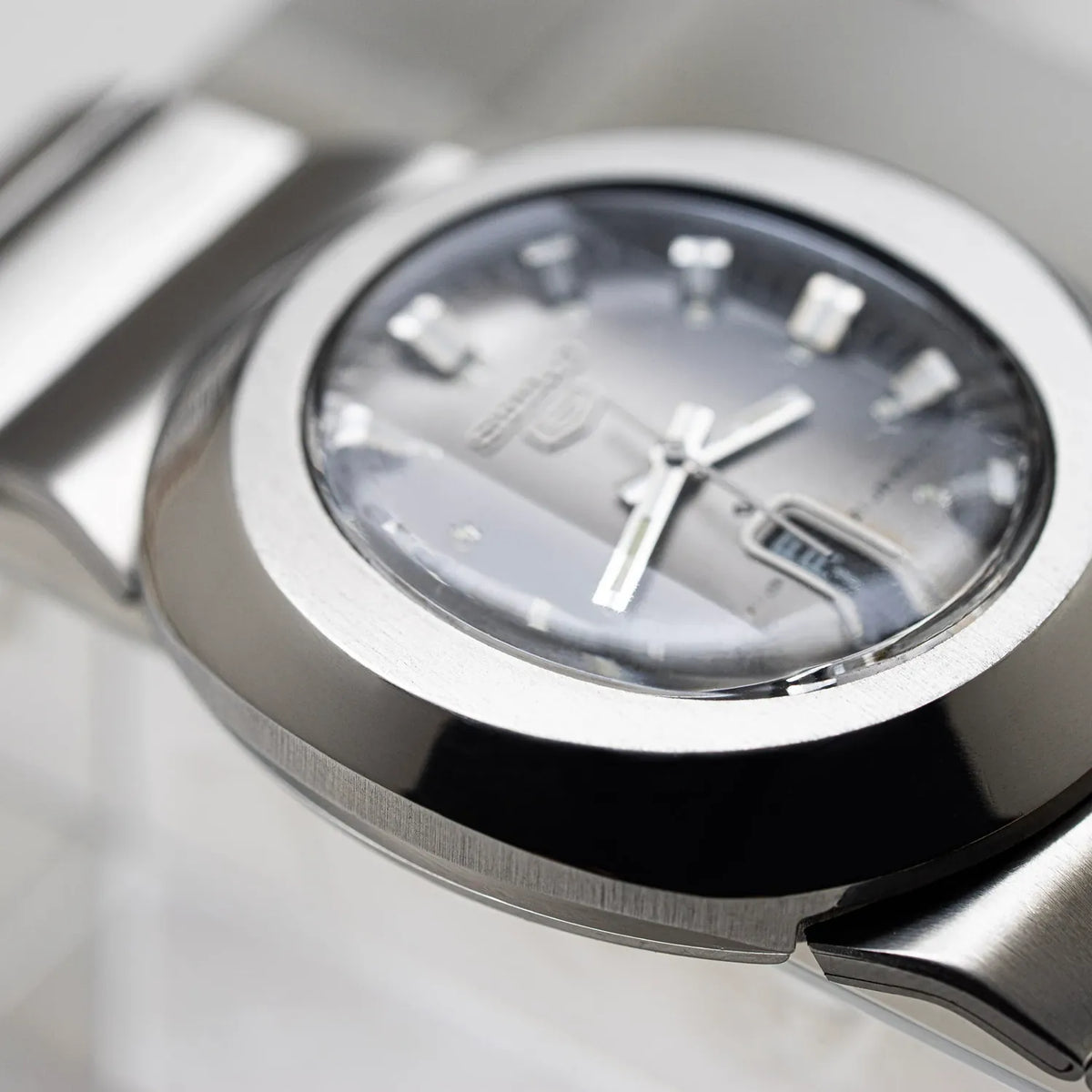
Are Vintage Seiko Watches Reliable Today?
A fifty-year-old Seiko that still ticks can be impressive. It is not, by itself, proof of reliability. The useful question is whether that particular watch will keep running predictably, can be maintained when something wears out and is suitable for the way you intend to use it today.
Vintage Seiko has good reasons to attract everyday wearers: straightforward automatic families, quartz designs with historically important technology and a large surviving population of watches. But production quality in the 1970s or 1980s cannot cancel fifty years of dried oils, battery leakage, moisture exposure or past repairs. Reliability is something to assess on the individual watch, not to assume from the name on its dial.
What does 'reliable' mean for a vintage wristwatch?
It helps to separate four questions that sellers sometimes mix together. Running means the hands move. Accurate enough means its measured timekeeping suits your expectations over more than a moment. Dependable means the movement, winding system, calendar and controls work consistently. Maintainable means defects can be inspected and repaired with available skills and parts.
These can point in different directions. A freshly regulated watch may show an excellent number on a timegrapher while still having worn components. A quartz watch might run accurately when a new battery is installed and later fail because of a corroded contact. A robust-looking dive case may be completely inappropriate for swimming if its seals have aged.
Which vintage Seiko movements are practical to own?
Simple automatic movements: often serviceable, never maintenance-free
Common Seiko 5 mechanical families such as 6119, 6319, 7009 and later 7S26 offer relatively simple everyday displays: central seconds and, often, day and date. That is generally less to inspect than a mechanical chronograph, but even uncomplicated automatic mechanisms need clean lubrication, healthy winding parts and correct adjustment. Their simplicity cannot tell you what past owners did to them.
The 1984 Seiko 5 7009-3130 offers a useful case study. Its VWS catalog record identifies a caliber 7009, a 36 mm case and current watch-specific performance information. A buyer should read that individual measurement as evidence recorded at the time, not a universal 7009 accuracy tolerance. The watch's documented service condition, dial and visible movement details matter more than claims that a Seiko 'runs forever'.

An earlier Seiko 5 6119-5450, documented as a 1974 model with caliber 6119, is another useful archive comparison. Its dial and calendar show that an older watch can still be an appealing daily-wear design, but the listing is a sold archive example, not an available product. For caliber-specific calendar and identification concerns, consult the published Seiko 6119 movement guide.

Quartz Seiko: fewer mechanical moving parts, different failure modes
Standard battery-powered quartz can offer excellent convenience and precision. Seiko's quartz system uses a crystal oscillator and electronic components to regulate the motion of the hands; it is not simply a miniature automatic. When healthy, a conventional quartz watch does not depend on wrist movement to stay running.
The 1990 Seiko SQ 5Y23-8240 with caliber 5Y23 is a practical example of a period watch whose distinctive case, original bracelet and unusual calendar still appeal. Yet the same battery that makes ownership easy brings a responsibility: a depleted cell should not be left indefinitely in the watch. Seiko warns that leakage can cause damage. Inspect the battery compartment and ask whether the calendar, setting works and watch continues to run correctly—not merely whether it started after a battery was fitted.

A 1992 Seiko Scuba 7N35-6020 with caliber 7N35 shows that quartz and serious sports-watch styling were not mutually exclusive. It may look ready for the beach. That appearance is separate from whether the decades-old seals, crown and caseback are watertight. A vintage diver should remain out of water unless its current condition and appropriate water-resistance testing justify the intended activity.
Five reliability problems that age makes more important
1. Dried oil and internal wear
Seiko explains that mechanical lubricants deteriorate and moving components can wear. A watch may operate with insufficient lubrication for a period before the damage becomes obvious. A service history matters more than a seller saying that the second hand moves smoothly. Ask whether the movement was inspected, cleaned, lubricated and regulated as necessary—not just timed for a few seconds.
2. Water ingress and aged gaskets
Seiko states plainly that water resistance is not permanent: gaskets deteriorate and impacts can deform sealing surfaces. Corrosion is a particularly serious warning sign because the damage may extend beyond what the exterior reveals. Even a vintage watch that originally had a substantial depth rating should not be assumed safe for water today.
3. Shock, magnetism and incorrect operation
Mechanical balances can be affected by shocks and magnetism. Seiko also explains that analogue quartz step motors can react to strong magnetic fields, although their behavior differs from that of a magnetized mechanical movement. Unexpected time gain, stopping or erratic motion calls for diagnosis, not a guess that all old watches behave that way.
Calendars deserve special care. Some vintage day/date setting systems are not operated in the same way as modern ones; forcing a crown or quickset during a calendar change can cause damage. Learn the instructions for your precise caliber. Never use force to find a quickset you are not certain exists.
4. Old batteries and fragile electronic parts
For quartz models, inspect for battery leakage and corrosion. Ask whether the appropriate cell is installed, whether the contacts are sound and whether the setting and calendar mechanisms work. A functioning quartz module is not necessarily easy to repair if a specific integrated circuit, coil or movement component is damaged and obsolete. A vintage Seiko 7A38-7100 is an instructive example of why the condition of a complicated quartz chronograph cannot be evaluated by the ticking seconds hand alone.
5. Replacement parts, originality and previous repairs
Parts availability varies by specific movement, variant and component. A commonly encountered caliber is not a guarantee that the exact case, stem, calendar part or dial can be sourced. Repairs made with non-original components may restore function but affect collectibility. Ask about replacements transparently, and compare movement, dial and caseback references instead of relying on a seller's description of 'all original' without images.
How to evaluate reliability before buying: a useful test sequence
- Identify the exact watch. Record its full movement-case reference and compare it with caseback photographs, dial layout and stated production period.
- Ask for operational evidence. On an automatic, ask about observed timekeeping and whether the winding, setting and day/date work. On quartz, verify stable operation, the battery compartment and all controls.
- Read the service description carefully. 'Runs' is not synonymous with 'fully serviced'. A timegrapher photograph is not a substitute for a documented intervention.
- Inspect the case for moisture signs. Look for corrosion, spotting beneath the crystal, damage around crown and caseback, and evidence of a moisture problem.
- Check the parts that experience wear. Crown action, bracelet clasp, spring bars, crystal and calendar controls affect daily usefulness.
- Evaluate restoration honestly. A replaced strap can be sensible; a mismatched dial, damaged movement or undisclosed parts substitution is a different question.
- Clarify the warranty and intended use. Ask what the seller documents, and never interpret 'serviced' as an unconditional waterproofing claim.
The Seiko Caliber 7009 beginner’s guide provides specific 7009 checks; our broader Seiko vintage watch collection is useful for comparing documented reference examples and sold archive watches, but current stock must be confirmed on each individual product page.
What maintenance should an owner plan for?
Seiko's general customer guidance recommends periodic servicing roughly every three years for relevant mechanical watches, with actual frequency influenced by use and environment. That guidance is a planning point, not a prediction that every fifty-year-old movement will need an identical procedure on a fixed anniversary. A competent watchmaker should evaluate the actual condition and parts situation.
For quartz, replace exhausted batteries promptly, have faults diagnosed and avoid long-term storage with a depleted cell. For all vintage watches, keep them away from unnecessary shocks, extreme temperature changes and water unless testing supports the intended use. Clean the exterior gently; avoid chemical cleaners and never assume that a case marked 'water resistant' is safe to rinse under a tap.
Vintage Watch Studio confirms that every mechanical watch it sells is fully serviced and that all its watches—mechanical and quartz—include a 12-month warranty. That is a useful distinction between known seller policy and a general promise about every vintage Seiko in the market. A warranty does not cancel normal aging or verify current water resistance; read the terms and the individual listing.
Are vintage Seikos realistic everyday watches?
Yes, selected examples can be. Choose a simple movement with sound documentation, a comfortable case, functional controls and a plan for maintenance. Expect a serviced automatic to behave like a mechanical watch, not like a phone. Expect a quartz model to need battery care, and understand that vintage electronic parts can create their own repair risks. For someone who needs accurate time with minimal attention, a verified quartz Seiko may be more convenient than a mechanical one; for someone drawn to movement craftsmanship, a properly serviced automatic can be entirely reasonable.
As an archive example, the Seiko 5 Ref. 7009-8750 shows a photographed movement and an original period case design, while the Seiko Scuba 7N35-6020 shows how differently a quartz sports watch can be constructed. Their reference identity and condition details—not the fact that both say Seiko—are what make an informed comparison possible.

Frequently asked questions
Can a forty- or fifty-year-old Seiko still be accurate?
Yes, but its accuracy must be assessed on that particular watch. A recorded timing result reflects a test condition, not a permanent guarantee. Mechanical and quartz performance are evaluated differently.
Is a serviced vintage Seiko maintenance-free?
No. Servicing improves the basis for dependable ownership, but mechanical oils still age, seals still deteriorate and quartz batteries eventually need attention.
Are vintage Seiko 5 movements easy to find parts for?
Some common families have a substantial surviving repair ecosystem, but availability depends on the precise part and caliber variant. Confirm before buying a watch with a known defect.
Is a non-running quartz Seiko probably just in need of a battery?
Possibly, but that cannot be assumed. Leaked batteries, electronic failures and mechanical faults in the hand train or calendar may also stop it.
Can an old Seiko diver still be worn in water?
Only when its present condition and suitable current pressure testing support the intended activity. An original depth marking alone is not evidence that the watch remains watertight.






